

Quick Summary
Code scanning tools help organizations identify security issues in both custom code and open-source dependencies before software reaches production. The two most important categories of code scanning tools are source code scanning tools, typically delivered as SAST, and Software Composition Analysis (SCA) tools for open-source and dependency risk. Modern teams increasingly need both, especially as AI-generated code, open-source usage, and software supply chain requirements raise the stakes for application security.
What Are Code Scanning Tools?
Code scanning tools are security tools used to identify risk in software before it reaches production. In practice, they usually fall into two major categories:
- Source code scanning tools, which analyze custom code for vulnerabilities and insecure coding patterns
- Software composition analysis tools, which identify risk in open-source and third-party dependencies
Together, these tools help teams find issues earlier, reduce remediation costs, and improve the security of both first-party code and software supply chain components.
Many organizations use the phrase “code scanning tools” broadly, but the term often combines two different problem areas:
- finding vulnerabilities in the code your teams write
- finding vulnerabilities, malicious packages, and compliance issues in the components your software depends on
That distinction matters, because the right tooling decision depends on which of those risks you need to manage, and in most modern environments, the answer is both.
Why Code Scanning Tools Matter in Modern Application Security
Code scanning tools are now a core part of modern application security because software is being built faster, with more open-source dependencies, more AI-assisted development, and more pressure to ship continuously. The earlier teams can identify vulnerabilities, dependency risks, and policy violations, the easier and less expensive those issues are to fix.
Code scanning tools matter because they help teams:
- detect vulnerabilities earlier in the SDLC
- reduce exposure from insecure coding patterns
- manage open-source and third-party risk
- support secure AI-assisted development
- enforce security and compliance requirements in CI/CD
- improve developer feedback loops without relying only on late-stage testing
The market has also changed. Choosing code scanning tools is no longer just about whether a scanner finds issues. Teams increasingly need to evaluate:
- how well the tool fits developer workflows
- whether it supports both first-party and third-party risk
- how it handles AI-generated code
- whether it supports SBOM and software supply chain requirements
- how well findings are prioritized and remediated in practice
What Kind of Code Scanning Tool Do You Need?
Not every team needs the same type of code scanning tool first, and not every tool solves the same problem.
| Source Code Scanning Tools ( SAST ) |
Software Composition Analysis ( SCA) |
Code Scanning Tools Synergy Why Your team needs Both |
| custom code secure coding issues IDE/PR feedback earlier remediation |
open-source dependencies malicious packages protection SBOM/compliance supply chain risk |
modern AppSec coverage AI-generated code validation Unified correlation & prioritization |
You likely need source code scanning tools when:
- your main concern is vulnerabilities in custom application code
- you want earlier detection of insecure coding patterns
- your teams need feedback in the IDE, pull requests, or CI/CD pipelines
- you are increasing use of AI-generated code and want code-level validation
You likely need software composition analysis tools when:
- your applications rely heavily on open-source libraries and frameworks
- you need visibility into vulnerable or outdated dependencies
- you need SBOM generation or ingestion
- you need to manage license risk, malicious packages, or broader software supply chain exposure
Most modern teams need both. First-party code and third-party dependencies create different kinds of risk, and one category does not replace the other.
When Do You Need Source Code Scanning Tools?
Source code scanning tools are the right choice when your main priority is identifying vulnerabilities in the custom code your teams write. In most AppSec programs, this capability is delivered through Static Application Security Testing (SAST).
SAST analyzes source code, bytecode, or binaries without executing the application.
It helps teams detect vulnerabilities such as:
- SQL injection
- cross-site scripting
- insecure authentication and authorization patterns
- insecure data handling
- hardcoded secrets
- unsafe API usage
You should prioritize source code scanning tools when:
- developers need fast feedback during coding and code review
- security teams want to shift detection earlier into the SDLC
- you are building web, mobile, or API-driven applications with significant custom logic
AI coding assistants are increasing code volume and review burden.
The best source code scanning tools support:
- deep and wide scanning coverage
- broad language and framework support
- flexible rule sets and presets
- IDE and CI/CD integration
- reduced false-positive noise
- actionable remediation guidance
When Do You Need Software Composition Analysis Tools?
Software Composition Analysis tools are the right choice when your main concern is risk introduced through open-source and third-party dependencies. SCA identifies the packages your applications use and evaluates them for vulnerabilities, license issues, outdated versions, and modern software supply chain risks.
SCA matters because modern software depends heavily on external components, and those components can introduce:
- known CVEs
- outdated or unsupported libraries
- license and compliance problems
- malicious packages
- hidden transitive dependency risk
You should prioritize SCA tools when:
- your development teams rely heavily on open source
- you need SBOM workflows for customers, auditors, or regulators
- you want earlier visibility into dependency and software supply chain risk
- you need to detect malicious packages and suspicious package behavior, not just vulnerable packages
The best SCA tools support:
- direct and transitive dependency discovery
- vulnerability and malicious package detection
- SBOM generation and ingestion
- license compliance
- broad ecosystem support
- developer-friendly remediation guidance
- policy controls in CI/CD and developer workflows
Why Most Teams Need Both Source Code Scanning and SCA
Source code scanning tools and SCA solve different parts of the application security problem. One focuses on vulnerabilities in your custom code. The other focuses on vulnerabilities and risk in the components your software depends on. Most modern organizations need both because one does not replace the other.
Source code scanning helps answer:
- Is our own code introducing exploitable vulnerabilities?
SCA helps answer:
- Are we shipping vulnerable, outdated, risky, or malicious third-party components?
That is why teams increasingly evaluate SAST and SCA together when choosing code scanning tools. The real decision is not usually “which one do we choose?” It is:
- which tool category do we need first
- how well do the two categories work together
- whether findings can be prioritized and remediated in a unified way
Mitigate Open-Source Risk
Identify, prioritize, and remediate open-source risk in your applications, including vulnerabilities, malicious code, and license risks.
What to Look for in Source Code Scanning Tools
When evaluating source code scanning tools, focus on the features that improve real detection quality, developer usability, and remediation outcomes.
The most important evaluation criteria include:
- deep and wide scanning so the tool can analyze large codebases with meaningful vulnerability coverage
- multiple presets and rulesets so teams can tune results to risk tolerance and application context
- application-centric analysis that considers how vulnerabilities behave inside the application, not just isolated code snippets
- false positive and false negative management so teams are not overwhelmed by noise or blind to real issues
- uncompiled and incremental scanning to support modern development speed
- best-fix locations so developers know where remediation will have the greatest impact
- broad language and framework coverage across legacy and modern stacks
The question is not just “does the tool have these capabilities?” but “which source code scanning tools give the best combination of coverage, accuracy, speed, and usability for your environment?”
What to Look for in Software Composition Analysis Tools
When evaluating SCA tools, focus on whether they help your teams understand and reduce dependency and software supply chain risk in practice, not just inventory packages.
The most important evaluation criteria include:
- dependency discovery, including transitive dependency resolution
- vulnerability detection with high-quality intelligence and useful prioritization
- malicious package detection, not just CVE matching
- SBOM generation and ingestion
- license compliance management
- broad language and integration support
- risk prioritization and remediation guidance
- policy controls for CI/CD and approved component use
This matters because modern SCA is no longer just about knowing that a vulnerable dependency exists.
Teams increasingly need help answering:
- how risky is it
- where did it come from
- how should we fix it
- whether it is malicious, exploitable, or compliance-relevant
Securing AI-Generated Code
AI-assisted development increases the need for code scanning tools, not the opposite. AI can help teams write code faster, but it can also introduce vulnerable patterns, insecure package usage, unsafe defaults, and low-visibility dependency decisions at a much higher rate than human-only development.
That means AI-generated code should be validated with:
- source code scanning tools to detect vulnerabilities in generated code
- SCA tools to evaluate generated or suggested open-source dependencies
When looking at SCA, a modern platform should provide the following six features as sFor teams choosing code scanning tools today, support for AI-generated code is no longer an optional nice-to-have. It is part of the buying criteria. Tools need to fit AI-assisted workflows, provide earlier developer feedback, and help security teams manage the extra volume and variability that AI introduces.
New Requirements Shaping Code Scanning Tool Selection
Code scanning tool selection is changing because the risk environment has changed. Teams are no longer evaluating tools only on scan speed or static detection breadth. Modern selection criteria increasingly include:
- support for AI-generated code validation
- SBOM generation and ingestion
- software supply chain visibility
- malicious package detection
- stronger developer workflow integration
- more unified prioritization and remediation
- support for regulatory and customer requirements around open-source and software supply chain governance
The shift toward software supply chain security is especially important. Buyers increasingly expect code scanning tools to help them understand not only what is wrong in code, but also what is present in dependencies, how those components should be governed, and how risk should be documented and prioritized over time.
Why Many Teams Are Moving Toward Consolidated Application Security Platforms
As code scanning requirements expand, teams often find that point tools create fragmented findings and disconnected workflows. Source code vulnerabilities, dependency risk, malicious packages, SBOM needs, API exposure, and cloud-native application risk all create related signals that are difficult to manage in isolation.
That is why many teams no longer evaluate code scanning tools only as isolated scanners. They increasingly evaluate whether those tools fit inside a broader AppSec workflow that helps them:
- correlate source-code and dependency risk
- prioritize remediation more effectively
- reduce noise across teams
- improve developer experience without losing visibility
This does not mean point tools have no value. It means the selection process now increasingly favors solutions that improve visibility and actionability across categories, not just within one engine.
Checkmarx One for Code Scanning and Application Security
Checkmarx supports modern code scanning decisions by bringing together source code scanning, software composition analysis, and broader application security workflows in one platform.
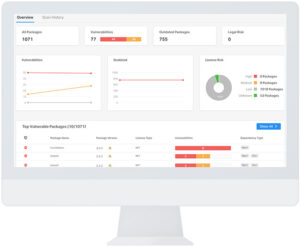
For teams that need source code scanning, Checkmarx SAST helps identify vulnerabilities in custom code early in the SDLC, with broad language coverage, developer workflow integrations, and AI-driven remediation support.
For teams that need software composition analysis, Checkmarx SCA helps identify vulnerable, outdated, risky, and malicious dependencies, while also supporting license compliance, SBOM workflows, and policy-driven open-source governance.
For many organizations, the real value comes from evaluating these together instead of separately. That is where Checkmarx One becomes relevant: it helps teams correlate findings across code, dependencies, supply chain risk, APIs, IaC, containers, and broader AppSec signals so they can prioritize and remediate more effectively.
This is especially important for teams managing:
- AI-generated code
- open-source and software supply chain risk
- cloud-native application portfolios
- developer-first remediation workflows
- enterprise-wide application security visibility
If you are choosing code scanning tools today, the strategic question is no longer only “Which scanner is best?” It is “How well do source code scanning and dependency scanning work together, and how well do they fit into the broader application security workflow we actually need?”