

Summary
IaC security platforms scan Terraform, Kubernetes and cloud templates for misconfigurations before deployment. Checkmarx One is best for enterprises consolidating IaC, code and supply chain security in one agentic AppSec platform, Wiz Code is best for integrated cloud context, Snyk IaC is best for supporting developer workflows, and KICS, Checkmarx’s open-source scanner, offers the broadest format coverage among the free tools compared here.
What Is an IaC Security Platform?
An infrastructure as code (IaC) security platform identifies security and compliance issues in infrastructure definitions before resources are deployed. It scans files created with tools such as Terraform, AWS CloudFormation, Kubernetes manifests, and Helm to detect insecure configurations, policy violations, exposed resources, and excessive permissions.
Evaluating Infrastructure as Code (IaC) Security platforms for a multi-cloud environment requires balancing unified policy enforcement across different cloud providers (AWS, Azure, GCP) with seamless CI/CD developer workflows. This allows teams to block risky changes before deployment and provide developers with information about the affected resource, violated rule, and recommended remediation.
Key evaluation criteria:
Use these five dimensions to compare platforms against a multi-cloud estate:
- Multi-cloud and IaC format coverage: which providers, template languages and configuration formats the scanner actually parses
- Developer workflow and CI/CD enforcement: where findings surface and whether the platform can fail a build or block a merge
- Policy customization and compliance mapping: support for custom rules and mapping to CIS, NIST, PCI DSS and similar frameworks
- Remediation guidance and risk prioritization: what the platform provides beyond a finding, and how it ranks what to fix first
- Consolidation with the wider AppSec program: how IaC findings correlate with code, dependency, secrets and cloud posture results
This is part of a series of articles about IaC security.
Why IaC Security Matters in Multi-Cloud Environments
Infrastructure Is Deployed Across Multiple Cloud Providers
Multi-cloud environments distribute resources across platforms such as AWS, Microsoft Azure, and Google Cloud. Each provider has different resource types, configuration models, identity systems, and networking controls. IaC security provides a consistent way to check infrastructure definitions across these environments before deployment.
This becomes important when teams maintain separate Terraform modules, CloudFormation templates, or other configuration files for different providers. Without centralized security checks, each environment can develop different security gaps. IaC security tools can scan these configurations using a common policy framework while still accounting for provider-specific requirements.
Misconfigurations Can Propagate Through Automated Deployments
IaC makes infrastructure repeatable, but this also makes errors repeatable. A single insecure template can deploy the same misconfiguration across many accounts, regions, or environments. Security checks in development and CI/CD pipelines can detect issues before automation distributes them at scale. This matters more as AI coding assistants write a growing share of infrastructure code, which can repeat insecure patterns faster than teams can review them.
For example, a Terraform module that creates publicly accessible storage could be reused by dozens of applications. Fixing each deployed resource individually is inefficient and may leave some instances exposed. Detecting the problem in the shared module addresses the issue closer to its source and helps prevent future deployments from reproducing it.
Related content: Read our guide to IaC scanning
Cloud Providers Use Different Security Controls and Policies
Security settings that are appropriate for one cloud provider may not have a direct equivalent in another. Encryption, access control, logging, networking, and secrets management are implemented differently across providers. IaC security platforms can apply provider-specific rules while enforcing common organizational requirements across clouds.
This helps teams translate requirements such as “storage must be encrypted” or “databases must not be publicly accessible” into checks for each provider. The underlying IaC properties may differ, but the security objective remains consistent. Centralized policies also make it easier to update controls when cloud services or organizational requirements change.
IaC Expands the Infrastructure Attack Surface
IaC repositories contain definitions for networks, permissions, storage, compute resources, and other security-sensitive infrastructure. Weak access controls, exposed services, overly broad permissions, or embedded secrets can create exploitable paths. Securing IaC therefore requires scanning both the infrastructure configurations and the development workflows used to create and deploy them.
The surrounding toolchain also matters. Source repositories, CI/CD systems, state files, modules, and deployment credentials can provide access to infrastructure or sensitive configuration data. An attacker who modifies trusted IaC code may be able to introduce insecure resources through the normal deployment process, making repository protection, code review, and pipeline security important parts of IaC security.
Common IaC Security Risks in Multi-Cloud Environments
The following table summarizes the key risks facing IaC in multi-cloud environments and how security solutions can help.
| Risk | Description | Impact | How Security Platforms Help |
| Cloud Misconfigurations | IaC templates may define insecure settings such as public storage, disabled logging, unrestricted access, or missing security controls. Multi-cloud environments increase this risk because each provider has different defaults and security models. | A single insecure reusable module can affect many resources and expose systems or data. | Scan IaC before deployment, detect unsafe properties, and enforce policy checks to block noncompliant configurations from reaching production. |
| Excessive IAM Permissions | IaC often defines users, roles, service accounts, and policies. Broad permissions, wildcard actions, or unnecessary admin access can violate least privilege. | Users or workloads may gain more access than needed, increasing the risk of privilege abuse or lateral movement. | Identify overly broad permissions and recommend least-privilege access across AWS, Azure, and Google Cloud identity models. |
| Hardcoded Secrets and Credentials | Developers may accidentally include API keys, passwords, tokens, private keys, or other credentials in IaC files or repositories. | Exposed secrets can be abused, and deleted secrets may still remain in version history. | Scan repositories and pipelines for exposed credentials, alert teams, and support secret revocation and rotation workflows. |
| Insecure Network Configurations | IaC defines firewalls, security groups, virtual networks, subnets, routing, and load balancers. Overly permissive rules can expose resources to untrusted networks. | Administrative ports or sensitive services may become publicly reachable. | Detect unrestricted inbound access, unintended public exposure, and network rules that bypass expected boundaries. |
| Unencrypted Storage and Databases | IaC may create buckets, disks, databases, queues, or other data services without encryption or approved key-management settings. | Sensitive data may be exposed at rest or in transit, creating compliance and security risks. | Enforce encryption policies, validate approved key usage, and ensure consistent encryption controls across cloud providers. |
| Configuration Drift | Deployed resources may be changed directly in the cloud console and no longer match IaC definitions. | IaC stops being the source of truth, and unauthorized changes may introduce security gaps. | Compare deployed resources with IaC definitions, detect unmanaged changes, and help teams restore intended configurations or update code. |
How to Choose an IaC Security Platform
The criteria below apply to every platform in this guide. Work through them against your own repositories rather than against feature lists, since coverage gaps usually appear in the formats and modules a team actually uses.
Multi-Cloud and IaC Format Coverage
Most organizations write infrastructure in more than one language. A Terraform-only scanner leaves Kubernetes manifests, Helm charts, ARM templates and CloudFormation stacks unchecked, and cloud-specific rule packs behave differently across providers even when the underlying control is the same. Coverage also has to extend to how code is packaged, including modules pulled from registries and Helm charts that are rendered before they are evaluated.
Evaluation criteria:
- Does it parse every IaC language your teams use today, including Helm, ARM, Bicep, Ansible and Pulumi?
- Are there provider-specific rule sets for AWS, Azure and Google Cloud, not just generic checks?
- Can it scan rendered templates and Terraform plan output, not only source files?
- Does it handle modules sourced from private registries and remote repositories?
Developer Workflow and CI/CD Enforcement
There is a difference between a scanner that reports findings and a platform that can stop a change. Feedback that arrives in the IDE and on the pull request reaches the person who wrote the template, while pipeline gating decides whether an insecure definition can be merged or applied. The integration surface matters as much as the detection engine, because a tool that only runs as a manual CLI step tends to be skipped under delivery pressure.
Evaluation criteria:
- Does it run in the IDE, the CLI, the source control system and the CI pipeline?
- Can it comment on pull requests with the specific resource and line of code?
- Can it fail a build or block a merge on a defined severity threshold?
- Does it support pre-commit hooks and Terraform Cloud or equivalent run environments?
- Does it check IaC as it is written by AI coding assistants, and can AI agents call the scanner directly, for example through MCP?
Policy Customization and Compliance Mapping
Built-in rule libraries cover common misconfigurations, but organizational standards such as approved encryption keys, mandatory tags or permitted regions require custom policy. The language used for those rules determines who can maintain them, whether that is Rego, Python, YAML or a vendor query format. Regulated teams also need findings mapped to the frameworks they are audited against, so that control evidence does not have to be reconstructed manually.
Evaluation criteria:
- What language are custom rules written in, and who on the team can maintain them?
- Can policies evaluate relationships between resources, not just single attributes?
- Are findings mapped to CIS Benchmarks, NIST, PCI DSS, SOC 2 or ISO 27001?
- Are custom rules and policy management available in the tier you plan to buy?
Remediation Guidance and Risk Prioritization
A list of violations without context creates a backlog rather than a fix. Useful platforms point to the exact resource and property, propose a corrected configuration, and rank findings so that public exposure and privilege issues surface above low-impact style violations. Suppression handling belongs here too, since teams need a reviewable way to accept a finding without disabling a rule globally.
Evaluation criteria:
- Does it suggest a corrected configuration or open a fix pull request?
- Are suggested fixes rescanned to confirm the issue is resolved before the change is committed?
- Does prioritization use exposure, exploitability or runtime context rather than severity alone?
- Can findings be routed to the owning team through ticketing integrations?
- Are suppressions recorded with a reason and kept next to the code?
Consolidation with the Wider AppSec Program
An IaC misconfiguration rarely sits in isolation. A publicly reachable bucket defined in Terraform carries different weight when the application writing to it has a known vulnerability, and a secret committed to a template is a code problem and an infrastructure problem at once. Platforms that correlate IaC findings with SAST, SCA, secrets and cloud posture data produce one prioritized view; standalone scanners leave that correlation to the team.
Evaluation criteria:
- Does the same platform also cover SAST, SCA, secrets and container scanning?
- Can it ingest findings from third-party scanners into one risk view?
- Does it trace a deployed cloud resource back to the IaC file that created it?
- Is there a single policy and reporting layer across build and runtime?
Common IaC Security Platforms and How They Meet the Criteria
The table summarizes how each platform measures up against the five criteria. Each one is explored in detail below.
| Category | Solution | How It Meets the Criteria |
| Unified application and cloud security platforms | Checkmarx One IaC Security | Covers 18 IaC platforms with line-of-code findings, customizable queries, and pipeline checks that block high-risk changes. IaC findings are correlated with Fusion SAST, SCA, and Secrets Detection results through ASPM in Checkmarx One. |
| Unified application and cloud security platforms | Snyk IaC | Scans Terraform, CloudFormation, ARM, Kubernetes and Helm across IDE, CLI, SCM and CI/CD, with CIS-backed rule sets and OPA custom policies. Drift management compares live state against the IaC plan. |
| Unified application and cloud security platforms | Cortex Cloud (Palo Alto Networks) | Uses Checkov as its IaC engine with hundreds of built-in policies, PR comments and Smart Fixes. Policy-as-code is authored in Python and YAML and applies consistently from build time to runtime. |
| Unified application and cloud security platforms | Wiz Code | Validates IaC against more than 1,000 rules across Terraform, CloudFormation, ARM, Kubernetes and Docker, detects drift, and traces cloud resources back to source code for one-click fixes. |
| Unified application and cloud security platforms | Orca Security | Scans Terraform, CloudFormation, ARM, Google Deployment Manager, Ansible and Kubernetes on every pull request with customizable guardrails, plus Cloud-to-Dev tracing and one-click remediation PRs. |
| Open-source IaC scanners | KICS | Covers 18 IaC platforms with more than 2,400 customizable queries and straightforward CI integration. Auto-remediation covers simple Terraform fixes only, with no hosted dashboard or prioritization layer. |
| Open-source IaC scanners | Checkov | Provides a single CLI across Terraform, plan files, CloudFormation, Kubernetes, Helm, ARM, Serverless and CDK, with attribute-based and graph-based custom policies. Central reporting comes from Cortex Cloud. |
| Open-source IaC scanners | Trivy | Combines IaC misconfiguration scanning with CVE, secret and container scanning in one binary, with SARIF and JUnit output for CI. No UI, reporting layer or policy governance in the open-source tool. |
For a broader look at IaC security tooling beyond multi-cloud evaluation, see 7 IaC Security Tools and Capabilities.
Notable IaC Security Platforms for Multi-Cloud Environment
How we selected these solutions: We shortlisted IaC security platforms based on the breadth of IaC formats and cloud providers they scan, their integration into developer workflows and CI/CD pipelines, support for custom policy and compliance mapping, remediation and prioritization capabilities, and how their findings connect to the wider application security program.
Unified Application and Cloud Security Platforms
1. Checkmarx One IaC Security

Best for: Enterprises consolidating IaC, code and supply chain security in one agentic AppSec platform
Strengths: 18 IaC platforms, policy-as-code build stops, AI-assisted fixes in the IDE
Things to consider: Full value comes from running IaC alongside other Checkmarx One engines
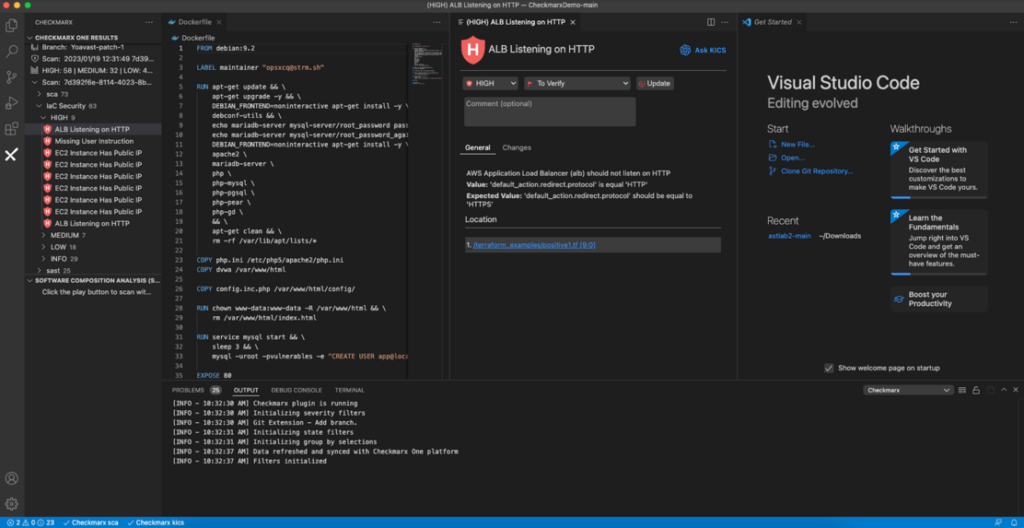
Checkmarx One IaC Security scans infrastructure as code templates for misconfigurations and vulnerabilities as part of Checkmarx One, Checkmarx’s agentic application security platform. It supports 18 IaC platforms, including Terraform, Kubernetes, Helm, AWS CloudFormation, Azure Resource Manager, Ansible, Pulumi, Crossplane, AWS CDK, Google Deployment Manager, Docker, Docker Compose, Knative, OpenAPI, AWS SAM, Azure Blueprints, gRPC and the Serverless Framework.
The platform scans IaC as part of pull requests and pipelines, blocking high-risk changes, and correlates and prioritizes IaC risk alongside findings from the other Checkmarx One engines. Integrations cover Azure Pipelines, GitHub Actions, GitLab CI, Jenkins, Bitbucket Pipelines, CircleCI, Bamboo, TeamCity, Travis, Codefresh, AWS CodeBuild, Terraform Cloud, Terraformer, pre-commit hooks and the KICS auto-scanning extension for Visual Studio Code.
Developers get IaC checks where code is written. Checkmarx Developer Assist flags infrastructure as code misconfigurations as code is created, whether a developer or an AI coding assistant wrote it. It pulls context from Checkmarx One, generates a fix and rescans the change to verify it before commit. Developer Assist runs in VS Code, Visual Studio, JetBrains, Eclipse, Cursor, Windsurf and Kiro, and in AI coding CLIs such as Claude Code. The Checkmarx MCP Server also lets AI coding agents trigger IaC scans directly.
Key features include:
- IaC template scanning: Scans IaC files for misconfigurations and CVEs across 18 supported platforms, returning results with the specific line of code that needs to change.
- Custom rules and pipeline enforcement: Editable queries let teams define organization-specific checks, applied consistently across teams and pipelines, with high-risk changes blocked before deployment.
- AI-assisted IDE remediation: Checkmarx Developer Assist detects IaC misconfigurations as code is written in IDEs such as VS Code, JetBrains and Visual Studio and in AI coding tools such as Cursor, Windsurf, Kiro and Claude Code, then generates a fix and rescans to verify it before commit.
- Risk correlation and prioritization: Tracks, correlates and prioritizes risk across development stages so IaC findings sit alongside Fusion SAST, SCA and secrets results in a single view through Checkmarx ASPM.
- Compliance and governance support: Identifies and helps rectify security gaps in IaC code against regulatory requirements and industry standards.
- Tuning controls to reduce noise: IaC Security presets, platform-scoped scans, and editable queries let teams focus scans on the frameworks they use and suppress checks that don’t apply to their environment.
- Pipeline and repository integrations: Connects to 16 CI/CD and development tools, including pre-commit hooks, Terraform Cloud and AWS CDK, so scanning runs at commit, build and review stages.
- AI coding agent integration: The Checkmarx MCP Server connects AI coding agents to Checkmarx One, so agents can trigger IaC scans and retrieve findings without leaving their workflow.
| Criterion | Solution Fit | Key Considerations |
| Multi-cloud and IaC format coverage | 18 IaC platforms covering Terraform, Kubernetes, Helm, CloudFormation, ARM, Ansible, Pulumi, Crossplane, CDK and Google Deployment Manager | Coverage is defined by IaC platform rather than by cloud provider, so provider-specific rule depth is worth confirming per estate |
| Developer workflow and CI/CD enforcement | Sixteen integrations across CI systems, pre-commit hooks, Terraform Cloud and IDE plugins, plus Developer Assist in AI coding tools such as Cursor, Windsurf and Claude Code, with builds stopped on policy violations | Users note scan and reporting times on very large mono-repos |
| Policy customization and compliance mapping | Custom policy-as-code rules applied consistently across teams and pipelines, with support for regulatory and industry standards | Reporting templates are fixed, so custom compliance views may need to be assembled outside the platform |
| Remediation guidance and risk prioritization | End-to-end scan, triage, alert and fix workflow with line-of-code references, automated ticketing and prioritization of critical findings, plus AI-generated fixes verified before commit through Developer Assist | Some users want more visibility into how the correlation engine ranks findings |
| Consolidation with the wider AppSec program | IaC runs inside Checkmarx One with Fusion SAST, SCA, secrets detection, API security, container security, AI supply chain security and ASPM under one risk view | Full value depends on adopting more of the platform than the IaC engine alone |
Get advanced scanning, proactive vulnerability identification and robust misconfiguration detection
Infrastructure as Code (IaC) Security
Strengthen Your cloud infrastructure with advanced scanning, proactive vulnerability identification and robust misconfiguration detection.
Jump to Key Benefits2. Snyk IaC
Best for: Developer-led teams already running Snyk for code and packages
Strengths: IDE-to-pipeline coverage, OPA custom policies, in-code fix suggestions
Things to consider: Custom rules and policy management sit in higher tiers
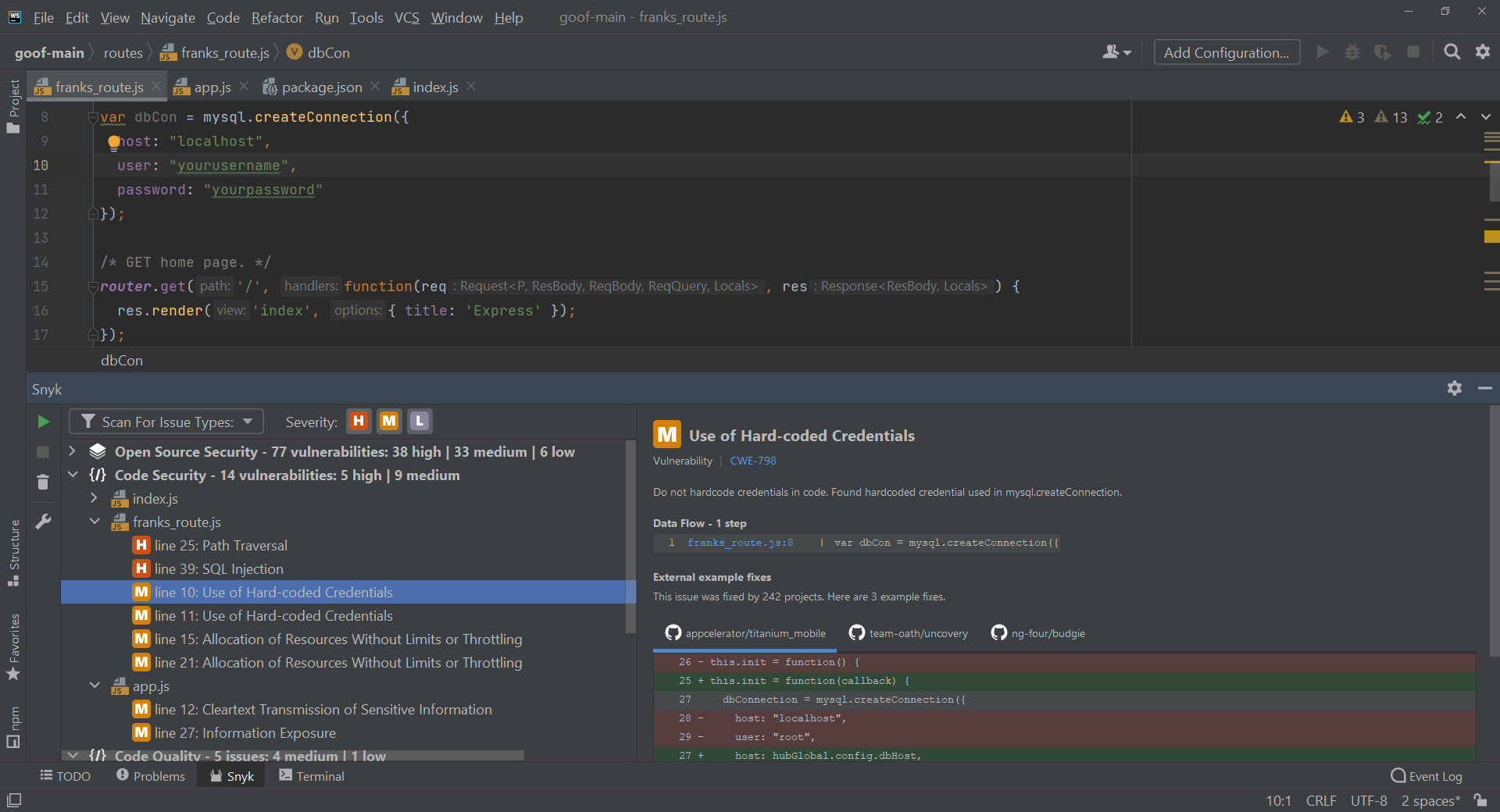
Snyk IaC finds and fixes misconfigurations in infrastructure as code before they reach production. It scans Terraform, CloudFormation, Kubernetes, Helm charts and ARM templates, and runs inside IDE, CLI, source control and CI/CD workflows so the same scan can be triggered at several points in the delivery process.
Detection uses built-in rule sets for Terraform, CloudFormation, ARM and Kubernetes formats and for AWS, Azure and Google Cloud, backed by industry best practices, CIS benchmarks and Snyk’s own threat-modeling research. Teams can extend those rule sets with custom policies written in Open Policy Agent.
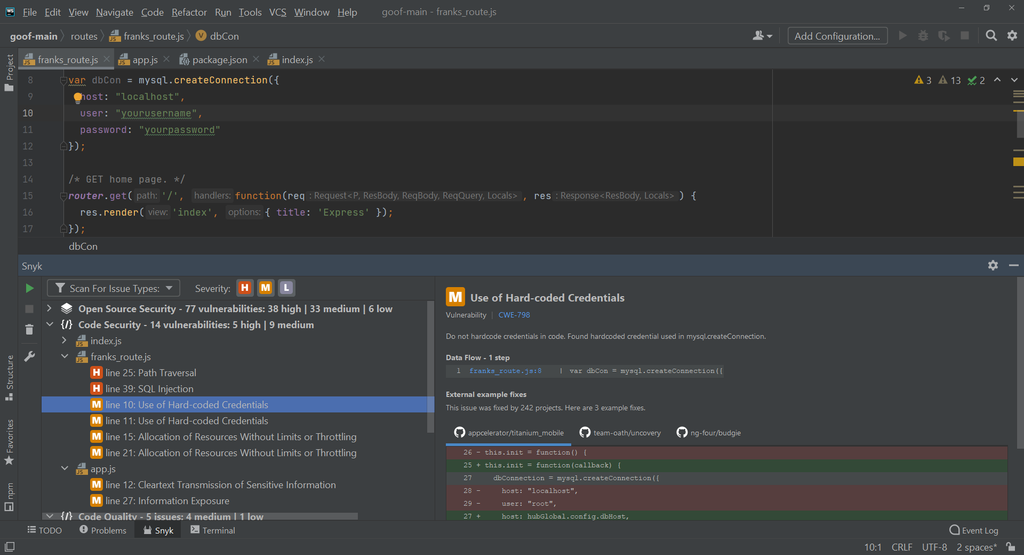
In CI/CD, Snyk IaC applies automated testing and gating so misconfigurations can be blocked before deployment. Vulnerable code is highlighted with fix suggestions in line with the template, and enterprise-grade reporting tracks configuration issues and compliance findings over time. Drift management compares deployed resources against the expected IaC state.
Key features include:
- Multi-format IaC scanning: Covers Terraform, CloudFormation, Kubernetes, Helm charts and ARM templates, with rule sets targeting AWS, Azure and Google Cloud resources.
- Developer-first integrations: Runs through IDE, CLI, source control, CI and Terraform Cloud and Enterprise integrations, giving visibility from the editor through to the pipeline.
- CI/CD gating: Applies automated testing and gating of security issues in pipelines so misconfigured templates are stopped before deployment.
- OPA-based custom policies: Extends the built-in rule sets with organization-specific policies written in Open Policy Agent.
- In-code remediation: Highlights the vulnerable configuration and provides fix suggestions in line with the code being written.
- Drift management: Compares live infrastructure against the IaC plan to surface resources changed outside the expected state.
| Criterion | Solution Fit | Key Considerations |
| Multi-cloud and IaC format coverage | Terraform, CloudFormation, Kubernetes, Helm and ARM, with dedicated rule sets for AWS, Azure and Google Cloud | Fewer supported IaC formats than the broadest scanners, with no listed support for Ansible or Pulumi |
| Developer workflow and CI/CD enforcement | IDE, CLI, SCM, CI and Terraform Cloud integrations with automated testing and gating of issues in pipelines | Branch selection is handled through CLI or CI rather than the web UI, which affects some review workflows |
| Policy customization and compliance mapping | Built-in rules aligned to CIS benchmarks and best practices, extended with OPA custom policies; compliance issue reporting available | Custom rules, security policy management and compliance reporting are Enterprise-tier features |
| Remediation guidance and risk prioritization | Fix suggestions shown in line with the code, plus drift management for resources changed outside IaC | Users report noise in large projects and want stronger prioritization and more contextual fix paths for complex cases |
| Consolidation with the wider AppSec program | Shares workflows and reporting with Snyk Code, Open Source, Container and Secrets across the AI Security Platform | Each product module is licensed separately, so full coverage means combining several modules |
Source: Snyk
3. Cortex Cloud (Palo Alto Networks)

Best for: Organizations wanting the same controls from build time to runtime
Strengths: Checkov-based policy engine, PR auto-fixes, code-to-cloud controls
Things to consider: Platform scope and module-based licensing add rollout effort
Cortex Cloud is the current version of Prisma Cloud, and its code security capability scans infrastructure as code alongside container images, open source packages and delivery pipelines. IaC scanning covers Terraform, CloudFormation, Kubernetes, Dockerfile, Serverless and ARM templates, with security embedded into DevOps tooling rather than run as a separate review step.
The IaC engine is built on Checkov, the open source policy-as-code tool maintained by the same team, and ships with hundreds of policies built in code. Teams define, test and version-control check-lists, skip-lists and graph-based custom policies in Python and YAML, and can add custom policies for both cloud resources and IaC templates.
Feedback reaches developers through native integrations for IDEs, version control systems and CI/CD tooling. The platform automates pull request comments for misconfigurations and can open automated pull requests, commit fixes and Smart Fixes. It also tracks dependencies between IaC resources and the most recent developer modifiers, and scans IaC templates and container images for exposed secrets using regular expressions, keywords and entropy-based identifiers.
Key features include:
- IaC misconfiguration scanning: Adds automated checks for misconfigurations and exposed secrets at each step of the development lifecycle across Terraform, CloudFormation, Kubernetes, Dockerfile, Serverless and ARM.
- Checkov-based policy engine: Uses the open source Checkov project as the policy-as-code foundation, with hundreds of policies provided out of the box.
- Graph-based custom policies: Defines, tests and version-controls check-lists, skip-lists and graph-based custom policies in Python and YAML for IaC templates.
- Automated fixes in code: Generates pull request comments, automated pull requests, commit fixes and Smart Fixes for identified misconfigurations.
- IaC dependency context: Tracks dependencies for IaC resources and the most recent developer modifiers to support review in large teams.
- Secrets detection in templates: Identifies passwords and tokens in IaC templates, golden images and Git repository configurations using signatures, keywords and entropy analysis.
| Criterion | Solution Fit | Key Considerations |
| Multi-cloud and IaC format coverage | Terraform, CloudFormation, Kubernetes, Dockerfile, Serverless and ARM templates, with consistent controls from build time to runtime | Ansible and Pulumi are not listed among supported formats; some data and workload capabilities have gaps on Windows environments |
| Developer workflow and CI/CD enforcement | Native IDE, VCS and CI/CD integrations, with build blocking based on defined thresholds and automated PR comments | Users describe the wider platform as operationally demanding to roll out, with ownership of alerts a common sticking point |
| Policy customization and compliance mapping | Hundreds of built-in policies plus custom check-lists, skip-lists and graph-based policies authored in Python and YAML | Policy authoring in Python and YAML assumes engineering capacity to maintain a rule set over time |
| Remediation guidance and risk prioritization | Automated pull requests, commit fixes and Smart Fixes, with dependency and modifier context attached to findings | Reviewers report false positives requiring triage and note the ongoing migration of Prisma Cloud tenants to Cortex Cloud |
| Consolidation with the wider AppSec program | Code security sits with SCA, secrets, license compliance, ASPM and cloud posture in one platform and policy engine | Capabilities are packaged as modules, so the consolidated view depends on which modules are licensed |
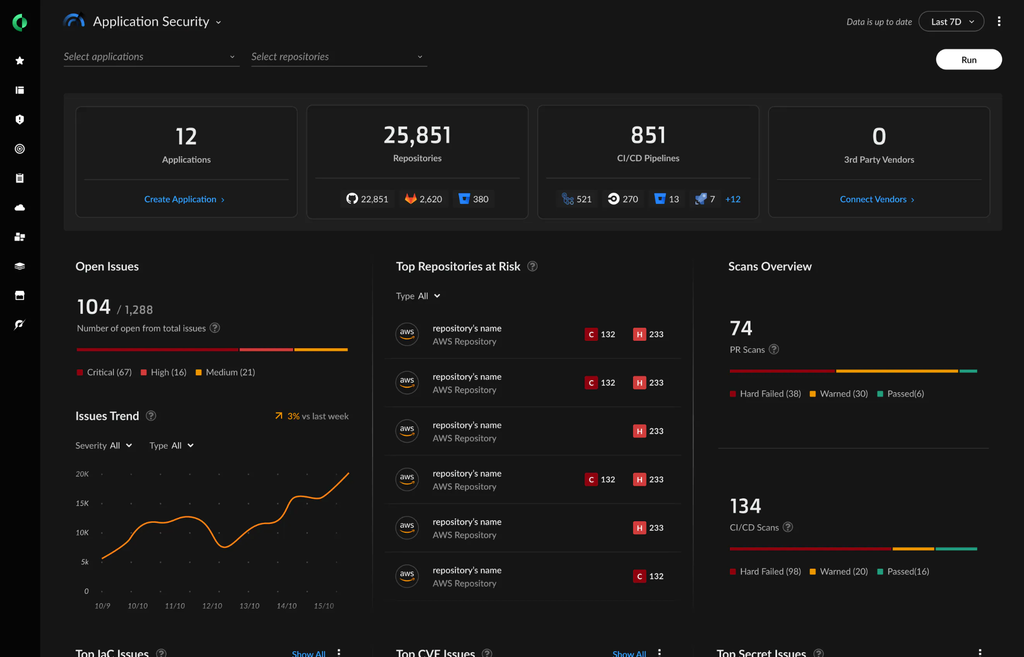
Source: Palo Alto Networks

4. Wiz Code

Best for: Cloud security teams tracing production risk back to IaC
Strengths: 1,000+ IaC rules, drift detection, code-to-cloud remediation mapping
Things to consider: Code scanning depth is newer than its cloud capabilities
Wiz Code covers code, CI/CD and cloud environments under a single security policy. Its IaC scanning validates templates against more than 1,000 rules for Terraform, CloudFormation, Azure Resource Manager, Kubernetes, Docker and other formats, and detects drift between what is defined in code and what is running in the cloud.
The distinguishing capability is code-to-cloud mapping. Risks found in a cloud environment are traced back to the source code that created them, and fix suggestions are presented directly in that source code. Findings appear in the IDE, in pull requests and in CI/CD, so the same policy applies at each stage.
Alongside IaC, Wiz Code scans for hardcoded secrets in code, IaC templates and container images, identifies sensitive data such as PHI and PII in the codebase, detects malware before it reaches CI runners, and hardens version control and CI/CD systems against misconfigurations and insecure defaults. Its ASPM layer aggregates and correlates findings from built-in and third-party scanners and connects code risks to cloud impact.
Key features include:
- Rule-based IaC scanning: Validates IaC against more than 1,000 rules covering Terraform, CloudFormation, Azure Resource Manager, Kubernetes and Docker.
- Drift detection and cloud-to-code tracing: Detects drift and traces deployed resources back to the code that defined them, so fixes are applied at the source.
- One-click remediation: Provides fix suggestions inside the source code, available from the IDE, pull requests and CI/CD pipelines.
- Secrets and sensitive data scanning: Finds hardcoded secrets in code, IaC templates and container images, and classifies sensitive data such as PHI and PII in the codebase.
- Pipeline posture hardening: Checks version control and CI/CD systems against standards including OpenSSF best practices for SCM, OWASP Top 10 CI/CD risks and CIS for GitHub and GitLab.
- ASPM correlation: Aggregates findings from built-in and third-party SAST, SCA and DAST scanners, enforces policy across the SDLC and adds ownership to remediation.
| Criterion | Solution Fit | Key Considerations |
| Multi-cloud and IaC format coverage | More than 1,000 rules across Terraform, CloudFormation, Azure Resource Manager, Kubernetes, Docker and additional formats | Reviewers describe code scanning maturity as still developing relative to the platform’s cloud capabilities, including serverless coverage |
| Developer workflow and CI/CD enforcement | Scanning and fixes available in the IDE, pull requests and CI/CD, under one policy from commit to runtime | Some users report longer load times in the interface when navigating graph views |
| Policy customization and compliance mapping | Unified code and cloud policy engine, with pipeline posture checks mapped to OpenSSF, OWASP CI/CD Top 10 and CIS benchmarks | Users ask for more customizable executive dashboards and clearer reporting for non-technical stakeholders |
| Remediation guidance and risk prioritization | Code-to-cloud mapping with one-click fixes in source, and prioritization using reachability and runtime context | Suggested fixes are not always compatible with a given codebase and still require developer validation |
| Consolidation with the wider AppSec program | ASPM aggregates built-in and third-party scanner findings and links code risks to cloud impact across Wiz Code, Cloud and Defend | Full context depends on running the wider Wiz platform rather than the code product alone |
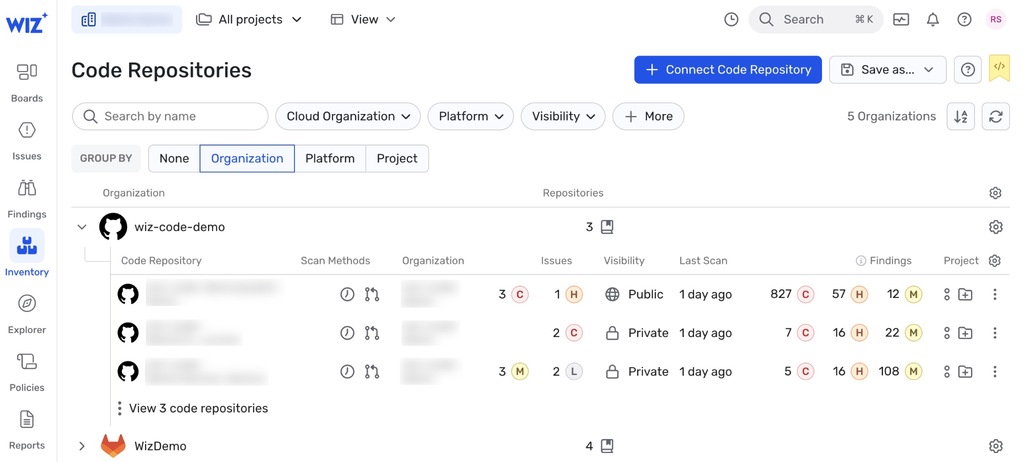
Source: Wiz

5. Orca Security
Best for: Cloud security teams fixing production risks at their IaC source
Strengths: Broad template coverage, PR-level guardrails, one-click remediation PRs
Things to consider: Reporting and SMB pricing draw the most user criticism
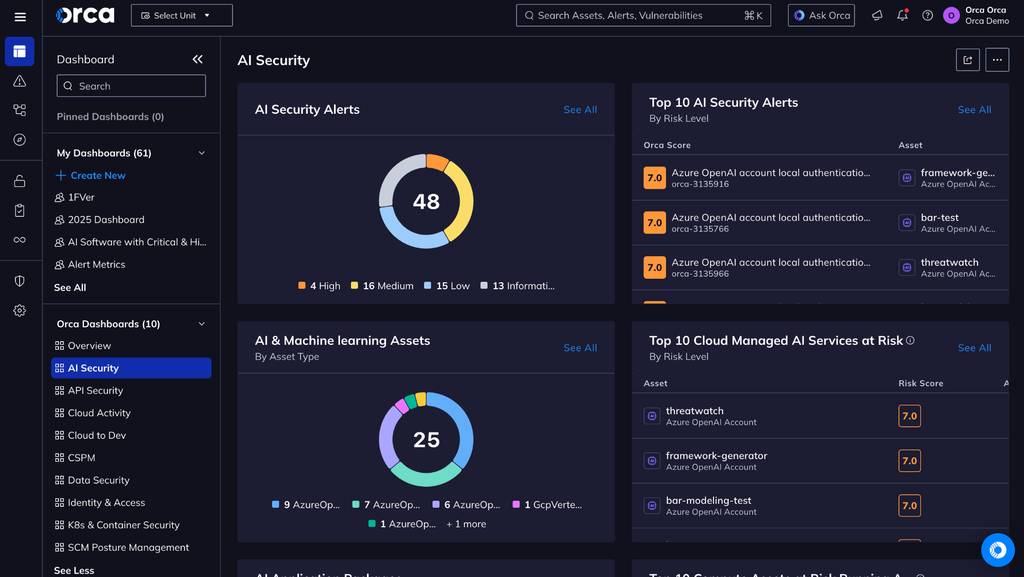
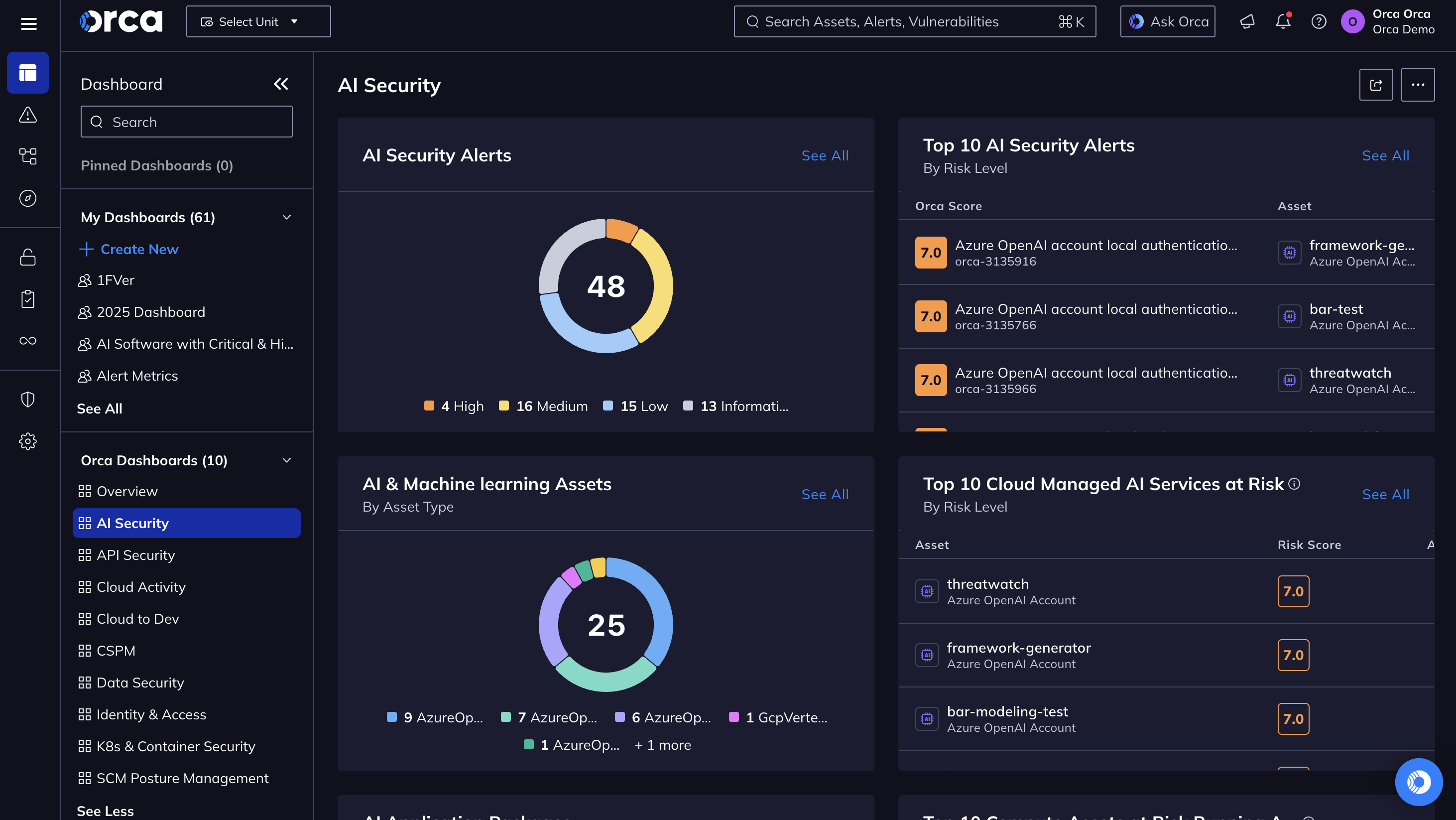
Orca Security covers application security across the SDLC within its agentless cloud security platform. IaC scanning validates code across Terraform, AWS CloudFormation, Azure Resource Manager, Google Deployment Manager, Ansible and Kubernetes, and runs automatically on every pull request to detect new issues or policy violations.
Policies for IaC scanning, including guardrails, can be set and customized to match organizational requirements. Cloud-to-Dev tracing links risks found in production back to the IaC that created them, and cloud alerts can be converted into AI-driven code fixes and one-click pull requests.
The same platform covers SCA with full SBOM output including transitive dependencies, SAST for first-party code, secrets detection with a pre-commit hook, container image scanning, and source code management posture checks against OpenSSF and Legitify standards. CI/CD checks run through native integrations with Jenkins, Bitbucket, CircleCI, GitHub and GitLab or through the Orca CLI, and findings route to Jira, ServiceNow, Slack, PagerDuty and SOAR systems.
Key features include:
- Multi-platform IaC validation: Validates IaC across Terraform, AWS CloudFormation, Azure Resource Manager, Google Deployment Manager, Ansible and Kubernetes.
- Pull request scanning and guardrails: Scans IaC automatically on every pull request and applies customizable guardrail policies to detect new issues or policy violations.
- Cloud-to-Dev tracing: Links cloud risks back to their code origins and turns alerts into AI-driven code fixes and one-click pull requests.
- Secrets detection with pre-commit hooks: Detects secrets early in the SDLC through GitHub, GitLab and Azure DevOps apps or the Orca CLI, with a pre-commit hook that catches issues before they reach repositories.
- AppSec Triage Agent: Analyzes the code context of a finding to deprioritize false positives and escalate true positives, with the option to roll back its conclusions.
- Workflow and CI/CD integrations: Runs compliance checks using CIS benchmarks and custom policies inside Jenkins, Bitbucket, CircleCI, GitHub and GitLab, and forwards findings to ticketing, notification and SOAR systems.
| Criterion | Solution Fit | Key Considerations |
| Multi-cloud and IaC format coverage | Terraform, CloudFormation, Azure Resource Manager, Google Deployment Manager, Ansible and Kubernetes, across AWS, Azure, Google Cloud, Oracle and Alibaba Cloud | Adding new cloud subscriptions or accounts is a manual configuration step rather than an automatic one |
| Developer workflow and CI/CD enforcement | Automatic scanning on every pull request, CI checks through native integrations or CLI, and guardrail policies that block insecure deployments | Agentless architecture provides visibility rather than real-time blocking at runtime |
| Policy customization and compliance mapping | Customizable IaC and secrets policies with guardrails, and compliance checks using CIS benchmarks and custom rules | Users ask for deeper customization in reporting and policy areas |
| Remediation guidance and risk prioritization | AI-driven code fixes, one-click pull requests, function-level reachability analysis and an AppSec Triage Agent for false positives | Executive-ready reports are a common complaint, with data often exported into another tool to build them |
| Consolidation with the wider AppSec program | IaC sits with SAST, SCA, SBOM, secrets, container scanning and SCM posture on the same platform as CSPM, CIEM and DSPM | Users report vulnerability detection depth trailing some dedicated platforms, and pricing that suits enterprises more than smaller teams |
Source: Orca Security
Open-Source IaC Scanners
6. KICS
Best for: Teams needing the widest IaC format coverage without licensing
Strengths: 18 IaC platforms, 2,400+ customizable queries, simple CI integration
Things to consider: No dashboard or prioritization, and auto-fix covers simple Terraform cases only
KICS, which stands for Keeping Infrastructure as Code Secure, is an open source solution for static code analysis of infrastructure as code. It is powered by Checkmarx, and both the scanning engine and the security queries are open to the development community. KICS is also the engine behind Checkmarx One IaC Security, which adds centralized policy, risk prioritization and AI-assisted remediation on top of the open source scanner.
It finds security vulnerabilities, compliance issues and infrastructure misconfigurations across 18+ IaC solutions: Terraform, Kubernetes, Docker, AWS CloudFormation, Ansible, Helm, Google Deployment Manager, AWS SAM, Microsoft ARM, Microsoft Azure Blueprints, OpenAPI 2.0 and 3.0, Pulumi, Crossplane, Knative and the Serverless Framework.
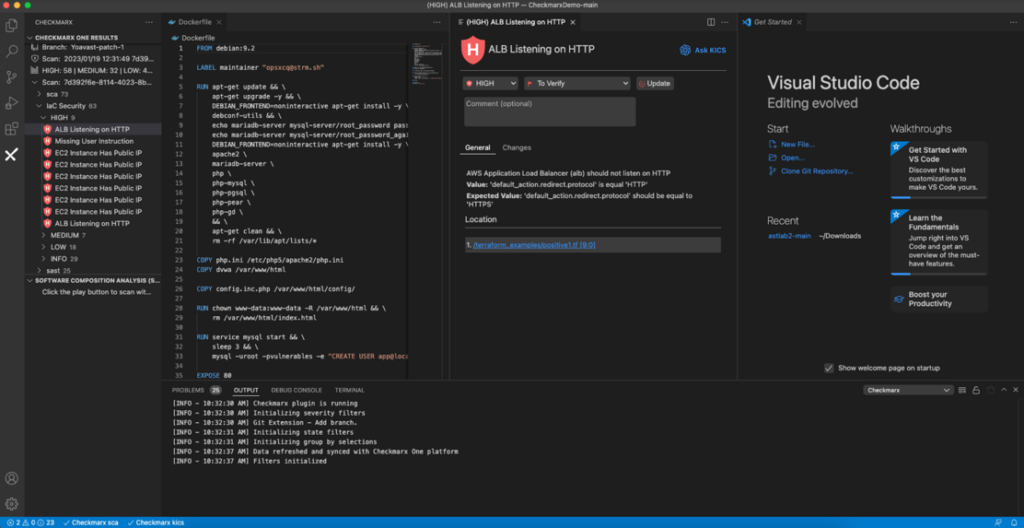
More than 2,400 queries are available, and all of them are fully customizable and adjustable heuristic rules that can be edited, extended and added to. The architecture was built for extensibility from the start, allowing support for new IaC solutions to be added through additional parsers. A VS Code plugin scans IaC while files are being edited, and the project is documented for quick installation and CI integration.
Key features include:
- 18+ supported IaC platforms: Analyzes Terraform, Kubernetes, Docker, CloudFormation, Ansible, Helm, ARM, Azure Blueprints, Pulumi, Crossplane, Knative, OpenAPI, AWS SAM, Google Deployment Manager and the Serverless Framework.
- Customizable query library: Ships more than 2,400 heuristic rules that can be edited, extended and added to for organization-specific checks.
- Open engine and queries: Both the scanning engine and the security queries are open source and available on GitHub for community contribution.
- Extensible parser architecture: Supports adding new IaC languages through plugins without changing the core engine.
- CI and editor integration: Installs and runs quickly in CI pipelines, with an auto-scanning extension that scans IaC inside Visual Studio Code while editing.
- Compliance and misconfiguration detection: Identifies security vulnerabilities, compliance issues and infrastructure misconfigurations across supported formats.
| Criterion | Solution Fit | Key Considerations |
| Multi-cloud and IaC format coverage | The broadest format list among the open source scanners in this guide at 18+ IaC platforms, covering all three major clouds plus Pulumi, Crossplane and Knative | Coverage is by IaC format; there is no cloud account connection to compare deployed resources |
| Developer workflow and CI/CD enforcement | Straightforward CI integration plus a VS Code auto-scanning extension for in-editor feedback | No hosted pipeline analysis or centralized enforcement layer; gating logic is built by the team |
| Policy customization and compliance mapping | More than 2,400 customizable queries, with a declarative format for writing organization-specific rules | Writing and tuning custom queries takes effort for teams unfamiliar with the query syntax |
| Remediation guidance and risk prioritization | Identifies the misconfiguration and the affected file for developer action | The kics remediate command applies simple one-line fixes for Terraform only, and there is no prioritization layer in the open source tool |
| Consolidation with the wider AppSec program | Can be adopted standalone or as the IaC engine within a broader Checkmarx AppSec program | On its own it does not cover secrets, dependencies or container scanning, and has no dashboard; Checkmarx One IaC Security is the commercial upgrade path |
Source: Checkmarx
7. Checkov
Best for: Teams wanting one scriptable CLI across many IaC frameworks
Strengths: Graph-based policies, plan file scanning, extensible policy interfaces
Things to consider: Central reporting and governance come from Cortex Cloud
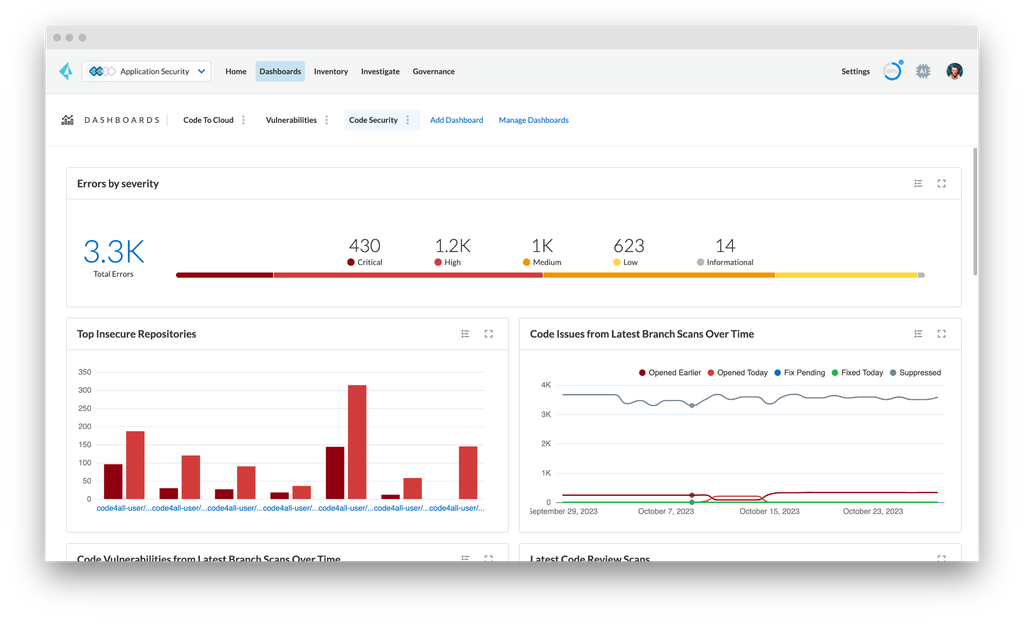
Checkov scans cloud infrastructure configurations to find misconfigurations before they are deployed. It uses a common command line interface to manage and analyze IaC scan results across platforms, which keeps one tool in place as teams move between frameworks.
Supported frameworks include Terraform, Terraform plan, CloudFormation, Kubernetes, ARM templates, Serverless, Helm and AWS CDK, with checks covering hundreds of resource types across all major cloud providers. Support for Terraform plan files means evaluation can happen against the resolved configuration rather than source templates alone.
Policy authoring works in two modes. Attribute-based policies check individual resource attributes at build time using a Python policy-as-code framework, while graph-based YAML policies analyze relationships between cloud resources. Extensible policy management interfaces allow custom policies, providers and suppression terms, and an extensible integration interface embeds Checkov into build processes and release systems. The project is maintained by the Prisma Cloud team.
Key features include:
- Common CLI across frameworks: Manages and analyzes IaC scan results through one command line interface for Terraform, CloudFormation, Kubernetes, Helm, ARM, Serverless and AWS CDK.
- Terraform plan scanning: Verifies changes in Terraform plan files as well as source configuration, covering hundreds of resource types across major cloud providers.
- Attribute-based policies: Scans cloud resources at build time for misconfigured attributes using a Python policy-as-code framework.
- Graph-based policies: Analyzes relationships between cloud resources using YAML policies rather than evaluating attributes in isolation.
- Extensible policy management: Supports custom policies, custom providers and suppression terms defined by the team.
- Live terminal execution: Executes, tests and modifies runner parameters in the context of a subject repository with CI/CD and version control integrations.
| Criterion | Solution Fit | Key Considerations |
| Multi-cloud and IaC format coverage | Terraform and Terraform plan, CloudFormation, Kubernetes, Helm, ARM, Serverless and AWS CDK across all major cloud providers | Ansible and Pulumi are outside the supported framework list |
| Developer workflow and CI/CD enforcement | CLI, CI/CD and version control integrations with an extensible integration interface for build and release systems | Mostly CLI-based, so centralized enforcement and audit capability require additional tooling |
| Policy customization and compliance mapping | Attribute-based Python policies plus graph-based YAML policies, with custom providers and suppression terms | Teams own the decisions about which checks matter and how suppressions are managed |
| Remediation guidance and risk prioritization | Reports the misconfigured attribute or resource relationship for the team to fix | Static analysis without cloud context can produce false positives; prioritization is left to the team |
| Consolidation with the wider AppSec program | Serves as the open source IaC engine underneath Cortex Cloud, where hosted reporting and code-to-cloud features are added | Dashboards, threat insights and team-level management sit in the commercial Cortex Cloud tier |
Source: Checkov

8. Trivy
Best for: Teams adding IaC and CVE scanning to a pipeline quickly
Strengths: Single binary, IaC and container scanning together, SARIF output
Things to consider: No UI or reporting layer, and noisy results without tuning
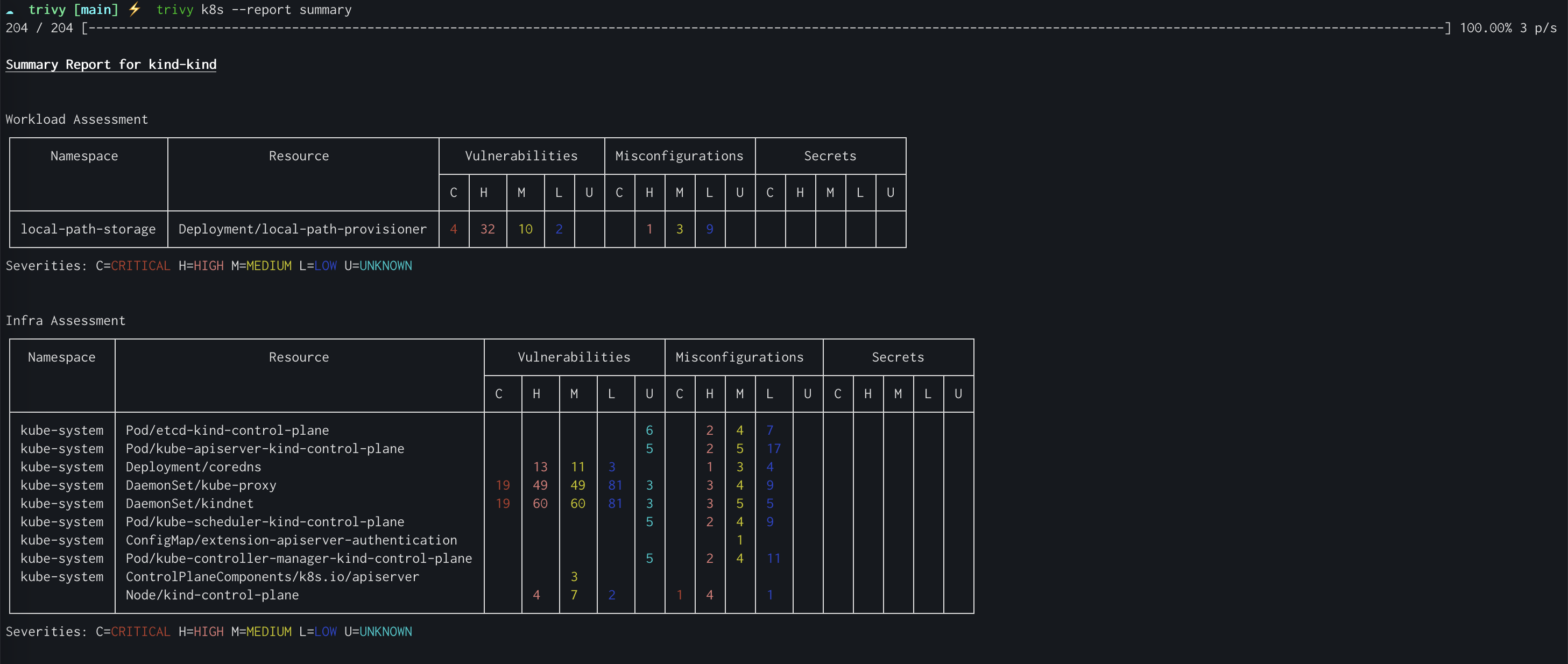
Trivy is an open source scanner from Aqua Security that finds vulnerabilities and misconfigurations across code repositories, binary artifacts, container images and Kubernetes clusters. For IaC work, it scans configuration files for misconfigurations alongside its CVE, secret and license checks, which keeps one tool in the pipeline instead of several.
Setup is a binary installation with no database dependencies or middleware. The vulnerability database is compact and auto-updating, scans complete in seconds, and critical CVEs can be filtered directly from the command line, which makes it straightforward to add to an existing CI job.
Output can be exported in JUnit XML, SARIF and AWS Security Finding Format, and results can be viewed in the GitHub UI through the GitHub Action. Trivy installs into a Kubernetes cluster with a Helm chart and scans images in Harbor through a plug-in adapter. It runs against private and public registries, local filesystems, tar archives, Podman and Git repositories, on Linux, macOS, FreeBSD and OpenBSD, with support for air-gapped environments and distroless images. It is the default scanner for GitLab container scanning, Artifact Hub and Harbor, and is a Red Hat certified scanner.
Key features include:
- Combined vulnerability and IaC scanning: Detects CVEs and IaC misconfigurations across code repositories, binary artifacts, container images and Kubernetes clusters from one binary.
- Fast, dependency-free setup: Installs as a single binary with no database dependencies or middleware, using a compact auto-updating database with scans that complete in seconds.
- Multiple output formats: Exports results as JUnit XML, SARIF and AWS Security Finding Format, and surfaces findings in the GitHub UI through the GitHub Action.
- Kubernetes and registry integration: Installs into a cluster with a Helm chart and scans images in Harbor through the plug-in adapter.
- Environment versatility: Scans private and public registries, local filesystems, tar archives, Podman and Git repositories across Linux, macOS, FreeBSD and OpenBSD, including air-gapped and distroless setups.
- Ecosystem adoption: Serves as the default scanner for GitLab container scanning, Artifact Hub and Harbor, and holds Red Hat certified scanner status.
| Criterion | Solution Fit | Key Considerations |
| Multi-cloud and IaC format coverage | Scans IaC configuration files including Terraform, CloudFormation and Kubernetes manifests, alongside container and dependency targets | Narrower IaC format list than KICS or Checkov, and users note it can be slow on very large workloads |
| Developer workflow and CI/CD enforcement | Simple binary install into CI, GitHub Action with results in the GitHub UI, and SARIF and JUnit output for pipeline reporting | Gating logic is built by the team; there is no pipeline monitoring or dynamic enfchorcement layer |
| Policy customization and compliance mapping | Connects to OPA and Rego for custom policy, with compliance checks such as NIST available | Centralized governance, dashboards and compliance mapping sit in Aqua’s commercial tier |
| Remediation guidance and risk prioritization | Reports findings with severity filtering available directly from the command line | Users report frequent false positives without tuning, and there is no guided remediation or fix PR capability |
| Consolidation with the wider AppSec program | Covers IaC, container images, dependencies and secrets in one scanner, and can be a step toward the Aqua platform | Users note the absence of a UI, report generation and SIEM integration, and scanning many container images at once is a practical limit |
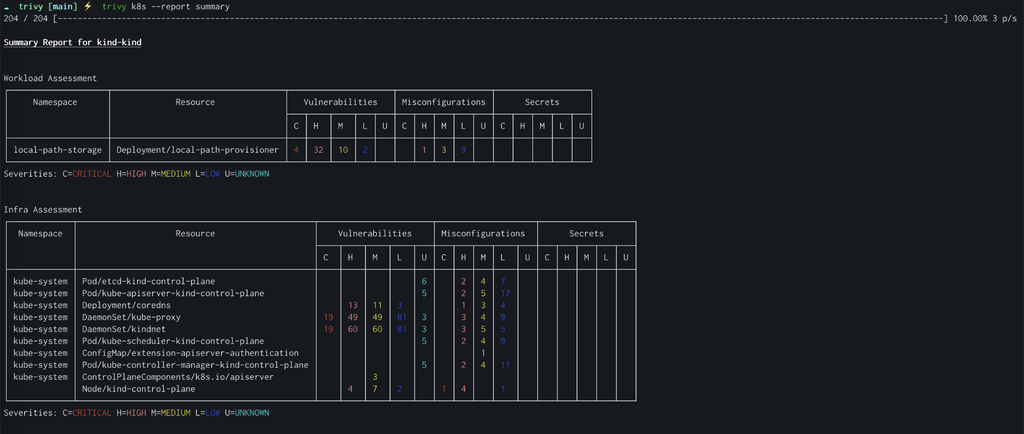
Source: Trivy
Conclusion
Selecting the right IaC security platform for multi-cloud estates requires evaluating multi-cloud and template format coverage, seamless developer workflow and CI/CD pipeline integration, robust policy customization with compliance mapping, and effective remediation guidance. A solution meeting these criteria helps teams identify and resolve misconfigurations early while maintaining security across diverse cloud environments.
As more infrastructure code is generated by AI coding assistants, platforms that check and fix IaC where it is written, and correlate those findings with the rest of the AppSec program, reduce risk without slowing delivery.