
Summary
SCA tools find vulnerabilities, license risks, and malicious packages in open-source dependencies. Best for unified AppSec: Checkmarx; developer workflows: Snyk; license depth: Black Duck; policy governance: Sonatype.
What Are Software Composition Analysis (SCA) Tools?
Software Composition Analysis (SCA) tools are automated security solutions that scan codebases to identify third-party libraries, track open-source dependencies, flag security vulnerabilities, and monitor license compliance. SCA helps prevent software supply chain attacks by mapping transitive dependencies and alerting teams to malicious packages or restrictive licenses before they reach production.
SCA tools help identify dependencies with known security vulnerabilities, packages that are outdated or no longer maintained, components that introduce operational or supply chain risk, and libraries with licenses that may conflict with an organization’s compliance requirements. Many tools also provide remediation guidance, such as recommending safer package versions, prioritizing fixes based on risk, and integrating with CI/CD pipelines to detect issues early in the software development lifecycle.
SCA Tools at a Glance
The table below summarizes the key differences between the Software Composition Analysis vendors tools covered in this article. We explore each of them in more detail in the sections that follow.
| Category | Solution | Best For | Key Strengths | Things to Consider |
| Application Security Platforms with SCA | Checkmarx SCA | Unifying open-source risk inside a broader AppSec platform | Exploitable-path reachability, malicious-package database, SBOMs | Learning curve and reporting flexibility |
| Application Security Platforms with SCA | Snyk Open Source | Developer-first dependency scanning in existing workflows | IDE/PR integration, risk-based prioritization, fix PRs | Cost at scale and occasional false positives |
| Application Security Platforms with SCA | Veracode SCA | Enterprises needing open-source risk plus compliance | Proprietary vuln database, reachability, auto-remediation | Pricing model and setup effort |
| Application Security Platforms with SCA | Black Duck SCA | Deep detection and license compliance at scale | Multi-factor scanning, KnowledgeBase, SBOMs, policy | Resource-heavy deployment and setup cost |
| Application Security Platforms with SCA | GitHub Advanced Security | GitHub-native teams wanting built-in scanning | Native PR workflow, Dependabot alerts/updates, SBOM export | GitHub-only scope; per-committer cost |
| Application Security Platforms with SCA | Semgrep Supply Chain | Reachability-based dependency scanning | Dataflow reachability, upgrade guidance, malware detection | Reachability limited to supported languages |
| Application Security Platforms with SCA | Endor Labs | Cutting alert noise through reachability | Full-stack reachability, upgrade impact, risk scoring | Pricing opacity and newer market presence |
| Dedicated SCA and Software Supply Chain Tools | Mend.io | Open-source risk plus license governance | Reachability, EPSS/CVSS 4.0, broad language coverage | Support responsiveness and reporting |
| Dedicated SCA and Software Supply Chain Tools | Sonatype Lifecycle | Policy-driven open-source governance | Proprietary data, Golden PRs, policy engine, SBOMs | Reporting/UI polish and licensing clarity |
| Dedicated SCA and Software Supply Chain Tools | JFrog Xray | Teams in the JFrog/Artifactory ecosystem | Artifactory-native scanning, SBOMs, operational risk policies | Requires Artifactory; learning curve |
| Dedicated SCA and Software Supply Chain Tools | FOSSA | License compliance and SBOM management | License depth, attribution reports, SBOMs, reachability | Vulnerability depth and reachability maturity |
| Open-Source SCA Tools | OWASP Dependency-Check | A free, OWASP-backed dependency scanner | Free and open source, build-tool plugins, CVE detection | CPE matching noise; no reachability |
| Open-Source SCA Tools | Trivy | Fast, all-in-one open-source scanning | Speed, broad coverage, SBOMs, CI/CD integrations | Container-centric; no reachability |
| Open-Source SCA Tools | Grype | Lightweight, SBOM-driven vulnerability scanning | SBOM-native, fast, broad vulnerability sources | Vuln-scan only; no policy in open-source tier |
Why SCA Tools Matter
Modern applications depend heavily on open-source software, making third-party components a major source of security, compliance, and operational risk.
Software Composition Analysis software provides continuous visibility into these dependencies, helping organizations identify vulnerabilities, manage software supply chain risks, satisfy compliance requirements, and integrate security into everyday development workflows:
- Reduce hidden risks from open-source dependencies: SCA tools identify direct and transitive dependencies, exposing vulnerable, outdated, or abandoned components that developers may not know are included in an application.
- Protect the software supply chain: Continuous monitoring detects newly disclosed vulnerabilities and potentially compromised packages, enabling teams to remediate risks before they are exploited.
- Improve transparency and compliance: SCA tools automatically maintain an inventory of open-source components, licenses, and vulnerabilities, supporting audits, regulatory requirements, and Software Bill of Materials (SBOM) initiatives.
- Embed security into developer workflows: By integrating with IDEs, source code repositories, and CI/CD pipelines, SCA tools provide early feedback, remediation guidance, and policy enforcement without disrupting development.
How SCA Tools Work
Let’s review the key components that power SCA platforms.
Dependency Discovery
Dependency discovery is the foundational step in SCA. The tool scans project files, such as package manifests, lock files, and source code, to identify all open-source and third-party components. This includes both direct dependencies (those explicitly declared by developers) and transitive dependencies (required by other libraries). Accurate discovery requires support for multiple programming languages and build systems to ensure comprehensive coverage.
The discovery process often extends to container images, infrastructure-as-code templates, and other artifacts where dependencies can reside. By mapping the complete dependency tree, SCA tools provide a clear picture of the external code running within an application. This inventory forms the basis for vulnerability analysis, license checks, and compliance reporting, making thorough discovery a critical capability for any SCA solution.
Vulnerability Matching
Once dependencies are discovered, SCA tools cross-reference each component against curated vulnerability databases. These databases include public sources like the National Vulnerability Database (NVD), as well as proprietary feeds maintained by security vendors. The tool checks for known vulnerabilities associated with each version of a dependency, flagging issues according to severity and exploitability.
Vulnerability matching is an ongoing process, as new issues are disclosed regularly. Many SCA tools support continuous monitoring, alerting teams when vulnerabilities are discovered after code has been deployed. This enables proactive risk management, allowing organizations to patch or upgrade dependencies before attackers can exploit exposed weaknesses. Effective matching relies on accurate component identification and up-to-date vulnerability intelligence.
License Compliance Analysis
License compliance is a key function of SCA tools, as improper use of open-source components can lead to legal and financial risks. SCA solutions scan dependencies to identify their licenses and compare them against organizational policies. They flag conflicts, such as using GPL-licensed code in proprietary applications, or other restrictions that may require source code disclosure or attribution.
Automated license analysis streamlines compliance by providing clear, actionable reports on all open-source licenses present in a project. These reports help organizations understand their obligations, avoid inadvertent violations, and demonstrate compliance during audits. Some SCA tools also provide remediation guidance, such as suggesting alternative packages with more permissive licenses or recommending steps to resolve conflicts, supporting continuous compliance as projects evolve.
SBOM Generation and Analysis
Software Bill of Materials (SBOM) generation is an increasingly important feature of SCA tools. An SBOM is a detailed inventory of all components, versions, and dependencies in a software application. SCA tools automate the creation of SBOMs, capturing granular information needed for security, compliance, and supply chain transparency. This is essential for meeting regulatory requirements and responding to software supply chain incidents.
Beyond generation, SCA tools analyze SBOMs to identify vulnerabilities, license risks, and outdated components. They can ingest SBOMs from third-party vendors or partners, enabling organizations to assess the security of external software they rely on. By automating SBOM management, SCA tools help organizations maintain an up-to-date view of their software ecosystem and respond quickly to emerging threats or compliance demands.
Malicious Package Awareness and Policy Controls
Traditional SCA focuses on known vulnerabilities in legitimate open-source packages. However, software supply chain attacks increasingly involve malicious packages that are intentionally published to public repositories or compromised versions of trusted libraries. These threats may contain credential stealers, backdoors, cryptocurrency miners, or other malicious code, and they often have no CVE when first discovered. As a result, vulnerability matching alone cannot detect every supply chain risk.
Modern SCA tools address this gap by incorporating malicious package detection and software supply chain intelligence. They use threat intelligence, package reputation, publisher verification, behavioral analysis, and indicators such as typosquatting, suspicious release patterns, or dependency confusion to identify risky packages before they are adopted. This helps teams prevent malicious components from entering development environments and production systems.
Policy controls complement these capabilities by allowing organizations to define and automatically enforce security and compliance requirements. For example, policies can block builds that include critical vulnerabilities, unapproved licenses, unmaintained packages, or dependencies from untrusted registries. Integrating these checks into CI/CD pipelines ensures that security and governance requirements are applied consistently throughout the software development lifecycle, reducing manual review and preventing high-risk components from reaching production.
SCA Tools Feature Checklist: Key Capabilities to Look for
Software Composition Analysis solutions vary significantly in capability. While most can identify open-source dependencies and known vulnerabilities, the most effective solutions provide broader software supply chain visibility, automate remediation, and integrate seamlessly into development workflows.
The following table summarizes the essential features you should look for in a modern SCA solution and why they matter.
| Feature | How It Works | Why You Need It |
| Scan Accuracy | Identifies open-source components and their exact versions across source code, binaries, containers, and other artifacts while minimizing false positives and false negatives. | Accurate identification reduces wasted remediation effort and ensures vulnerable or non-compliant components are not overlooked. |
| Dependency Coverage | Discovers both direct and transitive dependencies across multiple programming languages, package managers, build systems, and deployment artifacts. | Hidden transitive dependencies often introduce security and compliance risks that developers are unaware of. |
| Vulnerability Prioritization | Ranks vulnerabilities using contextual factors such as exploitability, reachability, available fixes, and business risk instead of relying only on CVSS scores. | Helps teams focus on vulnerabilities that present the greatest real-world risk instead of fixing every issue equally. |
| Remediation Guidance | Recommends secure package upgrades, patches, or alternative dependencies, and may automate fixes through pull requests. | Reduces the time developers spend researching fixes and speeds remediation. |
| CI/CD and Developer Integration | Integrates with IDEs, source control systems, pull requests, and CI/CD pipelines to scan dependencies throughout development. | Detects issues before deployment, allowing vulnerabilities to be fixed earlier when remediation is faster and less costly. |
| License Compliance Management | Detects open-source licenses, identifies policy violations, and reports licensing obligations across dependencies. | Helps organizations avoid legal and compliance risks associated with incompatible or restrictive licenses. |
| SBOM Support | Generates, imports, and analyzes Software Bills of Materials (SBOMs) using standards such as SPDX and CycloneDX. | Improves software supply chain transparency, supports regulatory requirements, and simplifies incident response and audits. |
| Malicious Package Detection | Uses threat intelligence, package reputation, publisher verification, and supply chain risk analysis to identify malicious or suspicious packages before they are adopted. | Protects against software supply chain attacks that exploit compromised or intentionally malicious packages, even when no CVE exists. |
| Policy Automation | Applies security, compliance, and governance policies automatically by blocking or flagging dependencies that violate organizational requirements. | Enforces consistent security standards and prevents high-risk components from entering production. |
| Reporting and Dashboards | Provides dashboards and reports that track vulnerabilities, license compliance, policy violations, and remediation progress across projects and teams. | Gives development, security, and compliance teams visibility into software supply chain risk and helps measure remediation efforts over time. |
Best SCA Tools
How we selected these tools: We shortlisted software composition analysis tools based on their ability to discover open-source and third-party dependencies, match them against vulnerability and license databases, prioritize real risk, generate and manage SBOMs, and integrate into developer workflows and CI/CD pipelines.
Application Security Platforms with SCA
Application security platforms include SCA as one capability within a broader suite of application security testing tools, often alongside SAST, DAST, API security, secrets detection, and infrastructure scanning. They are designed for organizations that want a centralized platform to manage application security across the software development lifecycle.
1. Checkmarx SCA Tool

Best for: Unifying open-source risk inside a broader AppSec platform.
Strengths: Exploitable-path reachability, malicious-package database, SBOMs.
Things to consider: Learning curve and reporting flexibility.
Checkmarx SCA is delivered as part of the Checkmarx One application security platform, which also includes SAST, DAST, and infrastructure-as-code scanning. It is built to identify, prioritize, and remediate open-source risk across the software development lifecycle, covering known vulnerabilities, malicious code, and license issues. The tool scans direct and transitive dependencies to unlimited depth, including binary and private packages held in on-prem and private JFrog Artifactory registries.
Key features include:
- Exploitable path analysis: Checkmarx applies an advanced form of reachability analysis that determines which vulnerable classes or functions inside third-party libraries can be called by the application at runtime.
- Malicious package protection: The tool draws on a proprietary database of more than 420,000 open-source libraries known to contain malicious code.
- Transitive and private dependency scanning: Discovery extends across directly and transitively referenced open-source and private packages to unlimited depth.
- Policy rules with automated actions: Policies can be configured around package characteristics, CVSS severity (up to v4.0), reachability, malicious code detection, and licensing.
- AI-guided remediation: Remediation guidance specifies the expected effort and impact of each fix, and the tool can recommend more secure alternative packages using AI.
- SBOM generation and license management: Checkmarx generates, ingests, shares, and manages software bills of materials in industry-standard formats.
Limitations (as reported by users on Gartner Peer Insights):
- Initial learning curve: Some reviewers note the tool is not easy to work with during the first uses and requires a short ramp-up period before teams are comfortable with it.
- Reporting flexibility: Several users would like more ability to slice and filter report data, and note that license compliance reports can be hard for non-technical readers to interpret.
-
Large-scale performance: Scan times can run longer than some comparable tools, with occasional performance concerns raised on large-scale projects.
Checkmarx Software Composition Analysis
Review and Remediate Within your IDE
The Checkmarx extension makes it simple to both review results and kick off new scans. Realtime scans are also available and there is even an option for automatic remediation for threats that have been found.
See it in a Personalized Demo2. Snyk Open Source
Best for: Developer-first dependency scanning in existing workflows.
Strengths: IDE and PR integration, risk-based prioritization, fix PRs.
Things to consider: Cost at scale and occasional false positives.
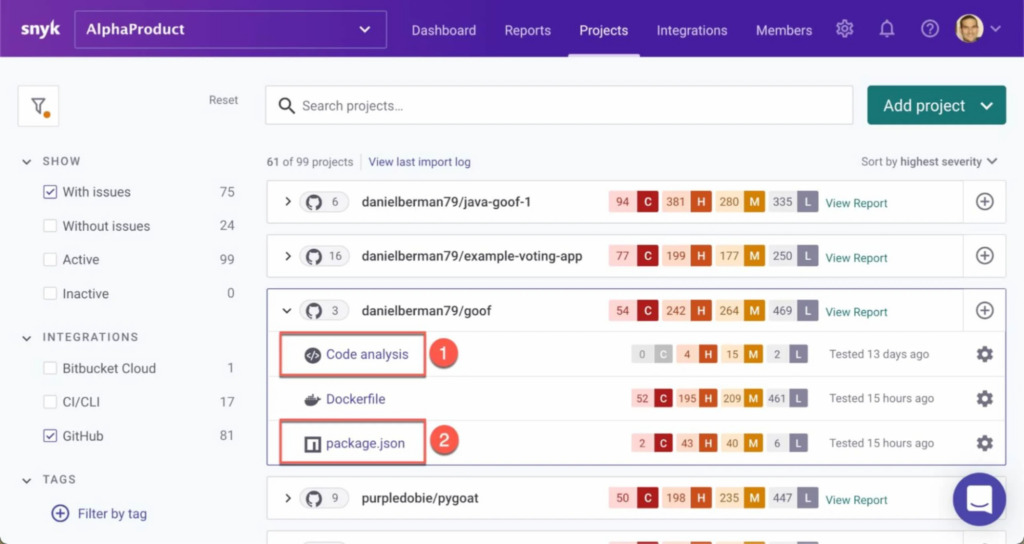
Snyk Open Source is a developer-first software composition analysis tool that helps teams find, prioritize, and fix vulnerabilities and license issues in open-source dependencies. It is designed to operate at every stage of development: surfacing vulnerable dependencies in the IDE and CLI as code is written, scanning pull requests before they merge, adding guardrails to CI/CD pipelines, and testing production environments for existing exposure.
Key features include:
- Risk-based prioritization: Snyk assigns a Risk Score that combines vulnerability severity with more than a dozen contextual factors, including reachability, exploit maturity, and EPSS and CVSS scores.
- Automated fix pull requests: The tool generates one-click pull requests pre-populated with the required upgrades and patches.
- Continuous monitoring: Imported projects are monitored automatically for newly disclosed vulnerabilities, so issues discovered after code is deployed are surfaced without a fresh manual scan.
- Developer workflow integration: Snyk works across IDEs, source code managers, and CI/CD pipelines, providing feedback within the tools developers use daily.
- Compliance and reporting: Real-time and historical reporting lets teams evaluate compliance with regulatory and internal security policies, packaged for security engineers and GRC teams.
Limitations (as reported by users on G2):
- False positives over time: Some reviewers report that after a project has been scanned for a while, false positives begin to surface, adding triage effort.
- Cost at scale: Users note that pricing scales per developer and across modules, and that the cost of accessing the full platform can become high.
- Interface consistency: Reviewers mention that the UI could be improved and that some acquired capabilities sit in a separate interface from the core product.
- Pipeline scan time: Scans can add several minutes on medium and larger repositories, which can slow pipelines.
3. Veracode SCA

Best for: Enterprises needing open-source risk plus compliance reporting.
Strengths: Proprietary vulnerability database, reachability, auto-remediation.
Things to consider: Pricing model complexity and setup effort.
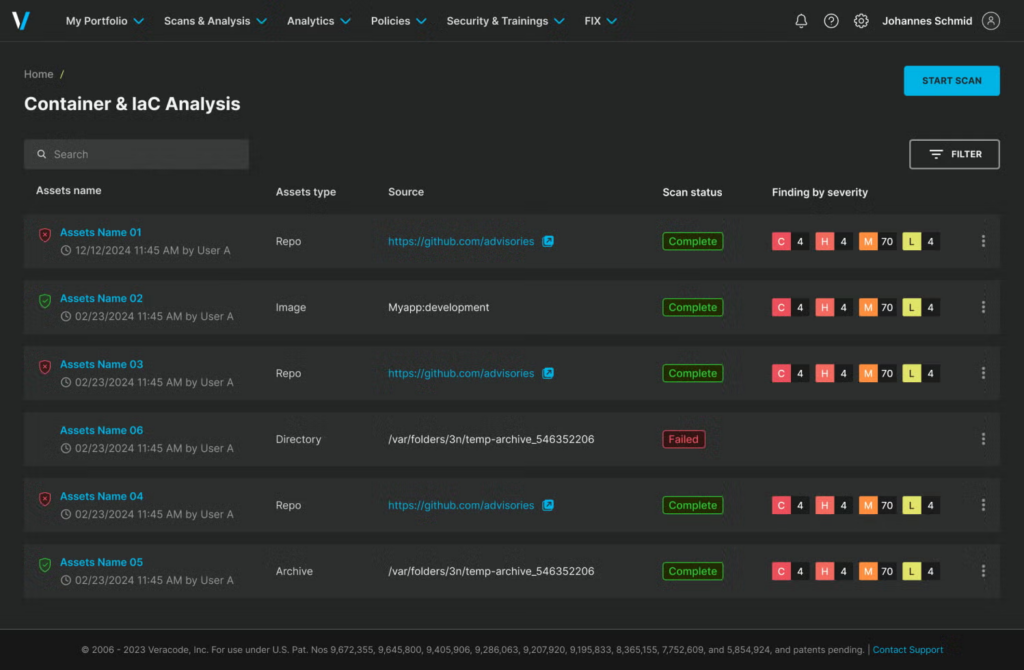
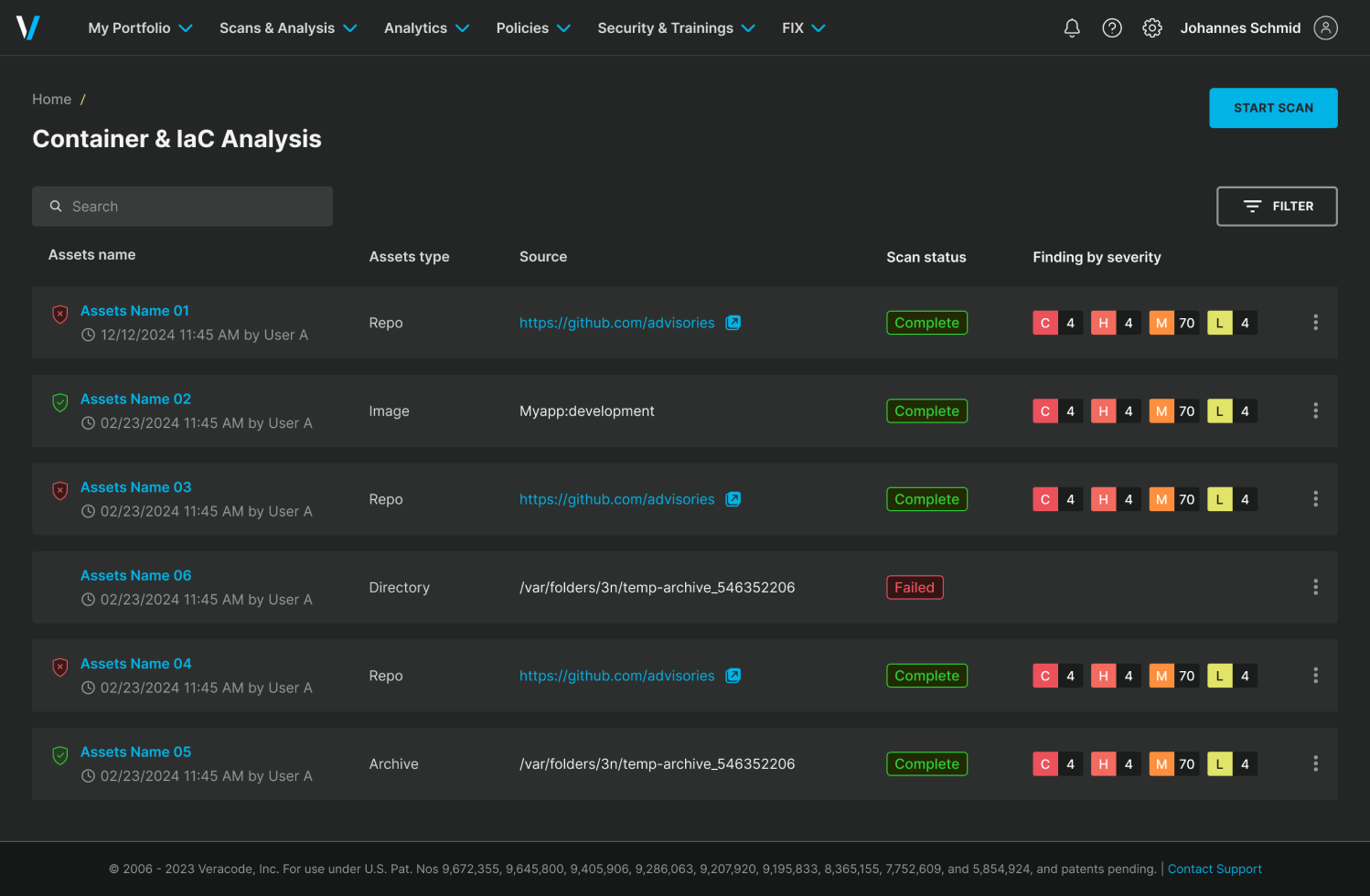
Veracode Software Composition Analysis identifies and acts on open-source risks as part of the broader Veracode application security platform. It is designed to let developers set up and scan in development environments quickly, working across IDEs, repositories, and CI/CD workflows with support for both cloud-native and traditional languages. The tool combines vulnerability and license detection with automated remediation, drawing on a proprietary vulnerability database that can surface issues before they are published to public sources.
Key features include:
- Malicious package detection: Veracode uses machine learning and threat intelligence to detect and block malicious packages, which is positioned as a defense against supply chain attacks before they take hold.
- Vulnerability method analysis: This reachability capability pinpoints where an application’s code interacts with risky functions in libraries and components.
- Automated remediation: The tool offers context-aware auto-pull requests and targeted “best-fix” actions that apply a recommended change with guidance on its impact on functionality. e.
- Proprietary vulnerability database: Backed by more than six years of machine learning, the database is used to identify new vulnerabilities and license issues, including some before they appear in public feeds.
- SBOM, dependency graphs, and policy: Veracode generates and scans SBOMs in CycloneDX and SPDX formats, builds dependency graphs that distinguish direct and indirect vulnerabilities, and supports customizable policy gates.
Limitations (as reported by users on G2):
- Pricing model: Reviewers note that the per-application pricing model can be unfavorable for microservices architectures and that renewal costs can rise year over year.
- Add-on licensing: The automated remediation add-on is licensed separately on top of base scanning, which adds to cost complexity.
- Setup and support: Some users report a steeper setup and configuration curve, and slower support compared with developer-first tools.
- Detection gaps: A small number of reviewers report cases where expected vulnerabilities were not detected.
Source: Veracode
4. Black Duck SCA

Best for: Enterprises needing deep detection and license compliance.
Strengths: Multi-factor scanning, KnowledgeBase, SBOMs, policy.
Things to consider: Resource-heavy deployment and setup cost.
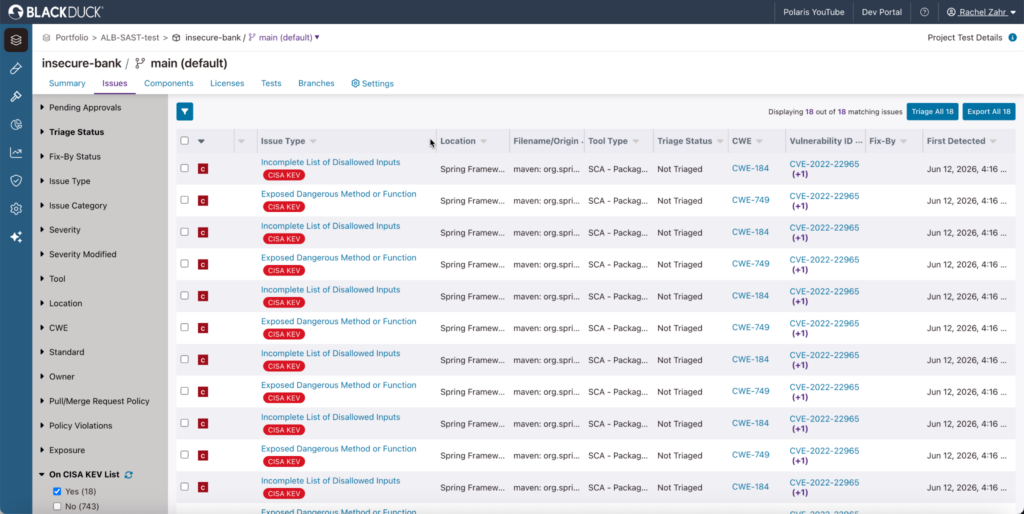
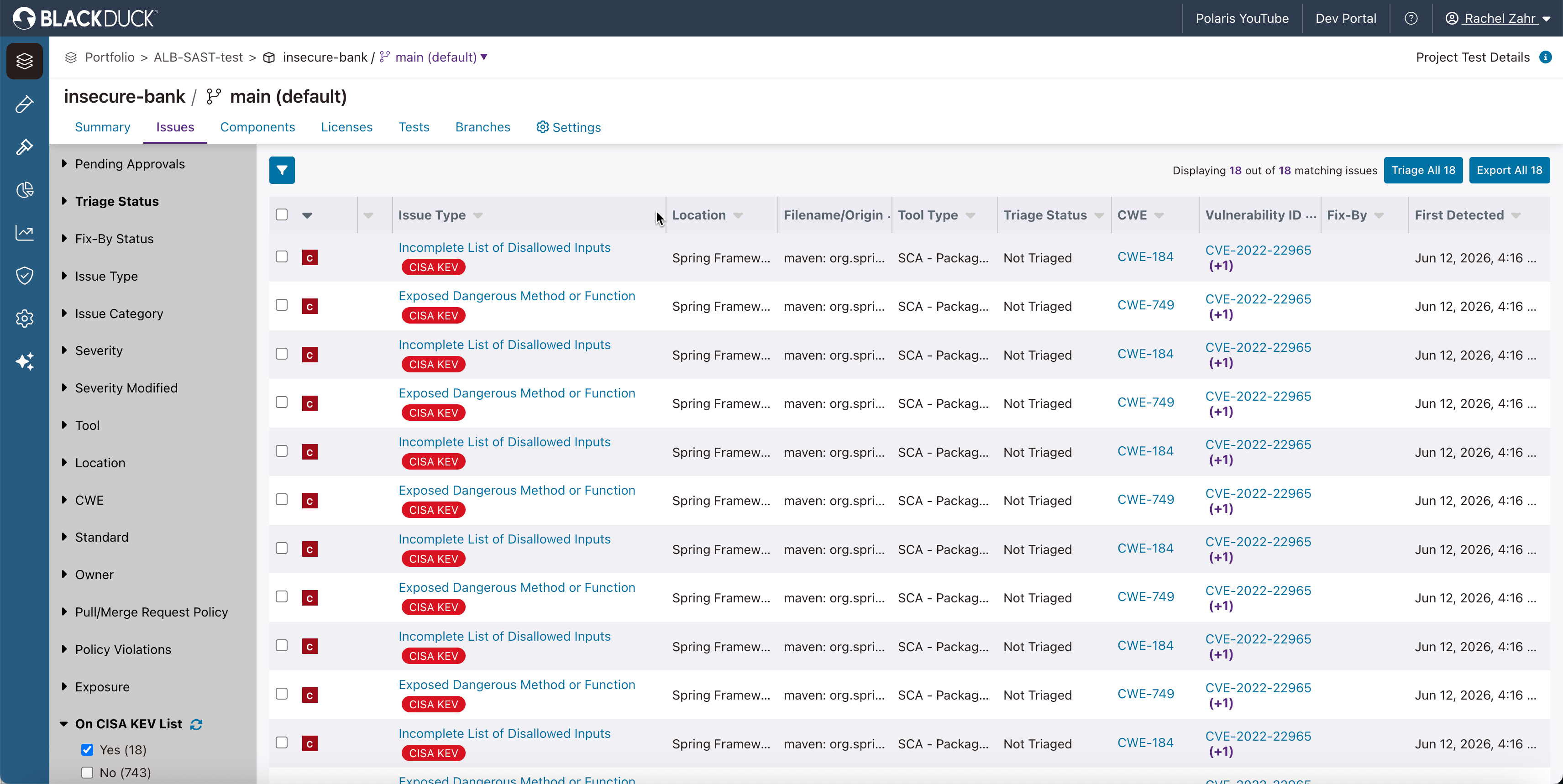
Black Duck SCA helps teams manage the security, quality, and license compliance risks in open-source and third-party code. It is distinctive for combining several scan technologies – dependency analysis, binary and signature scanning, and snippet detection — to build an accurate inventory and identify components that package-manager scanning alone would miss, including undeclared dependencies, languages without package managers such as C and C++, and partial code copied into a codebase.
Key features include:
- Multi-factor scanning: Black Duck combines dependency, binary, and snippet or signature analysis to detect open-source components across source code, container images, binaries, and firmware.
- KnowledgeBase and Security Advisories: The KnowledgeBase contains insight into millions of open-source components and more than 2,750 licenses with full text and encoded obligations. Black Duck Security Advisories provide vulnerability notifications and remediation insight earlier than public feeds.
- SBOM management: The tool generates SBOMs in SPDX and CycloneDX formats, imports SBOMs to map dependencies to known components, and integrates with SDLC tools for automated SBOM generation and risk monitoring.
- Policy management and enforcement: Teams can define open-source security and license policies and enforce them automatically across each stage of development, blocking high-risk components before they reach production.
- AI model and container coverage: Black Duck can discover open-source and third-party AI models integrated into projects, identifying their origin, license obligations, and whether they have been significantly retrained.
Limitations (as reported by users on G2):
- Deployment resources: Reviewers note that on-premises deployment requires significant infrastructure resources.
- Scan speed: Some users describe scans as slow.
- Setup cost: The initial setup can involve substantial cost and effort.
- Usage governance: Team-level usage and tenancy reporting could be improved for organizations with many internal teams.
Source: Black Duck
Dedicated SCA and Software Supply Chain Tools
Dedicated SCA tools focus specifically on securing open-source dependencies and the software supply chain. In addition to vulnerability and license scanning, they often provide advanced capabilities such as malicious package detection, SBOM generation and analysis, dependency health insights, supply chain risk monitoring, policy enforcement, and automated remediation. These platforms are best suited for organizations that rely heavily on open-source software or require mature software supply chain security capabilities.
5. Mend.io

Best for: Open-source risk management with license governance.
Strengths: Reachability, EPSS and CVSS 4.0, broad language coverage.
Things to consider: Support responsiveness and reporting.
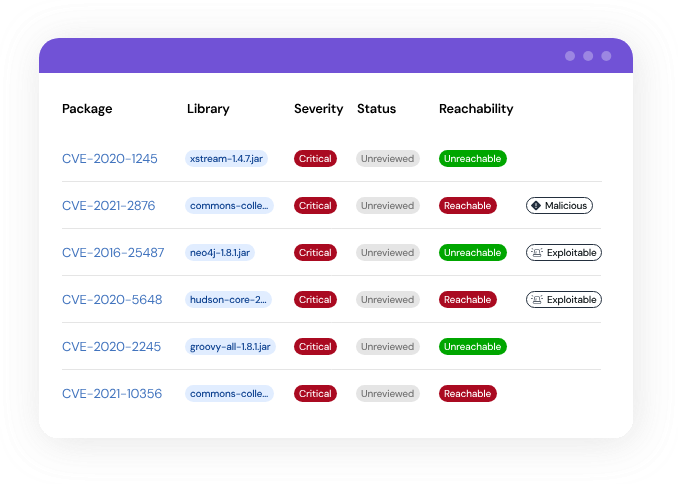
Mend SCA, part of the Mend AppSec platform, identifies and helps remediate security and license risks in the open-source components an application depends on. It uses reachability analysis to determine whether code actually invokes a vulnerable function in a flagged package, deprioritizing findings that are not reachable so teams focus on what is exploitable. Prioritization combines CVSS 4.0 severity scoring with EPSS exploitability data, and the tool generates and ingests SBOMs and applies VEX data to communicate component exploitability.
Key features include:
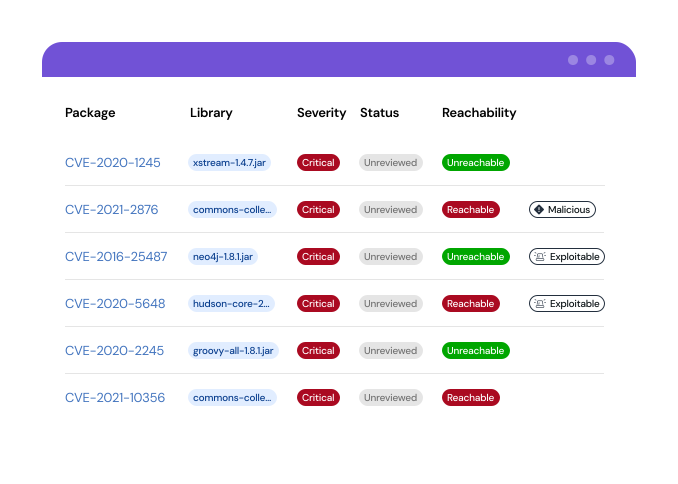
- Reachability analysis: Mend SCA traces the call graph from an application’s code through direct and transitive dependencies to determine whether a vulnerable function is actually invoked. Findings that are not reachable are deprioritized.
- Risk-based prioritization: The tool combines CVSS 4.0 severity scoring with EPSS data, which estimates the likelihood that a vulnerability will be exploited.
- License compliance: Mend SCA detects the licenses attached to direct and transitive dependencies, including copyleft, permissive, and dual-licensed packages.
- SBOM and malicious package detection: The tool produces SBOMs in SPDX and CycloneDX formats, ingests third-party SBOMs, and applies VEX data.
- Broad coverage and integration: Mend SCA supports more than 200 languages and frameworks across major ecosystems, plus container layers, infrastructure as code, and AI frameworks.
Limitations (as reported by users on Gartner Peer Insights):
- False positives: Reviewers report that false positives can appear on large codebases, and that a license is occasionally mapped incorrectly.
- Support responsiveness: Some users describe customer support responsiveness as inconsistent.
- Reporting and customization: Reviewers note difficulty creating custom reports tailored to specific scenarios.
- Interface and documentation: Some feedback describes the interface as dated and notes that documentation could be more current.
Source: Mend
6. Sonatype Lifecycle

Best for: Enterprises wanting policy-driven open-source governance.
Strengths: Proprietary data, Golden PRs, policy engine, SBOMs.
Things to consider: Reporting and UI polish, licensing clarity.
Sonatype Lifecycle is a software composition analysis tool focused on automating dependency management and controlling open-source risk across the development lifecycle. It is built on Sonatype’s proprietary intelligence, which collects data continuously from hundreds of sources using four analysis types (open-source repositories, automated vulnerability detection, behavioral analysis, and consumption analysis) to go beyond public NVD and Mitre data.
Key features include:
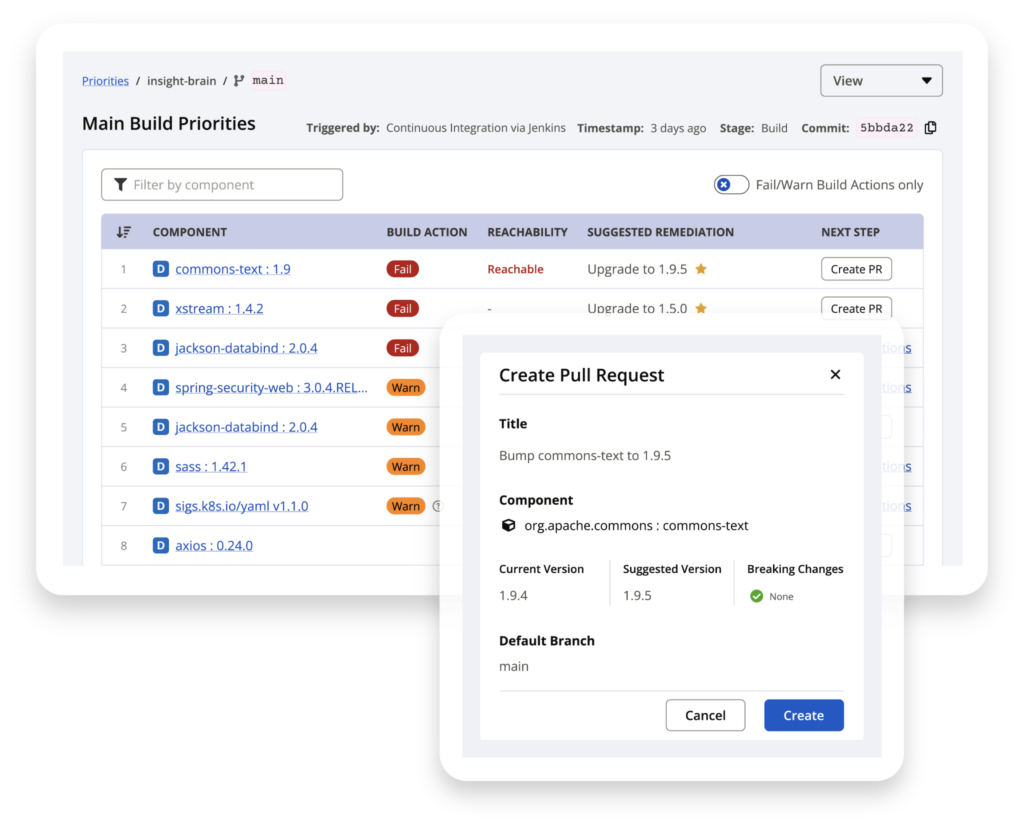
- Golden Pull Requests: Sonatype Lifecycle’s assisted remediation generates automated pull requests intended to avoid build breaks while eliminating direct and transitive risk.
- Flexible policy engine: The tool offers 18 default policies and more than 30 customizable constraints that can be applied by application type, legal requirement, or risk profile.
- Contextual risk prioritization: Rather than relying on CVSS scores alone, the tool uses reachability, breaking-change data, and upgrade availability to prioritize which issues to fix first.
- SBOM and visibility: Sonatype Lifecycle generates or imports SBOMs in any format and works with Sonatype SBOM Manager to manage and share them at scale.
- Exemption management and deployment flexibility: Built-in waiver management lets teams temporarily accept risk, automatically applying waivers for low-risk violations with no upgrade path or unreachable components, tracked in a dashboard.
Limitations (as reported by users on G2):
- Reporting and interface: Reviewers note that report interfaces and dashboards could be more flexible, and that the interface could feel more modern.
- Administration: Some users mention constraints in role and administration management.
- Pricing and licensing: The tool is considered expensive by some reviewers, and licensing clarity could be improved.
- Language coverage and integration: A few users would like expanded language support and more integration flexibility.
Source: Sonatype

7. JFrog Xray

Best for: Teams already in the JFrog and Artifactory ecosystem.
Strengths: Artifactory-native scanning, SBOMs, operational risk policies.
Things to consider: Requires Artifactory; platform learning curve.
JFrog Xray is an enterprise software composition analysis tool that identifies, prioritizes, and remediates security vulnerabilities and license compliance issues in open-source and third-party components. It is a core component of the JFrog Platform and integrates natively with JFrog Artifactory, sharing metadata so that scanning of repositories, build packages, and container images can run continuously throughout the development cycle. Xray performs deep recursive scans of all layers of a container image and captures build information.
Key features include:
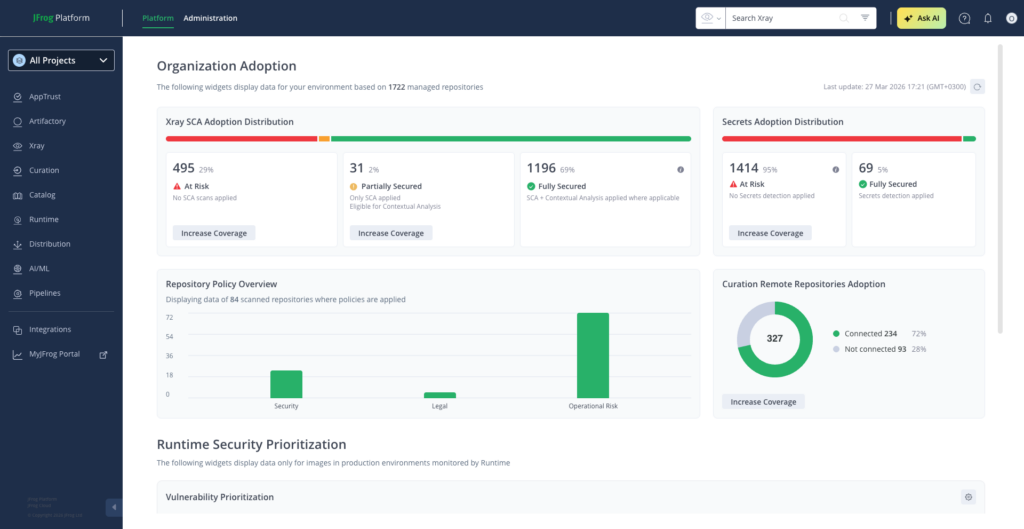
- Continuous artifact and container scanning: Xray scans repositories, build packages, and container images as they are uploaded to Artifactory, performing deep recursive analysis of every image layer.
- License compliance and SBOMs: The tool provides visibility into direct and indirect dependencies with automatically generated SBOMs, detects open-source licensing issues, and lets teams create policies that enforce regulations and generate compliance reports.
- Operational risk management: Beyond known vulnerabilities, Xray can evaluate operational risk and block packages based on factors such as version age, number of contributors, maintenance cadence, number of commits, and end-of-life status.
- CVE research and malicious package detection: Xray draws on the JFrog Security Research team for enriched CVE findings and contextual analysis, and detects malicious packages using a database of more than four million open-source packages.
- Developer and pipeline integration: Xray offers IDE plugins for VS Code, IntelliJ, Visual Studio, and PyCharm, a CLI, and CI/CD integration so scans can run as a pipeline step.
Limitations (as reported by users on PeerSpot):
- Ecosystem dependency: Xray requires a paid JFrog Platform and Artifactory subscription and is not offered as a standalone or free-tier product.
- Learning curve: Reviewers note that the breadth of the platform creates an initial learning curve for new users.
- Reporting: Some users report that custom reporting is limited and does not always allow the specific data points they need.
- CVE noise: Without tuning of contextual analysis, the volume of CVE findings can be high relative to what is exploitable.
Source: JFrog
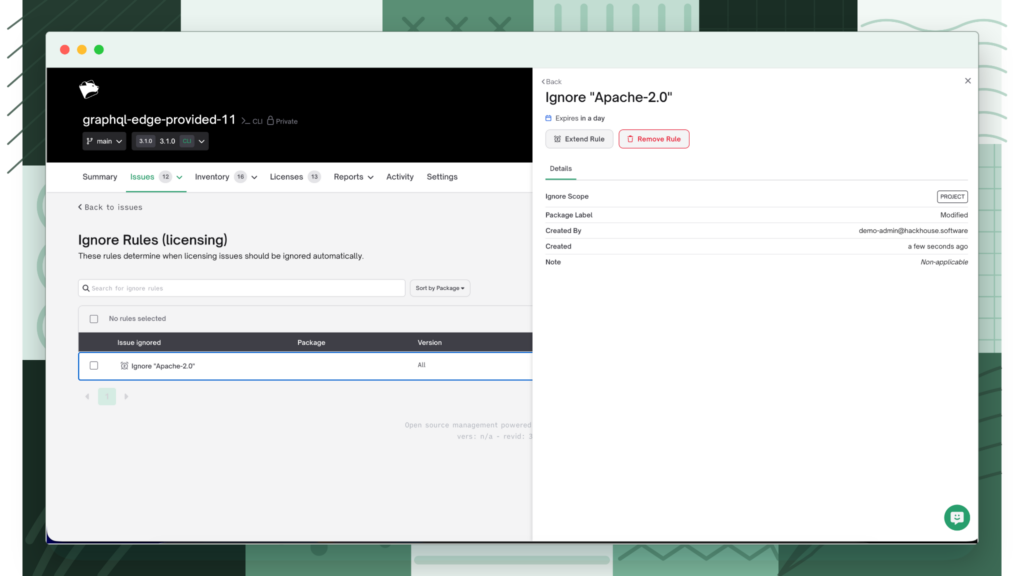
8. FOSSA

Best for: Teams prioritizing license compliance and SBOM management.
Strengths: License depth, attribution reports, SBOMs, reachability.
Things to consider: Vulnerability depth and reachability maturity.
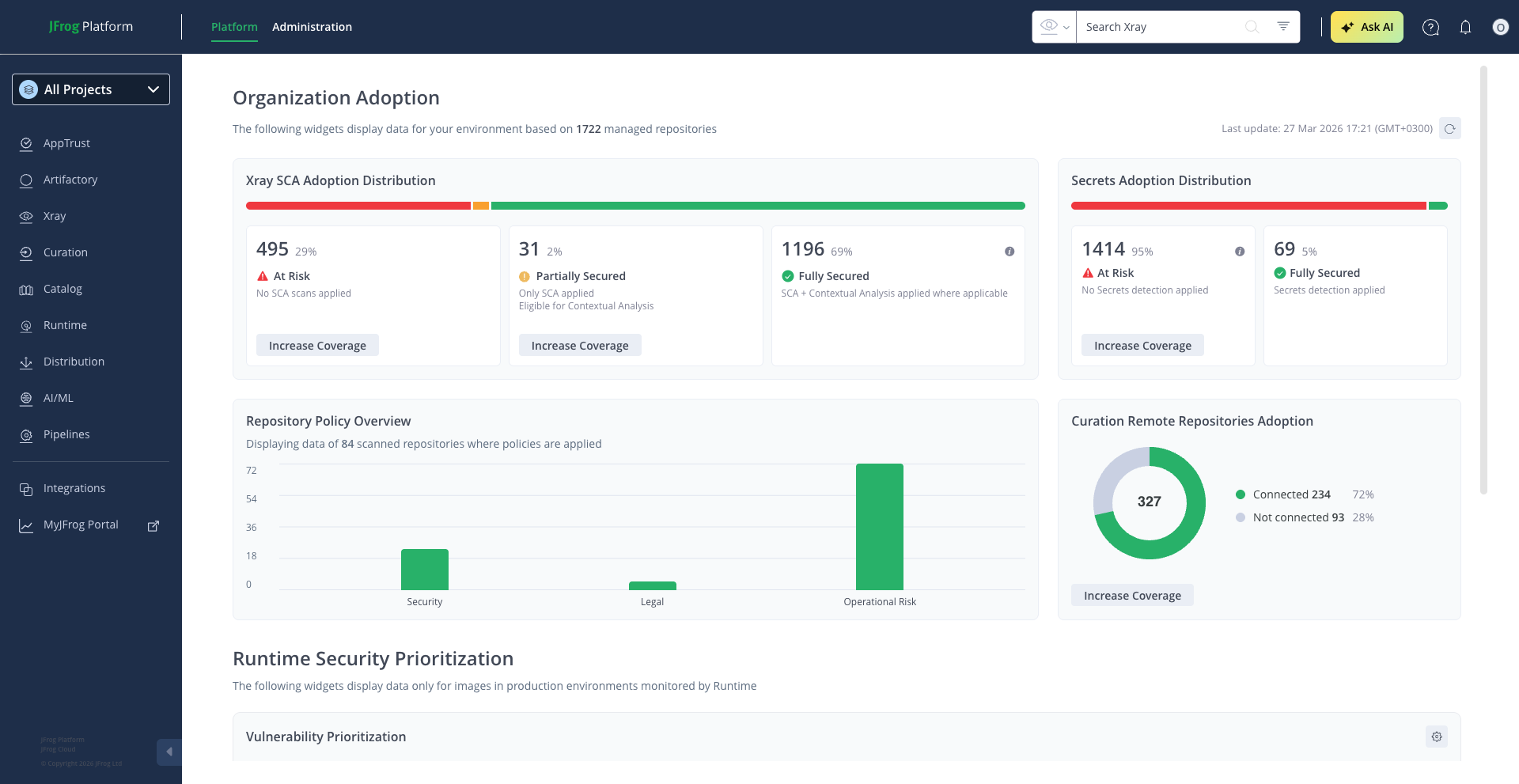
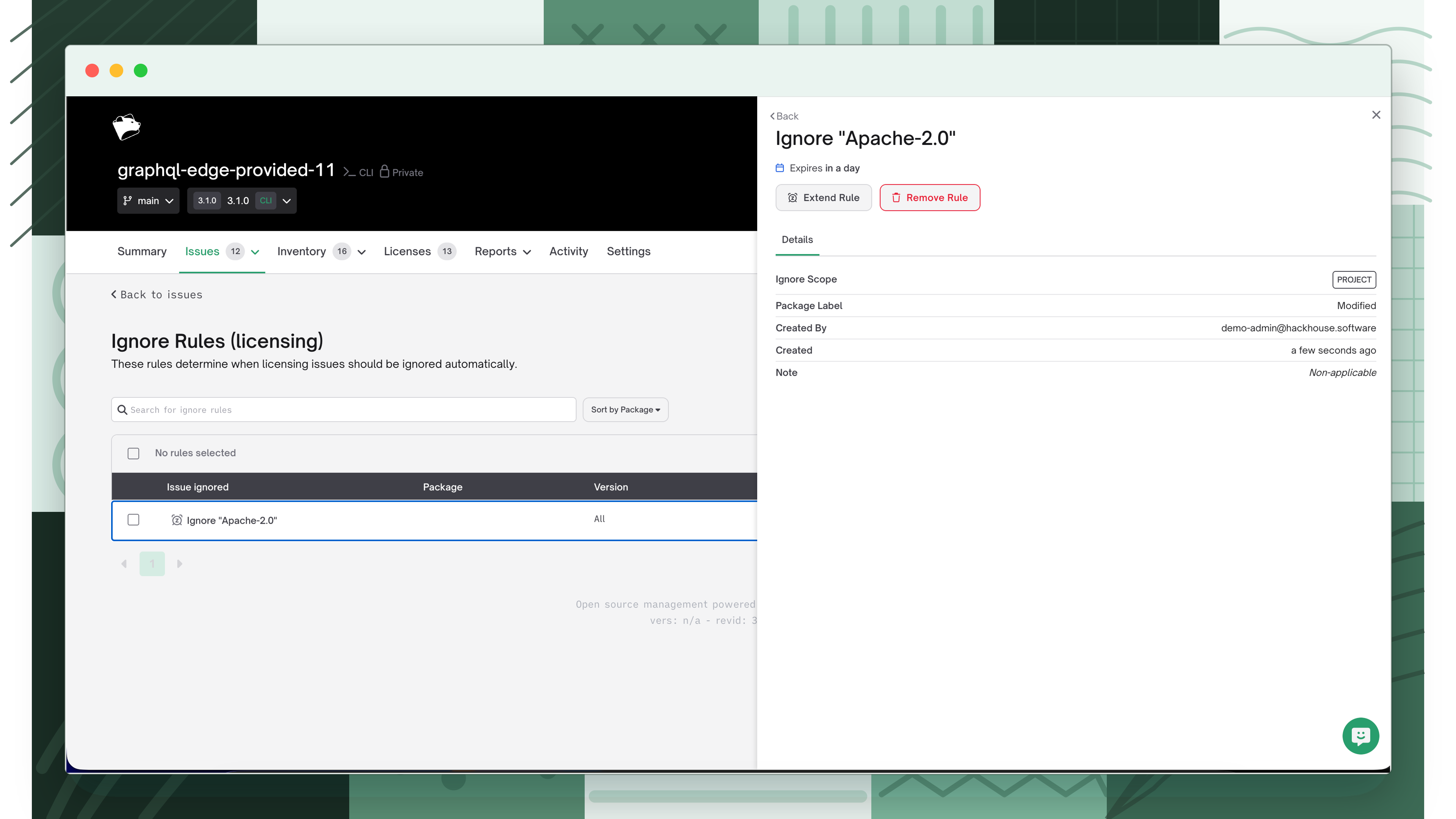
FOSSA is a software supply chain platform that consolidates software composition analysis, binary composition analysis, and container security in a single solution. It originated in open-source license compliance, where its detection depth remains a core strength, and has added reachability-based vulnerability management on top. The SCA component scans direct and transitive dependencies to unlimited depth and draws vulnerability data from NVD, GitHub, OSV, and FOSSA’s own database.
Key features include:
- Reachability-based SCA: FOSSA scans direct and transitive dependencies to unlimited depth and applies built-in reachability analysis to focus on components that end up reachable in production.
- License compliance and attribution: The platform detects a broad range of open-source license types, maps their obligations, and generates attribution reports and notice files required when distributing software.
- Vulnerability prioritization: Vulnerability data is aggregated from NVD, GitHub, OSV, and FOSSA’s proprietary database, and a prioritization algorithm weighs exploitability, upgrade impact, and effort. EPSS and CVSS data inform severity.
- SBOM management: FOSSA generates SBOMs in SPDX and CycloneDX formats, provides an SBOM Portal for sharing them with customers and auditors via access tokens, and can import and track third-party SBOMs over time.
- Unified platform and integrations: SCA sits alongside binary composition analysis and container security, with unified compliance reporting across all three to reduce tool sprawl. The platform integrates with major source control and CI/CD systems through a lightweight CLI.
Limitations (as reported by users on PeerSpot):
- Vulnerability depth: Reviewers note that vulnerability detection depth and freshness can trail security-first tools, reflecting FOSSA’s license-compliance heritage.
- Reachability maturity: Function-level reachability is still maturing, with coverage that varies by language and ecosystem.
- Compliance intelligence: Some users note there is still work to be done in parts of the contextualized compliance intelligence.
- Pricing transparency: Pricing is contact-sales, and costs can scale with the number of projects.
Source: FOSSA
Open-Source SCA Tools
Open-source SCA tools provide dependency scanning without commercial licensing costs, making them popular for individual developers, small teams, and organizations with limited budgets. Most focus on identifying known vulnerabilities and generating dependency inventories, with some also supporting SBOM generation and basic license analysis. While many are highly capable, they typically require more manual integration and management and may lack enterprise features such as centralized governance, policy automation, commercial vulnerability intelligence, and dedicated support.
9. OWASP Dependency-Check

Best for: Teams wanting a free, OWASP-backed dependency scanner.
Strengths: Free and open source, build-tool plugins, CVE detection.
Things to consider: CPE matching noise; no reachability analysis.
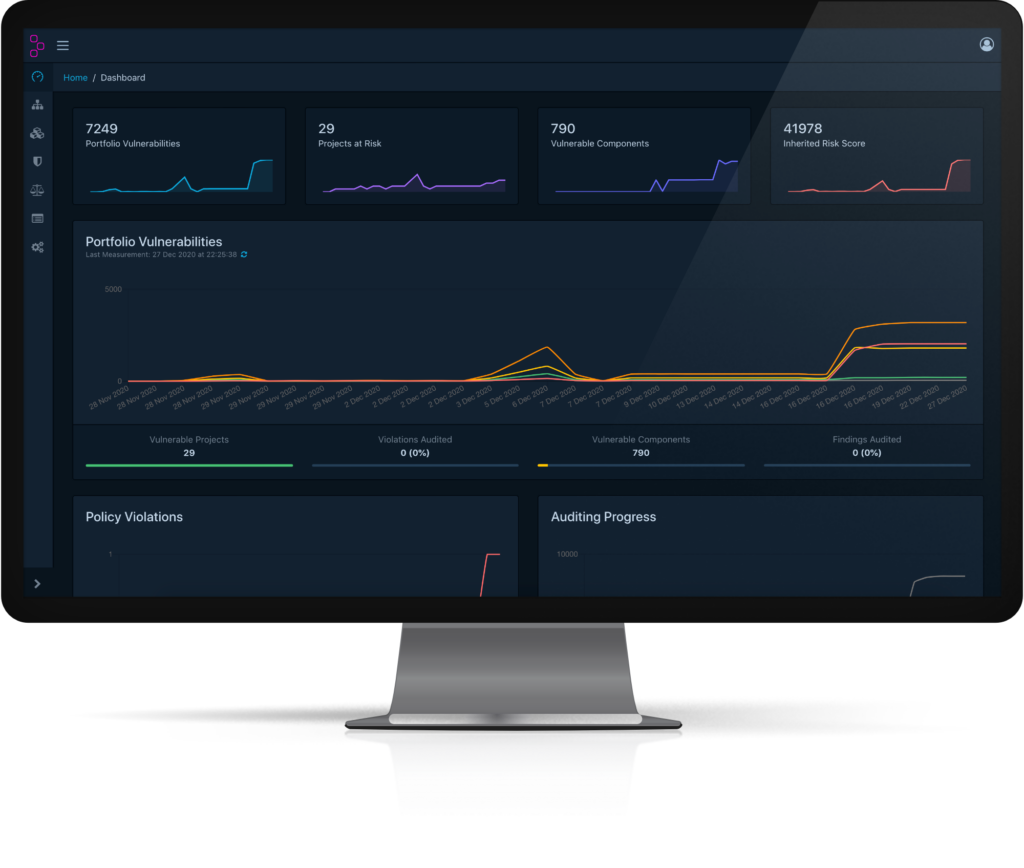
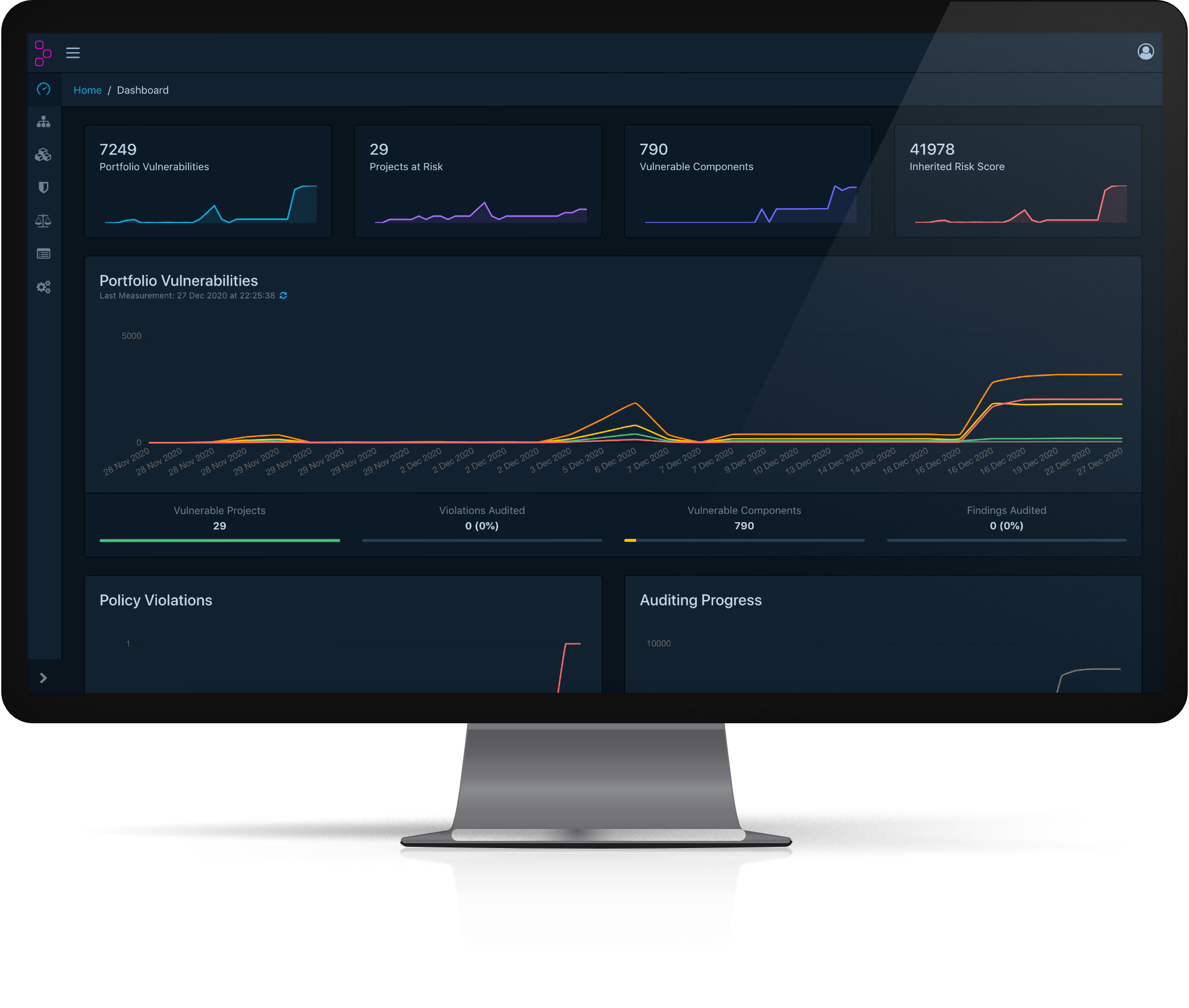
OWASP Dependency-Check is one of the earliest open-source software composition analysis tools, created to address the OWASP Top 10 entry on using components with known vulnerabilities. It detects publicly disclosed vulnerabilities in a project’s dependencies by collecting evidence about each dependency and determining its Common Platform Enumeration (CPE) identifier, then listing the associated CVE entries in a report.
Key features include:
- CPE-based vulnerability detection: The tool inspects project dependencies, gathers evidence, and identifies a CPE for each one. Where a CPE is found, it lists the associated CVE entries in a report.
- NVD data with supplementary sources: Dependency-Check updates itself automatically from the NVD data feeds hosted by NIST, and for specific technologies it also draws on the NPM Audit API, the OSS Index, RetireJS, and Bundler Audit.
- Build tool plugins: The tool ships with a command line interface, a Maven plugin, a Gradle plugin, and an Ant task, allowing it to run inside common Java and other build workflows.
- CI/CD integrations: Community-driven integrations connect Dependency-Check with build and analysis tooling including Jenkins, GitHub Actions, Azure DevOps, and SonarQube.
- Open-source licensing: Dependency-Check is distributed under the Apache 2.0 license with publicly available source code, so teams can run it without a vendor contract.
Limitations (based on publicly available sources):
- False positives: CPE-based matching can produce more false positives than ecosystem-aware scanners, so teams typically budget time to tune suppression entries.
- No reachability: The tool flags all matching CVEs and does not perform reachability analysis to determine whether a vulnerable function is actually used.
- Initial data download: The first download of the NVD data can take a long time, and an NVD API key is recommended to keep refreshes efficient.
- Limited management: There is no central management, policy engine, or advanced reporting layer compared with commercial tools.
Source: OWASP
10. Trivy
Best for: Teams wanting fast, all-in-one open-source scanning.
Strengths: Speed, broad coverage, SBOMs, CI/CD integrations.
Things to consider: Container-centric; no reachability analysis.
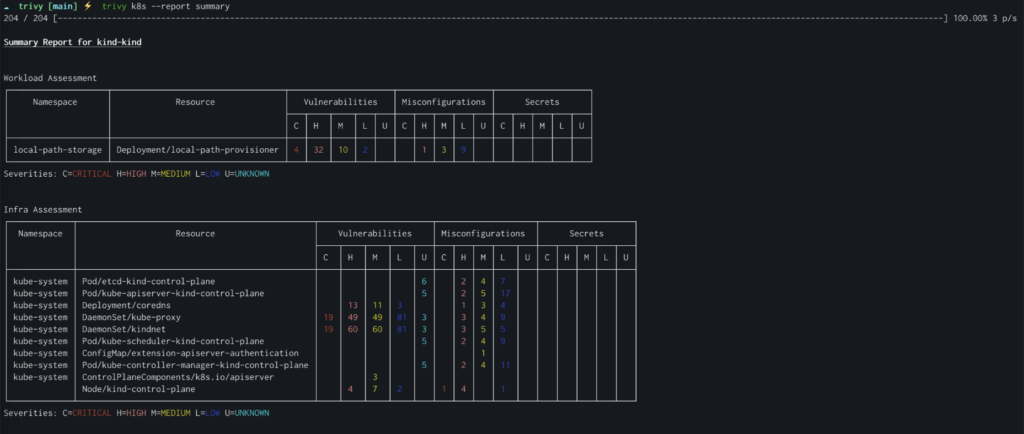
Trivy, developed by Aqua Security, is an open-source scanner for vulnerabilities and infrastructure-as-code misconfigurations across operating system packages and programming language packages. It is designed to be fast and simple to adopt: deployment is a binary installation with no database or middleware dependencies, the local vulnerability database updates automatically, and scans complete in seconds with results that can be filtered on the command line.
Key features include:
- Fast, dependency-free scanning: Trivy installs as a single binary with no middleware or database dependencies, uses a compact auto-updating database, and completes scans in seconds.
- Broad coverage: The tool scans operating system packages across distributions such as Alpine, Debian, Ubuntu, and RHEL, plus application dependencies for languages including Go, Node.js, Python, Ruby, Java, Rust, PHP, and .NET.
- Environment versatility: Trivy scans private and public registries, local filesystems, and container formats such as tar archives, Podman, and Git repositories.
- SBOM generation and scanning: Trivy can generate SBOMs in CycloneDX format and scan existing SBOMs, providing an inventory of components alongside vulnerability results.
- Ecosystem integrations: Results can be exported in formats including JUnit XML, SARIF, and AWS Security Finding Format, viewed in the GitHub UI via a GitHub Action, or surfaced in Kubernetes dashboards.
Limitations (based on publicly available sources):
- No reachability: Trivy reports all matching CVEs and does not analyze whether vulnerable code is reachable from the application.
- Container-centric focus: Its roots are in container and IaC scanning, and application-level SCA depth can vary by ecosystem.
- Independent database: Trivy maintains its own vulnerability database, which can deviate from other sources.
- Central management: Centralized policy and management require the commercial Aqua platform rather than the open-source tool.
Source: Trivy
11. Grype

Best for: Teams wanting lightweight, SBOM-driven vulnerability scanning.
Strengths: SBOM-native, fast, broad vulnerability sources, CI/CD-ready.
Things to consider: Vulnerability scanning only; no policy in open source.
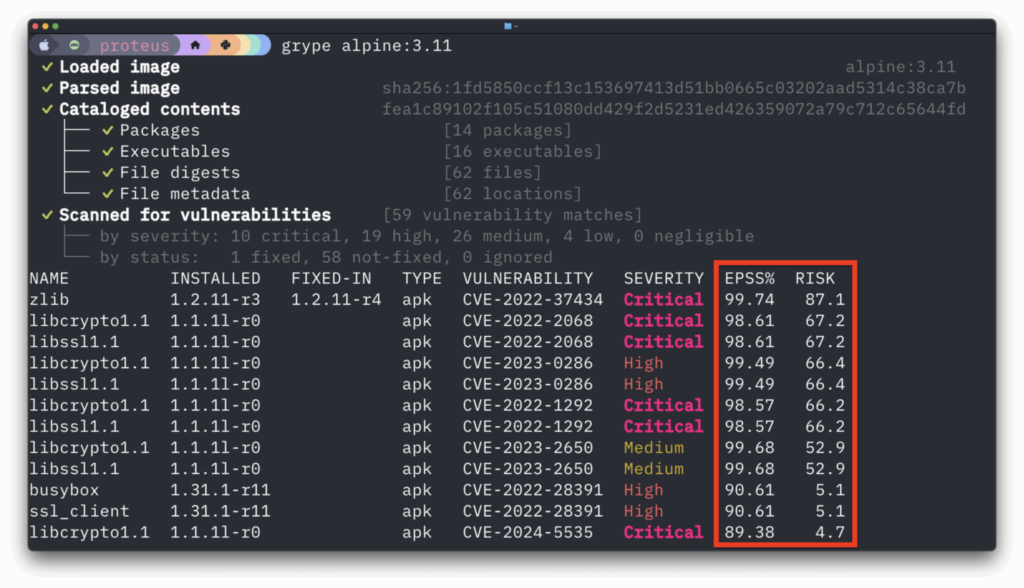
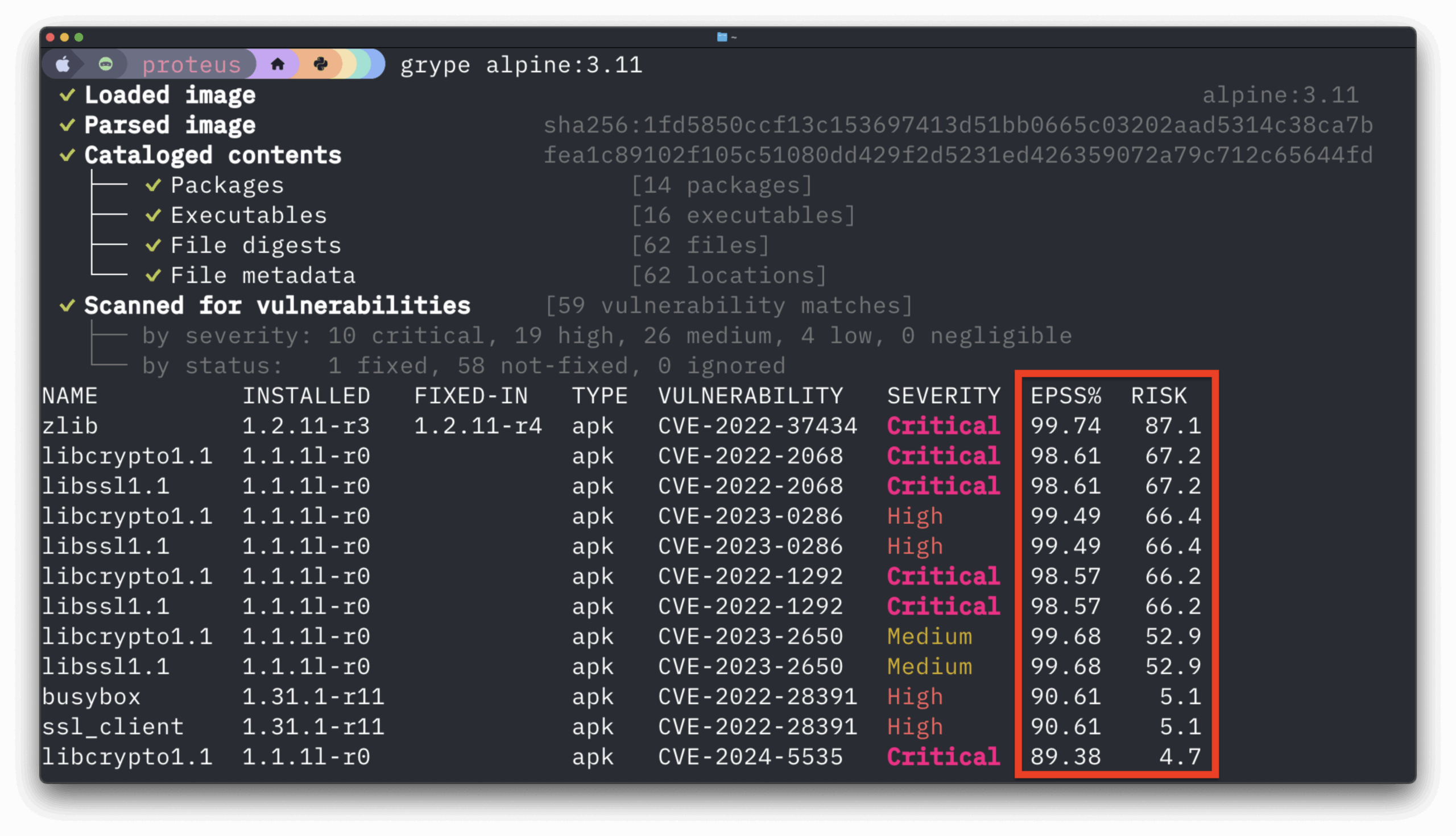
Grype is an open-source vulnerability scanner from Anchore that generates a list of known vulnerabilities from an SBOM, a container image, or a project directory. It scans both operating system and language-specific packages and works natively with SBOMs, pairing with Anchore’s companion tool Syft, which generates SBOMs, for a combined and faster scanning pipeline. Grype draws on a broad set of data sources, including the NVD, operating system advisories for distributions such as Alpine and Amazon Linux, and language-specific databases.
Key features include:
- SBOM-native scanning: Grype is designed to consume SBOMs as a first-class input, generating a list of known vulnerabilities from an SBOM, container image, or directory.
- OS and language package coverage: The scanner checks both operating system packages and language-specific packages for known vulnerabilities.
- Broad vulnerability sources: Grype pulls from the NVD, operating system advisories for distributions such as Alpine, Debian, Ubuntu, RHEL, and Amazon Linux, and language databases including the GitHub Advisory Database, npm, PyPI, and RubyGems.
- CI/CD automation: Grype is straightforward to automate in CI/CD pipelines and can output results in formats such as SARIF for integration with other tooling.
- Open-source foundation: Grype is distributed under the Apache 2.0 license with publicly available source code, and serves as the open-source scanner underpinning Anchore Enterprise.
Limitations (based on publicly available sources):
- Scope: Grype focuses on vulnerability scanning only and does not include a policy engine in the open-source tier.
- No reachability: It flags all matching CVEs and does not perform reachability analysis.
- Community size: Its community is smaller than some alternative open-source scanners.
- Central management: Centralized management, RBAC, and compliance reporting require Anchore Enterprise.
Source: Grype
How to Choose SCA Tools
When choosing a Software Composition Analysis (SCA) tool, focus on how well it fits your development environment and security requirements rather than comparing feature lists alone. The best solution should provide accurate results, integrate into existing workflows, and help developers remediate risks efficiently.
- Match the tool to your dependency ecosystems and delivery model: Ensure the tool supports the programming languages, package managers, build systems, containers, and deployment environments used across your organization.
- Evaluate signal quality, not just vulnerability counts: Look for accurate component identification, low false positives, meaningful risk prioritization, and high-quality vulnerability intelligence instead of simply reporting more findings.
- Prioritize developer remediation experience: Choose a tool that provides clear upgrade recommendations, automated pull requests, IDE integration, and CI/CD feedback to make fixing issues straightforward.
- Look for broader software supply chain visibility: Modern SCA should detect malicious packages, analyze SBOMs, monitor third-party software, and identify supply chain risks beyond known CVEs.
- Consider governance, policy automation, and total operational fit: Evaluate policy enforcement, license compliance, reporting, workflow integrations, scalability, and administrative overhead to ensure the tool fits both security and development teams.
Conclusion
Software Composition Analysis has evolved beyond simply producing an inventory of open-source dependencies. The best SCA tools help teams understand which vulnerabilities actually matter by combining accurate dependency discovery with contextual risk analysis, reachability, malicious package detection, and license compliance. They also guide remediation with upgrade recommendations, automated pull requests, and developer-friendly integrations that reduce the effort required to fix issues without disrupting delivery.
Modern SCA platforms also play an important role in software supply chain security by generating and analyzing SBOMs, continuously monitoring deployed applications for newly disclosed risks, and enforcing security policies throughout the CI/CD pipeline. Rather than slowing development with manual reviews, they automate governance and provide developers with actionable feedback early in the development lifecycle. Choosing a tool that balances detection accuracy, remediation capabilities, and workflow integration helps organizations reduce software supply chain risk while maintaining development speed and compliance.
Checkmarx Software Composition Analysis (SCA)
Checkmarx Software Composition Analysis helps organizations manage open-source and third-party component risk across modern applications. Integrated into Checkmarx One, it identifies vulnerable, outdated, and risky dependencies across codebases, containers, and environments, and combines that view with malicious package detection, secrets, and ASPM context.
With developer-friendly remediation guidance and policy controls, Checkmarx SCA enables teams to safely adopt open source without slowing delivery. Checkmarx SCA will help you identify, prioritize, and remediate more security and license risks in your open source packages than any other solution on the market.
Checkmarx SCA’s detection accuracy is unmatched. In a recent third-party evaluation of open source vulnerability detection against a primary competitor, Checkmarx SCA came out far ahead, with 100% true positives (vs. 90%), zero false positives (vs. 10%), and 12% false negatives (vs. 46%).
Key capabilities of Checkmarx SCA:
- Identify vulnerable and outdated components: Detect known vulnerabilities and unsupported versions in open-source libraries and frameworks.
- Support license and compliance management: Track and control licenses used across applications to avoid legal and operational risk.
- Prioritize remediation based on risk: Combine CVSS, exploitability, reachability, and app criticality to focus on what matters most.
- Embed SCA in DevSecOps: Integrate into IDEs, CI/CD, and registries to catch issues early and continuously.
- Reduce manual dependency research: Provide curated intelligence and recommended fixes to speed decision-making.