
Summary
Snyk is a developer-first application security platform that helps teams secure code, open source dependencies, containers, infrastructure as code, APIs, and AI-assisted development within existing developer workflows. This article explains Snyk’s products, strengths and limitations, pricing, and the leading alternatives
What Is Snyk?
Snyk is a developer-centric security platform that identifies and remediates vulnerabilities in code, dependencies, containers, and infrastructure as code. Founded in 2015, Snyk is widely adopted for integrating security into the software development lifecycle. Its tools fit into existing developer workflows, allowing teams to detect and fix vulnerabilities early, reducing risk without slowing development.
The platform supports a range of programming languages and frameworks, making it suitable for diverse technology stacks. Snyk provides automated security scanning and remediation advice, enabling developers to resolve issues quickly. Its integrations with source control, CI/CD pipelines, and cloud platforms support security at each stage of the application lifecycle. By focusing on developer usability and automation, Snyk helps organizations maintain their security posture without sacrificing productivity.
Key Snyk products include:
- Snyk Code: Static application security testing (SAST) for first-party code with real-time IDE scanning, AI-assisted remediation, and risk-based prioritization.
- Snyk Open Source: Software composition analysis (SCA) that identifies vulnerabilities and license issues in open source dependencies with automated fix pull requests.
- Snyk API & Web (DAST): Dynamic security testing for APIs and web applications, including asset discovery, authenticated scanning, and compliance reporting.
- Snyk Container: Container image and Kubernetes security with vulnerability scanning, base image recommendations, and continuous monitoring across the SDLC.
- Snyk Infrastructure as Code (IaC): Misconfiguration scanning for Terraform, Kubernetes, CloudFormation, and other IaC frameworks with policy enforcement and drift detection.
- Snyk Studio: AI development security platform that applies security guardrails, remediation workflows, and policy enforcement to AI coding assistants and agentic development tools.
Top alternatives of Snyk include:
- Checkmarx One: Unified application security platform combining SAST, SCA, DAST, API, container, IaC, and ASPM with AI-assisted remediation.
- Veracode: Cloud-based AppSec platform offering SAST, DAST, SCA, container security, compliance reporting, and application risk management.
- Mend.io: Developer security platform focused on SCA, dependency management, SAST, container security, and AI component governance.
- Black Duck: Software composition analysis platform emphasizing open source security, license compliance, SBOM generation, and curated vulnerability intelligence.
- Semgrep: Developer-first code security platform with customizable SAST, reachability-based SCA, secrets detection, and AI-assisted triage.
- SonarQube: Code quality and security platform combining SAST, code quality analysis, secrets detection, and software composition analysis.
- Aikido Security: Consolidated developer security platform covering SAST, SCA, containers, IaC, DAST, cloud posture management, and AI-assisted remediation.
- Aqua Security: Cloud-native application protection platform focused on container, Kubernetes, runtime, and cloud workload security.
- Wiz: Agentless CNAPP providing cloud posture management, attack path analysis, runtime security, and code-to-cloud visibility.
- Prisma Cloud: Palo Alto Networks’ CNAPP that secures cloud infrastructure, workloads, IaC, APIs, and applications from code through runtime.
What Is Snyk Used For?
Snyk helps development teams identify and remediate security risks throughout the software development lifecycle. Its platform covers application code, open source dependencies, containers, infrastructure as code, cloud environments, APIs, and AI-assisted development, allowing organizations to integrate security into existing developer workflows.
- Open-source dependency scanning: Identifies vulnerabilities in direct and transitive dependencies, recommends upgrades or patches, and continuously monitors projects for newly disclosed vulnerabilities across ecosystems such as npm, Maven, and PyPI.
- Static application security testing: Scans proprietary source code for vulnerabilities such as SQL injection and cross-site scripting, providing contextual remediation guidance through IDE and CI/CD integrations.
- Container security: Analyzes container images, base images, and application layers for vulnerabilities, recommends secure image updates, and continuously monitors container registries for newly discovered risks.
- Infrastructure as code security: Detects security misconfigurations in Terraform, CloudFormation, Kubernetes, and other IaC templates, helping teams enforce security policies before infrastructure is deployed.
- Cloud and API security: Identifies security risks in cloud resources, configurations, and APIs, including excessive permissions, exposed services, insecure implementations, and compliance issues.
- Snyk AI: Uses AI to prioritize vulnerabilities, explain findings in natural language, and recommend context-aware fixes, helping developers resolve security issues more efficiently while reducing alert fatigue.
Key Snyk Products and Their Pros and Cons
Snyk is structured as a single platform made up of several distinct products, each targeting a different part of the software development lifecycle. The products below are grouped into two categories: tools that test application and code artifacts, and tools that secure cloud-native infrastructure and AI-assisted development.
Snyk Tools at a Glance
| Product | Description | Best For | Pros | Cons |
| Snyk Code | Static application security testing (SAST) for first-party source code with real-time developer feedback and AI-assisted remediation. | Development teams embedding SAST into IDEs, pull requests, and CI/CD pipelines. | Real-time IDE scanning, one-click AI fixes, risk-based prioritization, broad language and IDE support. | False positives may require tuning, limited custom rules, no on-premises deployment, per-developer pricing. |
| Snyk Open Source | Software composition analysis (SCA) that identifies vulnerabilities and license risks in open source dependencies. | Organizations managing open source dependency risk across the SDLC. | Continuous monitoring, automated fix pull requests, reachability-based prioritization, strong vulnerability intelligence. | Reachability limited to paid plans, reporting customization is limited, scans can slow pipelines, upgrade recommendations may introduce breaking changes. |
| Snyk API & Web (DAST) | Dynamic application security testing for APIs and web applications with asset discovery and authenticated scanning. | Teams securing production web applications and APIs through dynamic testing. | API discovery, authenticated scanning, modern JavaScript crawling, compliance reporting and integrations. | Premium pricing, no concurrent scanning, lengthy scans for large applications, limited reporting customization. |
| Snyk Container | Container and Kubernetes security for images, workloads, and base images throughout the SDLC. | Organizations securing containerized applications and Kubernetes environments. | Base image recommendations, Kubernetes monitoring, CI/CD integration, contextual prioritization. | No on-premises deployment, occasional false positives, reporting limitations, scan performance on large projects. |
| Snyk Infrastructure as Code (IaC) | Misconfiguration scanning for Terraform, Kubernetes, CloudFormation, ARM, and Helm before deployment. | DevOps and platform teams securing cloud infrastructure as code. | Multi-cloud support, OPA custom policies, CI/CD enforcement, drift detection. | More limited governance than dedicated IaC platforms, free-tier limitations, cross-file analysis limitations, possible false positives. |
| Snyk Studio | AI security platform that secures AI coding assistants and agentic development workflows using Snyk security engines. | Organizations adopting AI-assisted software development that need centralized security guardrails. | AI security guardrails, automated remediation workflows, centralized policy enforcement, AI assistant integrations. | New product with limited independent validation, local-only MCP deployment, dependent on Snyk Code and Open Source engines, limited deployment flexibility. |
Application Security Testing
1. Snyk Code
Best for: Development teams that want developer-first SAST integrated into IDEs, pull requests, and CI/CD pipelines.
Key strengths: Real-time build-free scanning, AI-assisted remediation, risk-based prioritization, and broad IDE and language support.
Things to consider: Per-developer pricing can become expensive, false positives may require tuning, and custom rule capabilities are relatively limited.
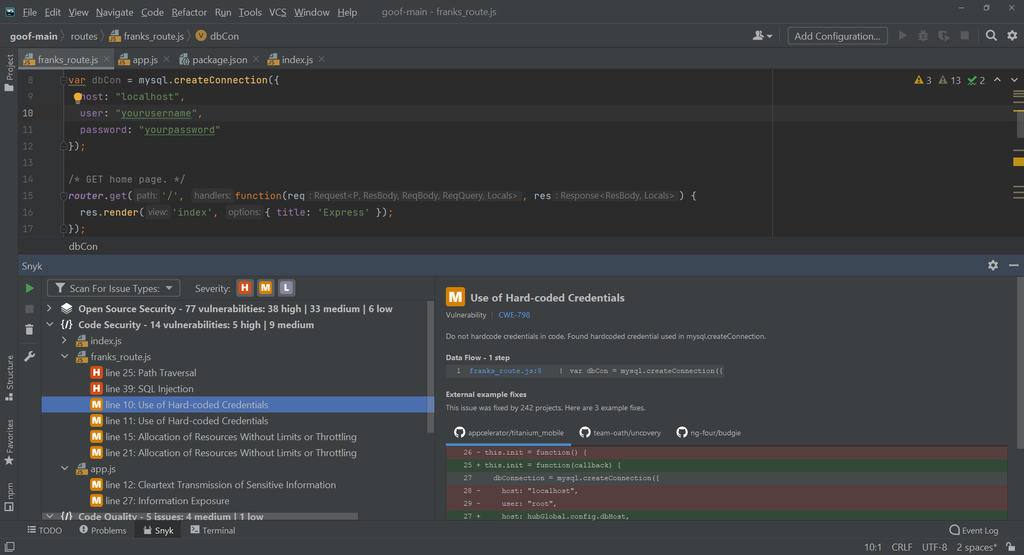
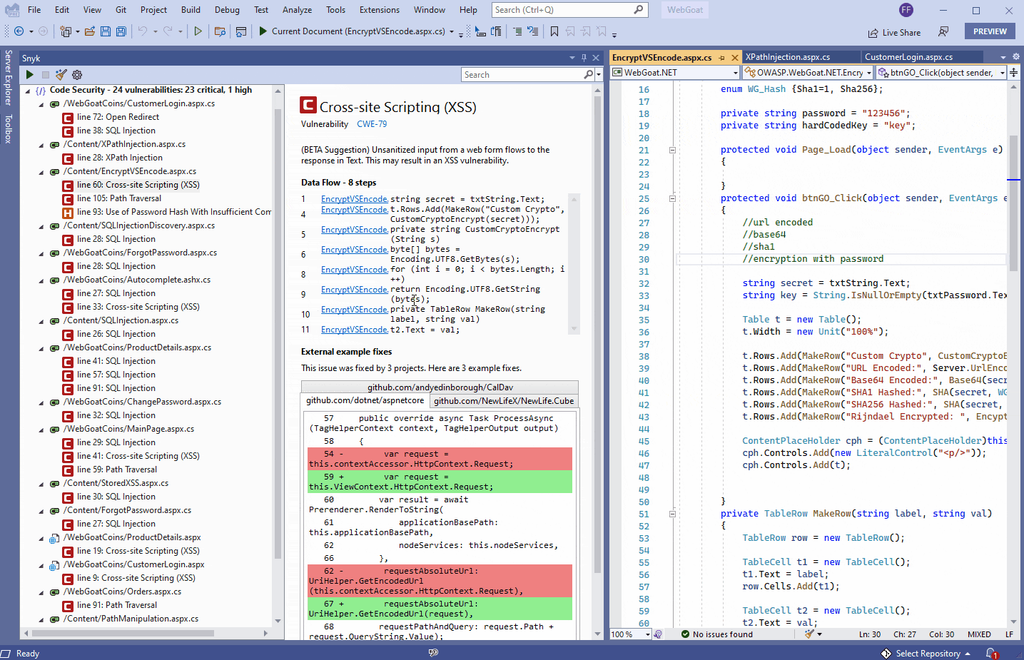
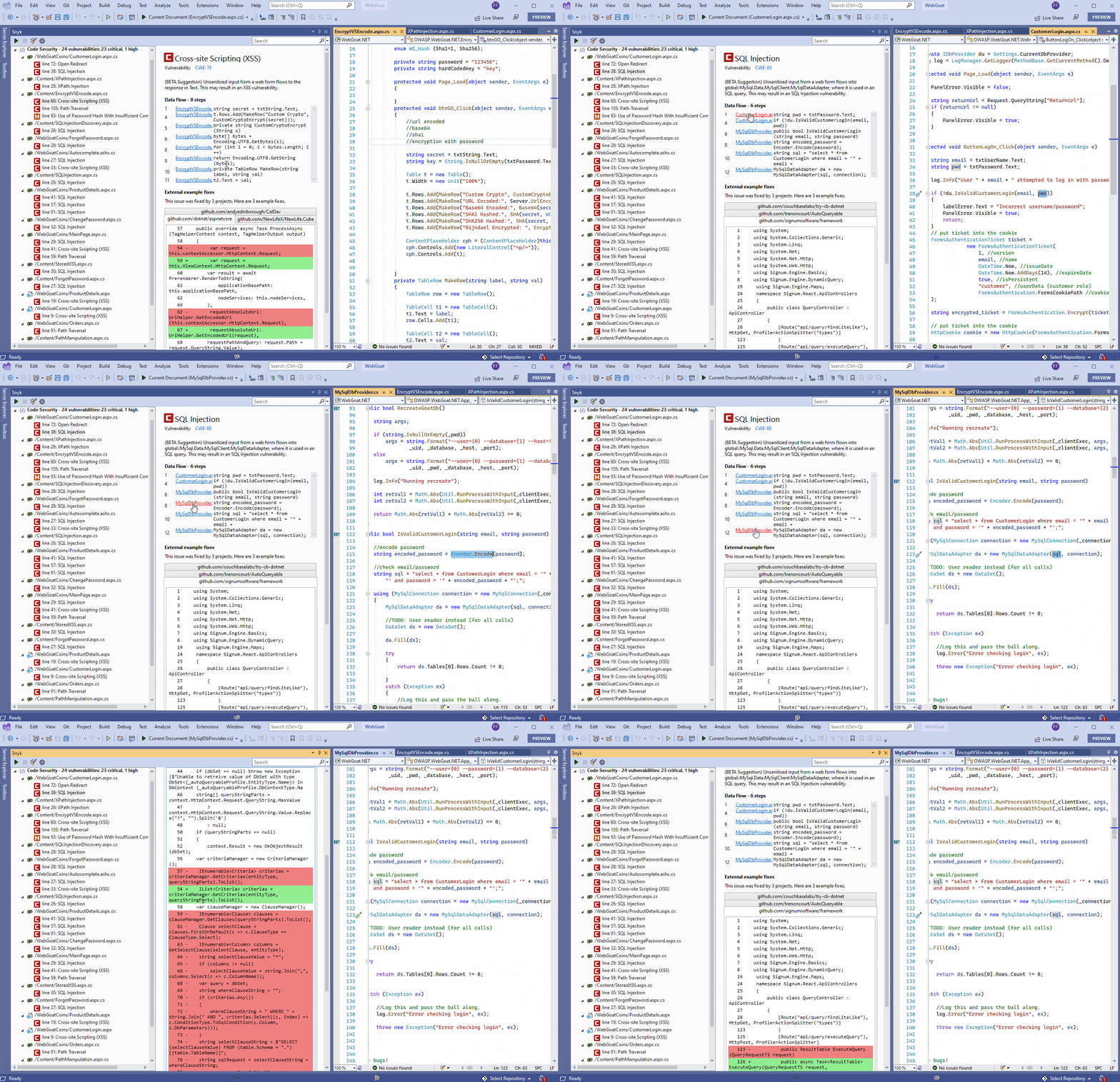
Snyk Code is Snyk’s static application security testing (SAST) product, which analyzes first-party source code for security issues. It returns results directly inside the IDE and on pull requests rather than only in post-build reports, and runs build-free so that findings appear as code is written. Each finding is paired with context-specific explanations and remediation advice, and the product can apply pre-screened fixes through a one-click capability called Snyk Agent Fix.
Coverage spans common programming languages, IDEs, and CI/CD tools, and Snyk states it extends to source libraries used in LLM-based applications such as OpenAI and Hugging Face clients. The underlying engine is a self-hosted, constraint-based logic solver supported by a machine-learning knowledge base that Snyk says models more than 25 million data flow cases.
Pros:
- Real-time IDE and pull request scanning: Snyk Code scans source code build-free in the IDE and on pull requests, returning results in seconds to minutes and surfacing issues before they enter the project. It can scan every pull request and repository to produce a status report, and a CI/CD security gate allows scans (including PR checks) to be built into the build process.
- Automatic fixes with Snyk Agent Fix: The product generates pre-validated fixes that developers can apply with one click, using an agentic architecture that injects security guidance into AI models at the moment of generation. Snyk reports an autofix accuracy of around 80% and provides in-line remediation recommendations alongside each issue.
- Risk-based prioritization: Snyk Code uses application context to prioritize findings, focusing attention on new, deployed, or publicly exposed code issues. This is intended to reduce noisy results so that teams address the issues considered more relevant to their environment first.
- Language, IDE, and CI/CD coverage: The scanner is compatible with most popular languages, IDE plugins, and CI/CD integrations, and Snyk states its coverage includes roughly 90% of common LLM libraries. Coverage is described as continuously expanding to include new languages and sources.
- Self-hosted analysis engine and knowledge base: The custom logic solver is self-hosted, which Snyk positions as a data-privacy measure, and runs constraint-based data flow analysis. A continuously updated machine-learning knowledge base draws on open source projects, supplemented by curated content from Snyk’s security researchers.
Cons (as reported by users on G2):
- Accuracy relative to the SCA side: Some reviewers describe the SAST results as feeling less mature than the open source scanning results, with more false positives and less context explaining why an issue was flagged.
- Alert fatigue from false positives: Reviewers note that recurring false positives can lead developers to start ignoring alerts, and that time is needed to tune settings to reduce the noise.
- Custom rule flexibility: Users report limited flexibility in defining custom rules, which can be a constraint for teams that need to encode highly specific security policies.
- Deployment and workflow gaps: Reviewers mention the absence of an on-premises option and difficulty pushing SAST results to the dashboard from the CLI in some configurations.
- Per-developer pricing pressure: Several reviewers from larger or budget-conscious teams describe the per-developer pricing as a meaningful cost factor when scaling the tool across an engineering organization.
Source: Snyk
2. Snyk Open Source
Best for: Organizations managing open source dependency risk and software supply chain security throughout the SDLC.
Key strengths: Reachability-based prioritization, automated fix pull requests, continuous monitoring, and comprehensive vulnerability intelligence.
Things to consider: Reachability analysis is limited to paid plans, reporting customization is limited, and scan times can impact CI/CD pipelines.
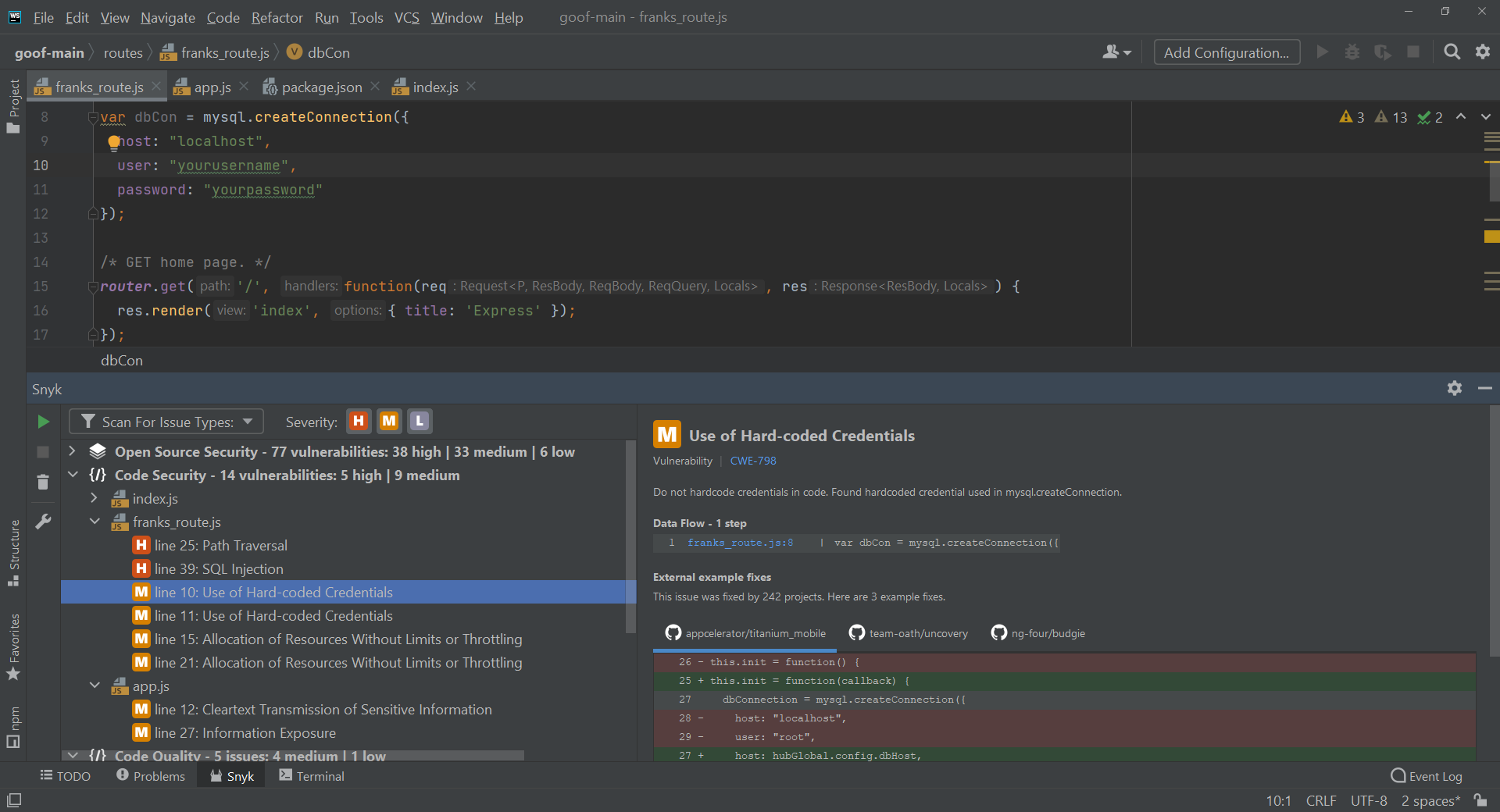
Snyk Open Source is Snyk’s software composition analysis (SCA) product, used to find, prioritize, and fix vulnerabilities and license issues in open source dependencies and their transitive dependencies. It operates across the development lifecycle, from the IDE and CLI during coding, to pull request checks, CI/CD pipeline guardrails, and monitoring of live environments.
The product is backed by Snyk’s own database of open source vulnerability intelligence and supports a range of popular languages including JavaScript, Java, Python, .NET, Ruby, Go, C/C++, and PHP. It automates remediation through one-click pull requests populated with the required upgrades and patches, and customizable PR templates let teams match generated pull requests to their own formatting conventions. Continuous monitoring re-checks projects for newly disclosed vulnerabilities after the initial scan.
Pros:
- Dependency scanning across the SDLC: Snyk Open Source identifies vulnerable dependencies as code is written in the IDE or CLI, scans pull requests before merging, adds guardrails in CI/CD pipelines, and tests production environments for exposure to known issues. This spreads dependency checks across multiple points rather than a single gate.
- Risk Score prioritization: The product calculates a Risk Score by evaluating each vulnerability against more than a dozen factors, including reachability, exploit maturity, and EPSS/CVSS scores. Teams can further refine prioritization using business and application context to focus on mission-critical or sensitive systems.
- Automated fix pull requests: Snyk automates fixes through one-click pull requests containing the necessary upgrades and patches. Customizable PR templates let organizations specify the title, description, and commit message so generated requests fit their existing processes.
- Continuous monitoring: Projects are monitored automatically for newly discovered vulnerabilities after they are first scanned, with alerting so teams can respond to issues that emerge after release. Snyk cites tens of thousands of new vulnerabilities disclosed annually as the rationale for ongoing monitoring.
- Governance and reporting: Real-time and historical reporting is provided for compliance with internal and regulatory policies, packaged for security engineering and GRC teams. License compliance and SBOM support are available on higher tiers.
Cons (as reported by users on G2):
- Fix suggestions that introduce breaking changes: Reviewers note that recommended upgrades sometimes break compatibility, leaving teams to do manual research; they suggest the tool could flag compatibility risks alongside the fix.
- False positives over time: Some users report that after a project has been scanned for several months, the tool can begin surfacing false-positive findings that require triage.
- Reachability gated to paid tiers: The reachability capability, which filters out vulnerable-but-unused dependencies, is described as available only in the paid subscription and not in the free version.
- Reporting customization: Reviewers describe reporting customization as limited, with integration into third-party reporting tools such as Power BI being cumbersome, and note that reports can take time to reflect changes.
- Pipeline scan times: Scans on medium-sized repositories are reported to take several minutes in some cases, which reviewers say can slow down the pipeline.
Source: Snyk

3. Snyk API & Web (DAST)
Best for: Organizations securing web applications and APIs with dynamic testing integrated into development workflows.
Key strengths: API discovery, authenticated scanning, modern JavaScript crawling, compliance reporting, and extensive integrations.
Things to consider: Pricing is relatively high, concurrent scanning is not supported, and customization and onboarding could be improved.
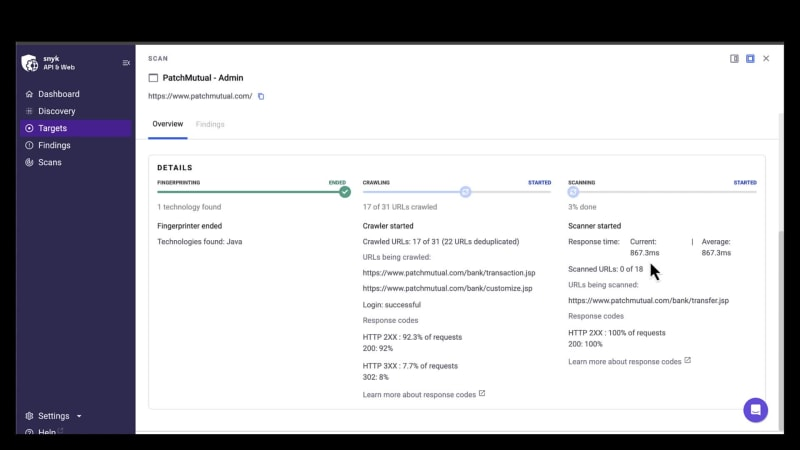
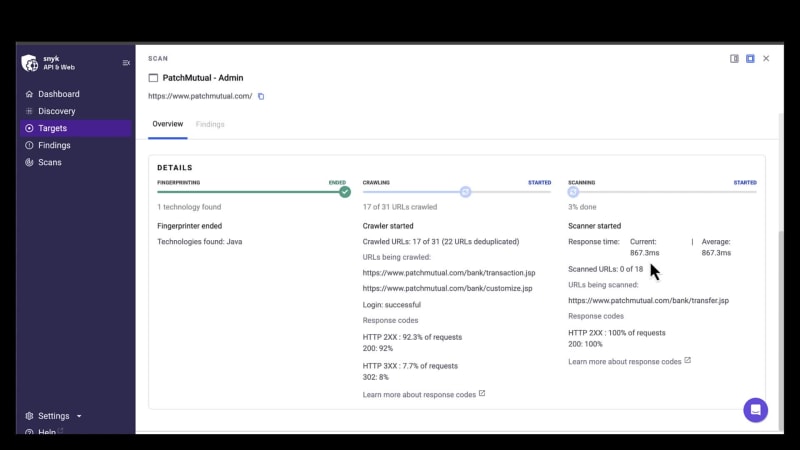
Snyk API & Web is Snyk’s dynamic application security testing (DAST) product, built on the DAST engine Snyk acquired from Probely. It discovers and tests the security of APIs and web applications, including those whose code was generated by AI, and returns fix guidance based on the technologies detected in each target.
The product includes asset discovery to inventory APIs and web apps, a Headless-Chrome–based crawler for JavaScript applications and single-page apps, and authenticated scanning for applications behind SSO or OpenID Connect. It is operable through a web interface, a full-featured API, and a CLI. Because the underlying engine is Probely, independent reviews appear under the Probely listing on review platforms.
Pros include:
- API and web application scanning: The engine performs dynamic testing against running APIs and web apps and can detect a large catalog of potential vulnerabilities, with 115 vulnerability types applicable specifically to APIs. Snyk reports a 0.08% false positive rate intended to limit time spent triaging non-issues.
- Asset discovery and inventory: A discovery capability identifies fully qualified domain names and services running in an organization’s infrastructure, then performs regular discovery scans to map the attack surface so that APIs and web apps can be cataloged and prioritized for testing.
- Crawling of modern web apps: A spider based on Headless-Chrome crawls and indexes interactive JavaScript applications and single-page apps. This is aimed at coverage of dynamic front-end applications that simpler crawlers may not fully traverse.
- Configurable and authenticated scanning: The product supports customizable scan configurations, scheduled and partial scans, scanning behind a firewall, blackout periods, and authenticated scans for applications using SSO or OpenID Connect. Recurring scans can be embedded into CI/CD pipelines.
- Reporting, compliance, and integrations: Findings come with evidence and remediation instructions, and detailed requirement reports support standards such as PCI DSS, SOC 2, HIPAA, ISO 27001, GDPR, and OWASP Top 10. Out-of-the-box integrations cover CI/CD tools, issue trackers, and messaging apps, with a full API and CLI for custom workflows.
Cons (as reported by users on G2):
- Pricing: Several reviewers describe the pricing as high and note that it may not suit budget-constrained teams or firms of any size.
- No concurrent scanning: Users report that the tool runs a single scan at a time and does not support concurrent scans, which can be a constraint when multiple targets need testing simultaneously.
- Scan duration on large targets: Reviewers note that scanning large applications or files can take a long time to complete.
- Limited customization: Some users find the customization and reporting options limited and not fully aligned with their specific requirements.
- Documentation and onboarding: Reviewers report that documentation is sparse, which makes it harder to train new users, and that changing a scan target requires contacting support, after which historical scans are relabeled with the new target name.
Source: Snyk
Cloud-Native and AI-Driven Security
4. Snyk Container
Best for: Organizations securing container images and Kubernetes workloads throughout the software development lifecycle.
Key strengths: Base image recommendations, Kubernetes monitoring, contextual prioritization, and broad registry and CI/CD integrations.
Things to consider: No on-premises deployment, reporting customization is limited, and large scans can slow development pipelines.
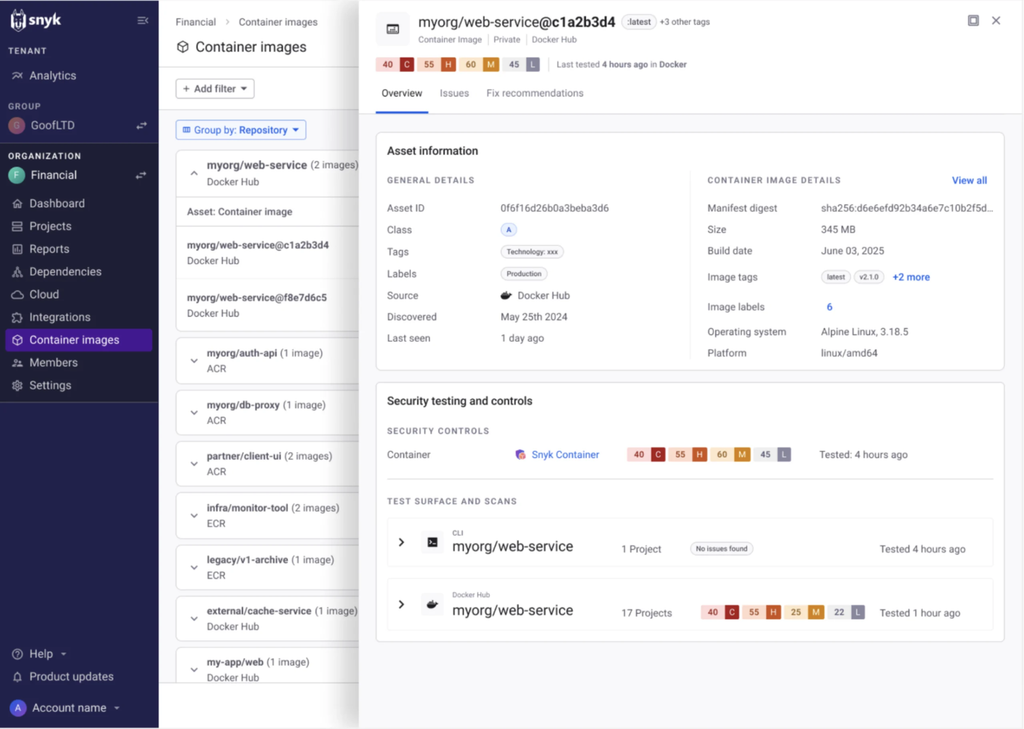
Snyk Container is Snyk’s product for finding and fixing vulnerabilities in container images and Kubernetes workloads across the development lifecycle. It scans container images, base images, and the open source dependencies used in Dockerfile commands, and points developers to the specific vulnerable commands and dependencies without requiring container security expertise.
The product provides base image upgrade recommendations and can automatically upgrade to resolve vulnerabilities, and it scans both the container and the open source dependencies inside it from a single view. Scanning can run on pull requests, directly from a repository, during CI/CD, and against running environments, with continuous monitoring afterward. Snyk Container integrates with major Kubernetes platforms, container registries, and base operating systems.
Pros:
- Base image recommendations and automated upgrades: Snyk Container identifies the risks in each image and provides one-click upgrades along with alternative base image recommendations. It can automatically upgrade base images to resolve vulnerabilities, and Enterprise tiers support custom, curated base image recommendations.
- Native Git scanning and CI/CD coverage: The product scans pull requests before merging and tests projects directly from their repository, with daily monitoring available. Scans can run within CI/CD during build and against running environments to keep new vulnerabilities out of production.
- Prioritization with context: Priority scoring focuses attention on the most critical issues based on signals such as exploit maturity and insecure workload configurations. Application context is used to prioritize deployed or publicly exposed issues over those with lower practical risk.
- Kubernetes workload monitoring: Snyk Container detects newly deployed and updated workloads in Kubernetes clusters and surfaces potentially unsafe settings in Kubernetes workloads. Newly discovered image vulnerabilities and base image updates can trigger alerts via Slack, Jira, email, or a custom integration.
- Broad platform integrations: The product works with Kubernetes platforms including EKS, AKS, GKE, OpenShift, and VMware Tanzu; registries including Docker Hub, ECR, ACR, GCR, Artifactory, Harbor, and Quay; and base operating systems including Amazon Linux, Red Hat Enterprise Linux and UBI, Alpine, Debian, Ubuntu, CentOS, and Oracle Linux.
Cons (as reported by users on G2):
- False positives requiring triage: Reviewers note that the platform can flag false positives that need manual review, which adds friction to container workflows.
- No on-premises deployment: Users point to the absence of an on-premises option, which can be a constraint for organizations with regulatory or data-residency requirements.
- Pipeline impact: Reviewers report that scans can take time on larger projects and may slow down the pipeline.
- Reporting customization: As with other Snyk modules, reviewers describe reporting customization as limited and note that reports can take time to reflect the latest state.
- Container coverage gaps: Some reviewers mention encountering issues specific to scanning Docker images, suggesting coverage is not uniform across all image types and configurations.
Source: Snyk

5. Snyk Infrastructure as Code (IaC)
Best for: DevOps and platform engineering teams that want to detect cloud infrastructure misconfigurations before deployment.
Key strengths: Multi-cloud IaC support, OPA custom policies, developer workflow integration, and infrastructure drift detection.
Things to consider: Governance capabilities are less extensive than dedicated IaC platforms, free-tier limits are restrictive, and cross-file analysis has some limitations.
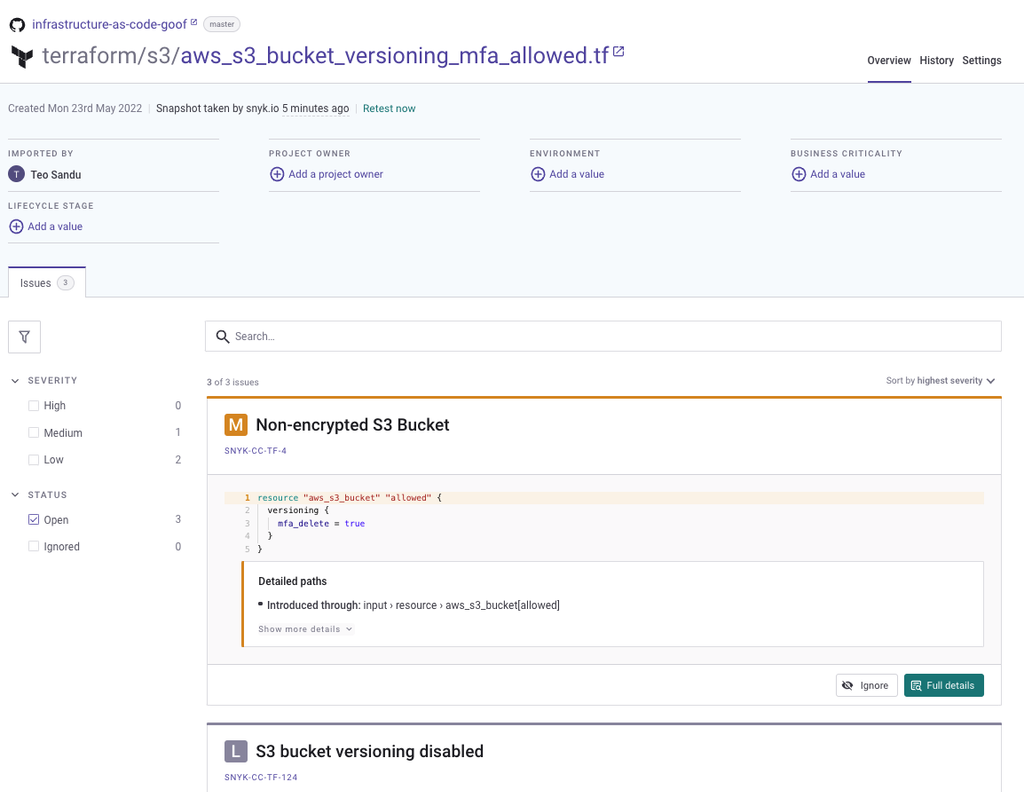
Snyk IaC is Snyk’s product for finding and fixing misconfigurations in infrastructure as code before deployment. It scans Terraform, CloudFormation, ARM templates, Kubernetes manifests, and Helm charts, and covers AWS, Azure, and Google Cloud. The product embeds these checks into IDE, CLI, SCM, and CI/CD workflows, providing in-line remediation suggestions so developers can fix issues alongside the code.
Built-in rulesets are based on industry best practices, CIS benchmarks, and Snyk’s own security research, and custom policies can be authored using Open Policy Agent (OPA). It also includes drift management to detect divergence between defined infrastructure and its deployed state, and enterprise reporting to track configuration and compliance issues over time. Snyk positions the product around developer adoption, with integrations into Terraform Cloud and Enterprise.
Pros:
- Multi-format misconfiguration scanning: Snyk IaC scans Terraform, CloudFormation, ARM, Kubernetes, and Helm charts for misconfigurations across AWS, Azure, and Google Cloud. It applies built-in rulesets grounded in CIS benchmarks, industry best practices, and Snyk’s threat-modeling research.
- Custom policies with OPA: Beyond the built-in rules, teams can define custom policies using Open Policy Agent, allowing organizations to encode their own security standards on top of the default rulesets.
- In-code remediation: The product highlights vulnerable configuration to developers and provides suggested fixes in line with the code, with the goal of preventing misconfigurations from reaching production. Feedback is delivered within IDE, CLI, SCM, and CI workflows.
- CI/CD gating and drift management: Automated testing and gating in CI/CD pipelines can block security issues from progressing, and drift management detects when deployed infrastructure diverges from its defined configuration.
- Reporting and developer integrations: Enterprise-grade reporting lets teams understand configuration issues over time and export IaC security and compliance reports. Integrations span IDEs, CLIs, Git repositories, CI/CD, and Terraform Cloud and Enterprise.
Cons (based on publicly available sources):
- Policy customization and governance depth: Independent comparisons describe Snyk IaC as having more limited policy customization and advanced governance features than some dedicated IaC security tools.
- Free-tier scanning limits: Coverage analyses note that IaC scanning is more constrained in the free tier than in paid plans.
- Cross-file resource linking: Snyk’s own documentation notes that when related resources are defined in separate Terraform files, the scanner may not link them, which can result in a missed issue or a false positive; the documented workaround is to define the resources in a single file.
- False positives and pipeline impact: Public reviews and comparisons report that false positives are possible and that scanning can slow pipelines, consistent with feedback on other Snyk modules.
Source: Snyk

6. Snyk Studio
Best for: Organizations adopting AI coding assistants that need centralized security guardrails for AI-generated code.
Key strengths: Real-time AI security guardrails, automated remediation workflows, consistent policy enforcement, and seamless integration with Snyk Code and Open Source.
Things to consider: The product is relatively new, relies on the capabilities of underlying Snyk scanning engines, and currently supports only a locally hosted MCP deployment.
Snyk Studio is Snyk’s product for securing AI-assisted and agentic development. It embeds Snyk’s security intelligence directly into the AI coding assistants and agentic development environments that developers use, with the stated goals of preventing new vulnerabilities in AI-generated code and clearing existing security debt. It works through a local MCP server that is part of the Snyk CLI, allowing AI agents to invoke Snyk scans during code generation.
The product provides real-time guardrails that guide an AI tool to intercept and fix insecure suggestions before a developer accepts them, and directed remediation workflows that scan, fix, validate, and generate a pull request from within the AI assistant. It is powered by the Snyk Code and Snyk Open Source engines and is designed to be tool-agnostic across supported AI assistants. As a recent addition to Snyk’s lineup, it does not yet have substantial independent review coverage.
Pros:
- Real-time AI guardrails: Snyk Studio supplies security directives to an AI tool so that insecure code recommendations are intercepted and corrected before the developer accepts them, applying checks at the point of code generation rather than after the fact.
- Directed remediation workflows: A single command can scan, fix, validate, and generate a secure pull request within the developer’s existing AI assistant, replacing manual back-and-forth with a guided workflow driven by Snyk’s security intelligence.
- Tool-agnostic policy enforcement: The product applies one set of security directives across supported AI assistants and agentic development environments, with reports for visibility and consistent governance across tools.
- Enterprise rollout: Snyk Studio can be deployed at scale using endpoint management tools such as Jamf, distributing predefined directives so the product is provisioned consistently across a developer population.
- MCP server and engine integration: Integration is delivered through the Snyk MCP Server, which runs locally as part of the Snyk CLI and lets AI agents call Snyk’s scanning capabilities. The security analysis is powered by the Snyk Code (SAST) and Snyk Open Source (SCA) engines.
Cons (based on publicly available sources):
- Local-only MCP server: Snyk’s documentation states that the MCP Server is designed to run locally using the Snyk CLI and that Snyk does not offer a hosted, remote version, which affects deployment options.
- Dependence on underlying engines: Because Snyk Studio is powered by the Snyk Code and Snyk Open Source engines, its detection coverage and accuracy inherit the constraints of those products, including their reported false-positive behavior.
- Local execution of third-party tooling: Snyk’s documentation notes that running a dependency scan through Studio may execute third-party ecosystem tools such as Gradle or Maven on the local machine, which is an operational consideration for some environments.
- Limited independent validation to date: As a recently introduced product, Snyk Studio has little coverage on third-party review platforms, and its effectiveness depends on which AI assistants and development environments are supported and on directives being configured correctly.
Source: Snyk
Who Snyk Is Best Suited For?
The following table lays out how Snyk is used by different roles in development and security teams.
| Role | How Snyk Is Used | Suitable Products |
| Developers | Scan code during development, receive real-time security feedback in the IDE, fix vulnerabilities through automated recommendations, and integrate security into pull requests and CI/CD pipelines. | Snyk Code, Snyk Open Source, Snyk Container |
| Application Security (AppSec) Teams | Establish security policies, monitor vulnerabilities across repositories, prioritize remediation, and provide developer guidance while maintaining centralized visibility. | Snyk Code, Snyk Open Source, Snyk API & Web (DAST), Snyk Studio |
| DevOps & Platform Engineers | Secure CI/CD pipelines, container images, Kubernetes workloads, and infrastructure before deployment while enforcing security checks throughout delivery pipelines. | Snyk Container, Snyk Infrastructure as Code (IaC), Snyk Open Source |
| Open Source Program Managers | Track vulnerabilities and license risks across third-party dependencies, monitor newly disclosed CVEs, and automate dependency updates. | Snyk Open Source |
| Cloud & Infrastructure Teams | Detect infrastructure misconfigurations, secure cloud-native deployments, and scan Kubernetes resources before infrastructure changes reach production. | Snyk Infrastructure as Code (IaC), Snyk Container |
| Organizations Adopting Shift-Left Security | Embed security throughout the software development lifecycle by identifying vulnerabilities during coding, code review, and build stages instead of after deployment. | Snyk Code, Snyk Open Source, Snyk Container, Snyk Infrastructure as Code (IaC) |
| Organizations Standardizing on a Developer Security Platform | Consolidate application security testing, dependency scanning, container security, IaC security, and AI-assisted workflows into a unified platform with consistent reporting and remediation. | Snyk Code, Snyk Open Source, Snyk API & Web (DAST), Snyk Container, Snyk Infrastructure as Code (IaC), Snyk Studio |
Who Is Snyk Not Well Suited For?
Snyk is a powerful platform, but it’s not the right fit for every organization. The following table explains when organizations might not be a good fit to the Snyk platform’s capabilities.
| Type of Organization | Needs | Why Snyk Isn’t a Good Fit |
| Teams needing minimal tuning out of the box | Accurate findings with limited manual tuning and false-positive triage | Reviewers across multiple Snyk products (Code, Container, IaC) note false positives that require ongoing rule tuning rather than working well by default. |
| Organizations seeking a unified AppSec platform | Broad coverage across multiple application security testing domains with unified workflows | While Snyk covers SAST, SCA, container security, IaC, and API/web security, organizations requiring deeper coverage across more testing disciplines and stronger correlation between multiple security engines may prefer more comprehensive AppSec platforms. |
| Large enterprises focused on application security posture management | Centralized risk correlation, portfolio-wide visibility, executive reporting, and governance | Snyk emphasizes developer workflows over enterprise posture management. Organizations with large application portfolios may need more advanced risk aggregation, reporting, and cross-project correlation capabilities. |
| Large engineering organizations with cost-sensitive procurement | Predictable, scalable licensing and pricing | Per-developer pricing is a recurring theme in reviews as adoption grows – several reviewers describe costs becoming a meaningful factor at scale. |
| Highly regulated enterprises and governance-driven security teams | Advanced governance, policy management, compliance reporting, and administrative controls | Although Snyk provides governance features, organizations with extensive compliance requirements or complex organizational structures may require deeper reporting, auditing, and enterprise policy capabilities. |
| Teams that need deep, customizable reporting | Flexible reports, timely reporting updates, and straightforward integration with external BI platforms | Reviewers describe reporting customization as limited across several Snyk products, particularly for exporting to third-party BI tools. |
| Security programs with centralized AppSec ownership | Strong security team control over policies, workflows, and risk management | Snyk is designed around developer-first security. Organizations that prefer security teams to own policy enforcement, triage, reporting, and enterprise-wide prioritization may find its operating model less aligned with their governance approach. |
Note: Information in the column “Why Snyk isn’t a good fit” is sourced from user reviews published on G2. The reviews cover Snyk Code, Snyk Open Source, Snyk API & Web, and Snyk Container). For Snyk API & Web, the article references G2 reviews for Probely because Snyk uses a DAST engine acquired from Probely.
Snyk AI Security Platform Plans
Pricing Tiers
Snyk’s pricing is organized into four main tiers:
- Free plan: Intended for individual developers and small teams that want basic access to Snyk’s developer security capabilities. It includes access to SCA, SAST, IaC, and container scanning, along with real-time code scanning and integrations with IDEs, the CLI, and source code managers. This tier comes with usage limits.
- Team plan: For development teams that want to build security into their development process with higher usage limits and support. The plan includes the Free plan capabilities with increased test limits per product, Jira integration, and next-business-day support.
- Ignite plan: For organizations with fewer than 50 developers that want access to an enterprise-grade platform. It includes the Team plan capabilities plus full platform capabilities access, unlimited code tests, custom security rules, and risk-based prioritization. This tier is better suited for organizations that need broader AppSec functionality, stronger governance, and more advanced prioritization.
- Enterprise plan: Intended for larger or more complex organizations that want to unify application security, reduce risk, automate security across the SDLC, and support AI-era development workflows. Pricing for Enterprise is not publicly listed and requires contacting Snyk sales. Provides the Ignite capabilities plus zero-day risk prevention, unified AppSec control, strategic security oversight, and full SDLC automation. Enterprise also includes Snyk Broker and regional data residency.
Snyk Add-Ons
Snyk provides several featured solutions that expand the platform beyond the core plans:
- Evo Agent Security: Focuses on securing coding agents, AI-generated code, and AI applications by adding visibility, governance, and control across the development lifecycle.
- Snyk API & Web: Extends Snyk’s developer-first security approach to API discovery and dynamic testing of APIs and web applications.
- Snyk Learn: Supports developer education and compliance training.
Key Pricing Considerations
When evaluating Snyk pricing, organizations should consider the number of contributing developers, the products they need, and their expected scanning volume. Snyk defines contributing developers as developers who have made a commit to a private repository monitored by Snyk within the last 90 days. This matters because pricing and usage planning are closely tied to the number of developers actively contributing to private codebases.
Teams should also evaluate which security areas are most important for their use case. A team focused mainly on open-source dependency risk may not need the same plan or product mix as an organization that requires SAST, container security, IaC scanning, API testing, governance, reporting, and enterprise controls. Usage limits are another consideration, since Snyk tracks tests separately across products such as Snyk Open Source, Snyk Code, Snyk Container, and Snyk IaC.
Total Cost of Ownership (TCO) and Scaling Considerations
Snyk’s total cost of ownership extends beyond subscription pricing. Organizations should evaluate how adoption, governance, operational requirements, and platform usage affect both initial costs and long-term scalability.
- Developer adoption and implementation: Account for developer onboarding, integration effort, governance requirements, support needs, and the operational cost of managing vulnerabilities at scale. Smaller teams may be well served by lower-tier plans, while larger organizations often require broader product coverage and stronger administrative controls.
- Scaling up the platform: Growth typically involves adding contributing developers, expanding product coverage, increasing repository and pipeline scanning, and enabling enterprise controls. As adoption increases, organizations may also need formalized policies, reporting, issue ownership, and remediation workflows, increasing subscription costs while reducing manual security effort.
- Optimizing or scaling down usage: Review active projects, integrations, and licensed products regularly. Monitor contributing developer counts, test usage, product coverage, and inactive or duplicate projects, and reassess whether advanced capabilities such as custom rules, risk-based prioritization, regional data residency, Snyk Broker, API & Web testing, or premium services are still required.
- Planning procurement and budgets: Align licensing with the organization’s actual development footprint, including active private repositories, contributing developers, required products, compliance obligations, and support needs. This helps avoid under-buying that creates coverage gaps and over-buying capabilities that are not yet operationally necessary.
Notable Snyk Alternatives
Snyk competes in a crowded application security market, and the strongest alternatives fall into three groups: broad application security testing platforms that consolidate multiple scan types, developer-first and open-source-rooted scanners, and cloud-native and container security platforms that extend protection from code into running infrastructure.
Snyk Alternatives at a Glance
| Category | Provider | Strengths | Things to Consider |
| Application security testing | Checkmarx One | Unified AppSec platform with ASPM, AI-powered remediation, comprehensive code-to-cloud coverage | Best suited for enterprise AppSec programs; some interface learning curve and tuning may be needed for very large codebases |
| Application security testing | Veracode | Mature cloud platform with SAST, DAST, SCA, AI-assisted remediation, compliance, and developer training | Licensing can be complex, large scans may take longer, implementation requires planning |
| Application security testing | Mend.io | Reachability-based SCA, automated dependency management, fast SAST, AI component governance | Reporting and onboarding may require additional effort, documentation quality varies |
| Application security testing | Black Duck | Deep open source analysis, SBOM generation, curated vulnerability intelligence, flexible deployment | Performance can slow on large projects, reporting may be difficult for non-technical users |
| Developer-first platforms | Semgrep | Fast pattern-based scanning, customizable rules, reachability analysis, AI-assisted remediation | Requires rule tuning, advanced custom rules have a learning curve, broader AppSec coverage may require additional tools |
| Developer-first platforms | SonarQube | Combines code quality and security, strong taint analysis, Quality Gates, broad language support | Initial setup and rule tuning take time, advanced security features require commercial editions |
| Developer-first platforms | Aikido Security | Broad code-to-cloud coverage, AI-powered remediation, strong noise reduction, developer-friendly workflows | Enterprise governance is less mature than some competitors, advanced customization is more limited |
| Cloud-native security | Aqua Security | Comprehensive CNAPP, runtime protection, Kubernetes security, flexible deployment options | Some workload coverage depends on deployment model, overlap with existing tools should be evaluated |
| Cloud-native security | Wiz | Agentless cloud security, Security Graph, attack-path analysis, code-to-cloud visibility | Premium pricing, alert tuning required, workload sizing can be complex |
| Cloud-native security | Prisma Cloud | Comprehensive CNAPP with code-to-cloud visibility, IaC security, AI-powered risk prioritization | Setup complexity, premium pricing, ongoing transition into Cortex Cloud should be considered |
Learn more in our detailed guide to Snyk alternatives
Application Security Testing Platforms
1. Checkmarx One

Best for: Large enterprises that want a unified application security platform with centralized governance, AI-powered remediation, and code-to-cloud coverage.
Key strengths: Comprehensive AppSec coverage, ASPM-based risk correlation, AI security agents, and strong enterprise governance.
Things to consider: New users may face an interface learning curve, and very large codebases can require tuning to reduce false positives.
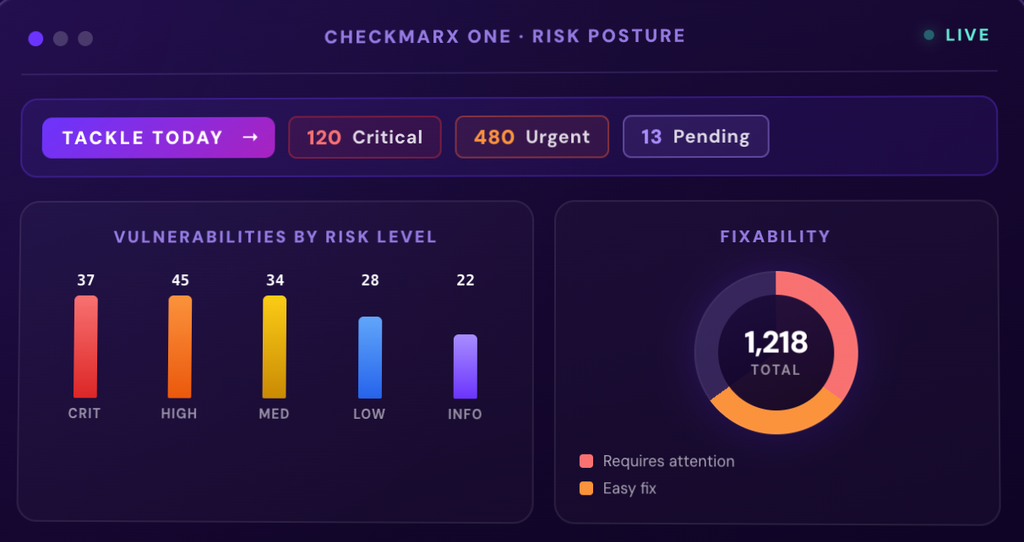
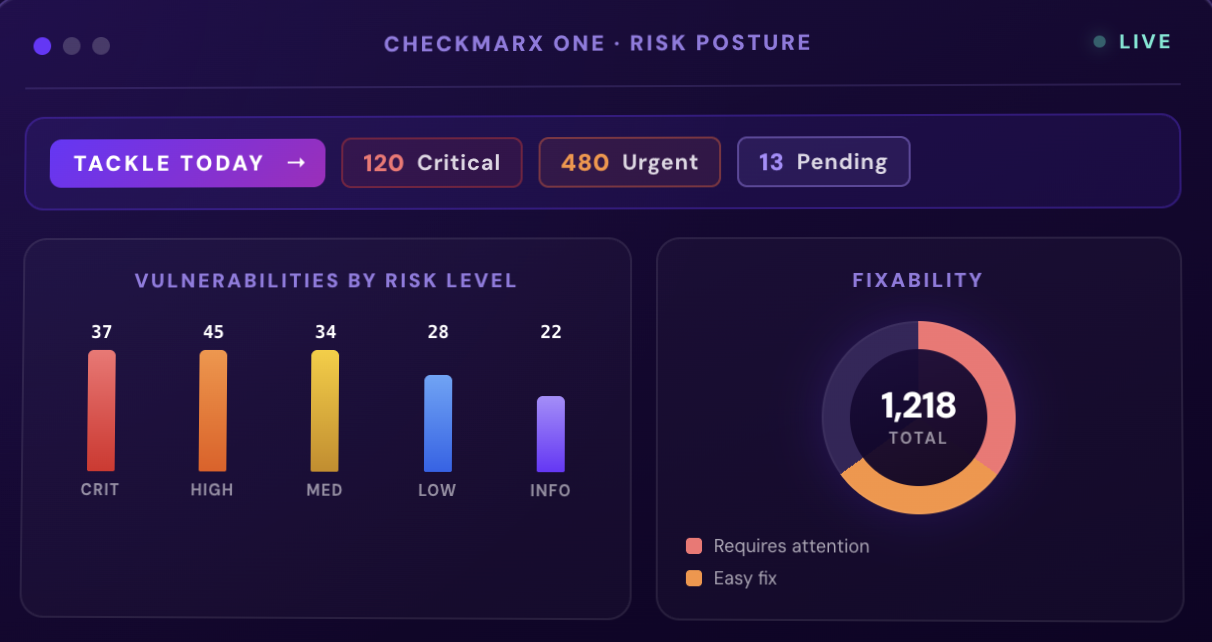
Checkmarx One is a unified, cloud-native application security platform that brings several testing engines together under a single risk view. It pairs deterministic scanning with AI reasoning in what Checkmarx calls a hybrid engine, and its coverage spans static analysis, software composition analysis, dynamic testing, API security, infrastructure as code, container security, secrets detection, and software supply chain security.
The platform layers Application Security Posture Management (ASPM) on top of these engines to correlate findings, and it adds a family of AI agents, Checkmarx One Assist, that operate inside developer tools to detect and remediate issues. Checkmarx centers the platform around the full software development lifecycle, from the first line of code through runtime, including AI-generated and legacy code. It also offers an on-premises SAST option alongside the cloud platform.
Key features include:
- Hybrid scanning across every surface: Checkmarx One combines deterministic rules with AI reasoning across multiple engines, including next-generation SAST, SCA, DAST, API security, IaC security, container security, and secrets detection. Results from these engines are consolidated into a single view rather than reported separately, with findings ranked by exploitability so teams address higher-priority issues first.
- Unified risk intelligence and governance (ASPM): The platform correlates findings across scanners and enriches them with business context to create one prioritized view of application risk. Security teams can track remediation across every repository and application, enforce enterprise policies, and maintain visibility across human-written, AI-generated, and legacy code.
- AI security agents (Checkmarx One Assist): Developer Assist provides real-time vulnerability detection and contextual fix recommendations inside the IDE as code is written, while Triage & Remediation Assist handles automated prioritization and merge-ready fixes. The agents are designed to reduce late-stage findings and backlog rework.
- Software supply chain and AI coverage: Beyond first-party code, Checkmarx One covers open-source dependencies, malicious package protection, container security, and repository health, and it generates an AI Bill of Materials (AI-BOM) to inventory AI components in the codebase. This extends scanning to the dependencies and AI elements introduced during modern development.
- Developer workflow integration: The platform connects to the IDEs, source control systems, CI/CD pipelines, and ticketing tools development teams already use, including VS Code, JetBrains, Visual Studio, and Eclipse on the IDE side, and GitHub, GitLab, Azure DevOps, and Bitbucket for source control. Feedback can be routed to Jira, Slack, Teams, or GitHub Issues so security travels with the code.
Limitations (as reported by users on Gartner Peer Insights):
- Reporting detail for external stakeholders: Some reviewers note that reports generated for sharing outside the platform can carry less detail than what is visible when viewing results directly in the console, so teams may need to supplement exported reports.
- Interface learning curve: A number of reviewers mention that the interface could be more intuitive, and that new users take some time to become comfortable navigating the platform.
- Tuning on very large codebases: On large code bases, reviewers report spending time triaging false positives, though they also note the platform is transparent about what triggered each finding and allows rules to be overridden to fit a team’s specifics.
Source: Checkmarx
2. Veracode

Best for: Organizations seeking a mature cloud-native AppSec platform with strong compliance, governance, and developer enablement.
Key strengths: Broad testing coverage across SAST, DAST, SCA, AI-assisted remediation, compliance reporting, and security training.
Things to consider: Licensing can be complex, large scans may impact CI pipelines, and implementation requires planning and product familiarity.
Veracode is a cloud-based application security platform that combines several testing types with remediation and governance tooling. Its core engines cover static analysis built on binary scanning, dynamic analysis of running web applications and APIs, software composition analysis, and container security, supported by a package firewall and an AI-assisted remediation product called Veracode Fix.
The platform centers on what the company calls Application Risk Management, with a Risk Manager (ASPM) layer for unified visibility and prioritization across the portfolio. Veracode draws on a vulnerability database built over two decades of research and scans code in a wide range of languages, with a focus on root-cause analysis and policy-based compliance. It also offers penetration testing as a service and developer security training through eLearning and Security Labs.
Key features include:
- Static and dynamic testing across the SDLC: Veracode provides SAST that analyzes source and compiled code, DAST that tests running web applications and APIs, and software composition analysis for open-source dependencies. These run within CI/CD pipelines so scanning happens as code moves through the development process rather than only at the end.
- AI-assisted remediation (Veracode Fix): The Fix product generates suggested code changes to resolve identified flaws, with the aim of reducing the manual effort needed to close findings. It is paired with root-cause analysis intended to help teams prioritize and address the underlying issues.
- Risk Manager (ASPM): Veracode’s ASPM layer aggregates findings into a single entry point across the application portfolio, giving both a general overview and the ability to drill into specific security findings. This supports prioritization and policy enforcement across multiple applications.
- Package Firewall and container security: A package firewall is positioned to secure development pipelines proactively against risky open-source components, and container security scans container technologies before production. These extend coverage beyond first-party code into dependencies and container artifacts.
- Compliance, training, and services: The platform includes policy and compliance reporting aligned to security standards, plus developer enablement through eLearning and hands-on Security Labs, and access to manual penetration testing as a service. This combination targets both technical remediation and audit and governance needs.
Limitations (as reported by users on G2):
- Cost and licensing model: Several reviewers describe costs increasing over time and note that each application can require a dedicated license, with the overall licensing model viewed as complex.
- Setup and learning curve: Some users report that the platform is relatively complex to implement and understand, and that effective use requires familiarity with the tool.
- Dependence on Veracode for false-positive handling: Reviewers note that mitigating false-positive findings is not always handled internally by the team and can require the Veracode admin team, which can interrupt workflow.
- Scan duration and consistency: Users report that large scans can be slow and may affect CI timing, and some describe inconsistency where a flaw is detected in one scan, missed in the next, and detected again later.
- Regional feature parity and support: A few reviewers mention features being delivered to the US market ahead of the EU, gaps between documentation and delivered functionality, and back-end support that did not always meet expectations.
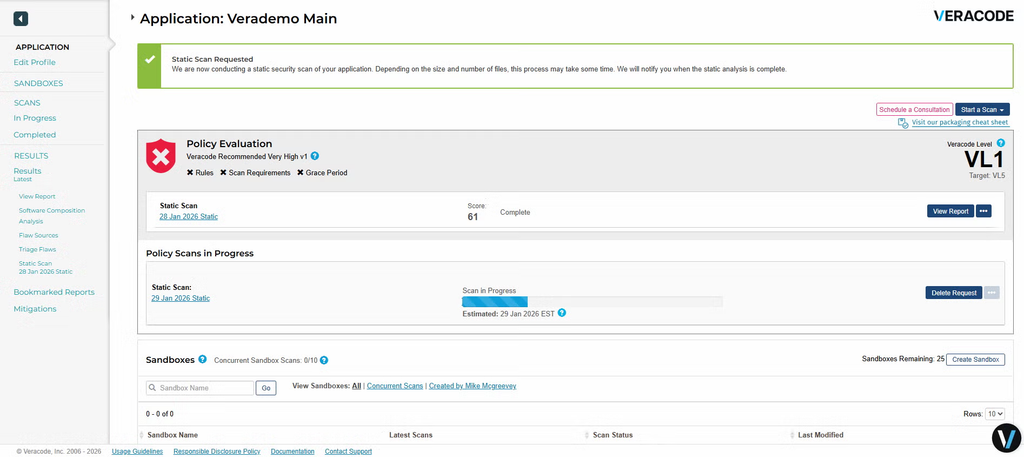
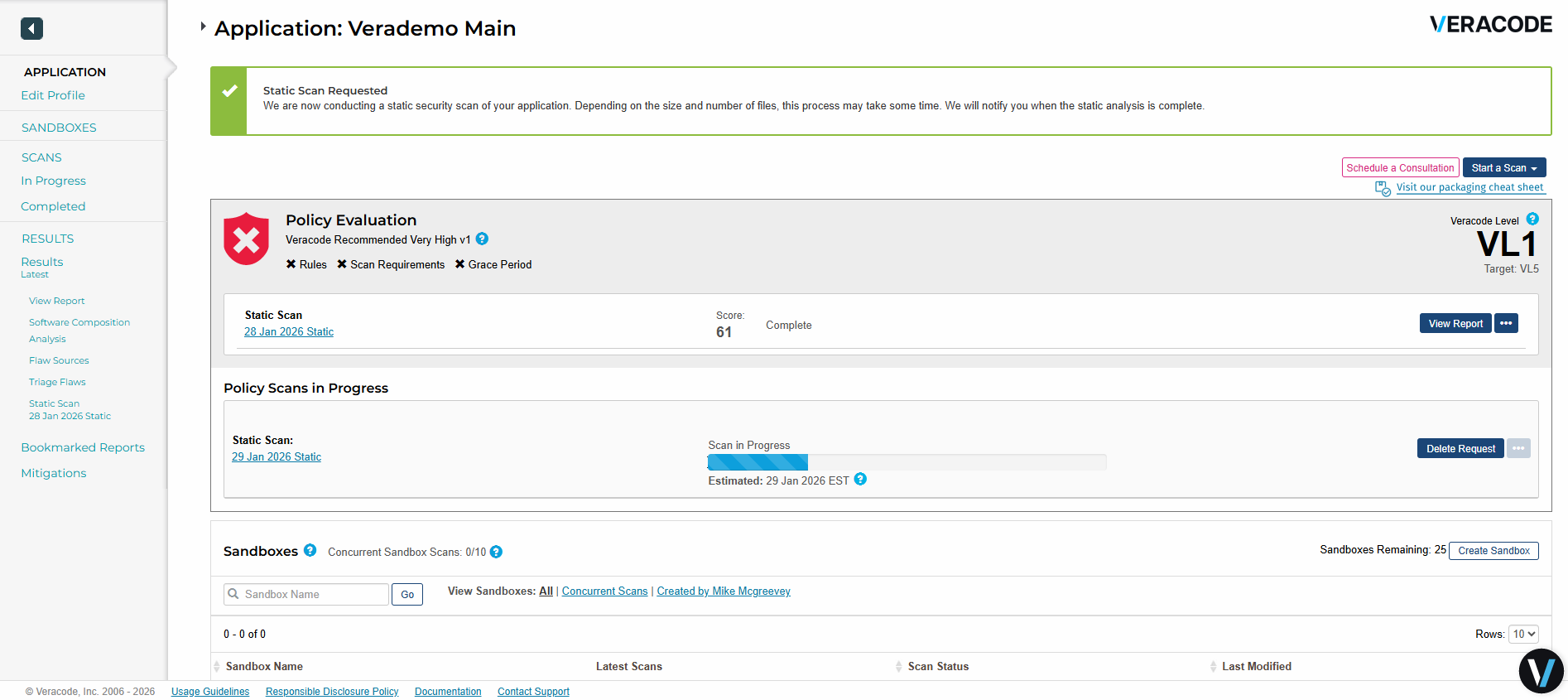
Source: Veracode
3. Mend.io
Best for: Organizations prioritizing open-source security, automated dependency management, and software supply chain security.
Key strengths: Reachability-based SCA, Renovate-powered dependency updates, fast SAST, and AI component governance.
Things to consider: Reporting and documentation may require improvement, and onboarding can be challenging for some organizations.
Mend.io (formerly WhiteSource) is an application security platform that unifies software composition analysis, static analysis, dependency management, container scanning, and AI security under a single offering. Its SCA product is built around reachability analysis to prioritize exploitable open-source vulnerabilities, and it uses the Renovate engine to automate dependency updates at scale.
Mend SAST scans first-party code with a focus on speed and supports more than 30 languages, including secrets scanning. The platform adds Mend AI to inventory and govern AI components such as models, agents, and system prompts, with red teaming and runtime guardrails. Mend prices its products together rather than as separate line items, and it integrates across IDEs, repositories, CI/CD, and package managers.
Key features include:
- Reachability-driven SCA: Mend SCA detects vulnerabilities in open-source dependencies and prioritizes them using reachability analysis along with EPSS and CVSS scoring, so teams focus on issues that are actually exploitable. It also flags malicious packages and supports SBOM generation.
- Automated dependency management (Renovate): Built on the Renovate engine, Mend automates open-source dependency updates across large, distributed codebases, opening update requests so teams can keep components current without manual tracking. This is positioned to reduce the exposure window for vulnerable dependencies.
- Fast SAST with secrets scanning: Mend SAST analyzes proprietary code with scans the company describes as up to ten times faster than traditional SAST, returning differential results in the repository and supporting over 30 languages. It also detects hardcoded credentials in source and configuration files and can trigger policy violations and build failures.
- AI component security (Mend AI): Mend AI inventories the AI components in a codebase, including models, agents, and shadow dependencies, applies policies, and offers AI red teaming and runtime guardrails. An MCP server connects to agentic IDEs to check AI-generated code and dependencies before they enter the repository.
- Governance and policy enforcement: The platform applies open-source license policy enforcement in real time, tracks remediation SLAs, and can block non-compliant components before merge, with a single web interface managing all products and full SCM integrations.
Limitations (as reported by users on Gartner Peer Insights):
- Reporting and UI tuning at scale: Some reviewers note that certain UI and reporting features required additional tuning to maintain performance in larger environments.
- Documentation and communication: Reviewers describe out-of-date documentation and customer communication as a challenge in some cases.
- Onboarding support: A few users report that support during initial onboarding and deployment was limited, which made the early stages of the project more difficult.
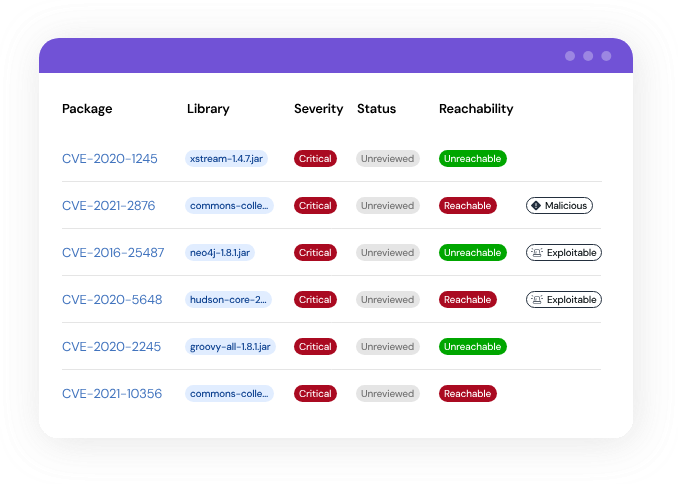
Source: Mend
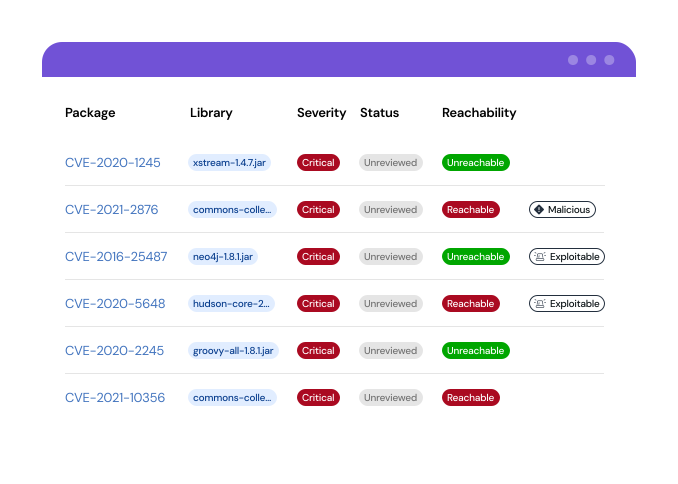
4. Black Duck

Best for: Enterprises that require deep software composition analysis, SBOM generation, and open-source license compliance.
Key strengths: Advanced dependency discovery, curated vulnerability intelligence, comprehensive SBOM support, and flexible deployment options.
Things to consider: Performance can decline on very large projects, and reporting may require additional interpretation for non-technical stakeholders.
Black Duck, spun off from Synopsys as an independent company, provides software composition analysis for managing security, license compliance, and code quality risks in open-source and third-party code. The product combines multiple scan technologies, including dependency analysis, source and binary scanning, and open-source snippet detection, to identify components even when they are not explicitly declared.
It generates SBOMs in SPDX and CycloneDX formats and draws on a large component knowledge base and its own security advisories that go beyond the public vulnerability database. Black Duck can also detect AI-generated code and embedded AI/ML models for compliance purposes. It supports cloud, on-premises, and air-gapped deployments, with an IDE plug-in for in-development feedback.
Key features include:
- Multi-technique dependency discovery: Black Duck SCA combines dependency analysis, source and binary scanning, and snippet detection to build a complete picture of the components in an application, container, or other artifact. This is aimed at finding dependencies that simpler manifest-based scans can miss.
- SBOM generation and supply chain visibility: The product generates SBOMs in SPDX and CycloneDX formats to meet industry, regulatory, and customer requirements, and supports regulations such as the EU Cyber Resilience Act. It provides visibility into direct and transitive dependencies across the software supply chain.
- Curated vulnerability intelligence (BDSA): Black Duck Security Advisories go beyond the public National Vulnerability Database with same-day notification and remediation guidance, drawing on a component database human-validated by the company’s research center. This is intended to reduce the lag and noise associated with relying on public feeds alone.
- AI code and model detection: The product evaluates AI-generated code with the same checks as traditional open source, including snippet analysis for license conflicts, and it detects third-party AI/ML models embedded in projects to support risk evaluation and disclosure.
- Flexible deployment and IDE feedback: Black Duck offers cloud, on-premises, and air-gapped deployment, and its Code Sight IDE plug-in flags vulnerable components and provides remediation guidance before developers check in code. A common set of scanning and analysis technologies underpins results across these environments.
Limitations (as reported by users on Gartner Peer Insights):
- Reporting clarity and history: Reviewers mention limited traceability of history and note that reports can be difficult to interpret for non-security audiences.
- Performance on large projects: Several reviewers report performance issues when scanning large projects or loading projects in the dashboard.
- Scanning coverage gaps: Some users describe issues such as SBOM import not working as expected and composition scanning for C code making assumptions about version numbers and licenses, which can affect accuracy.
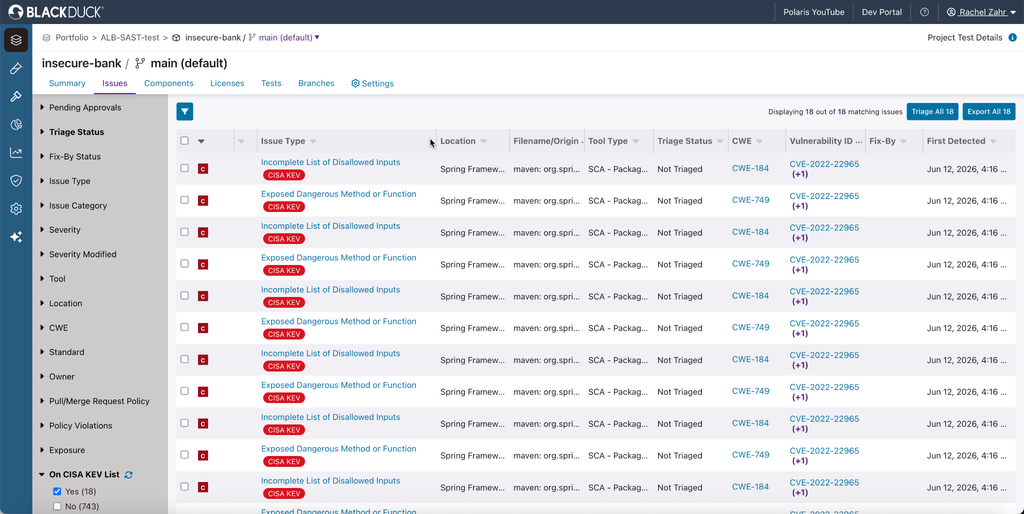
Source: Black Duck
Developer-First and Open-Source-Rooted Scanners
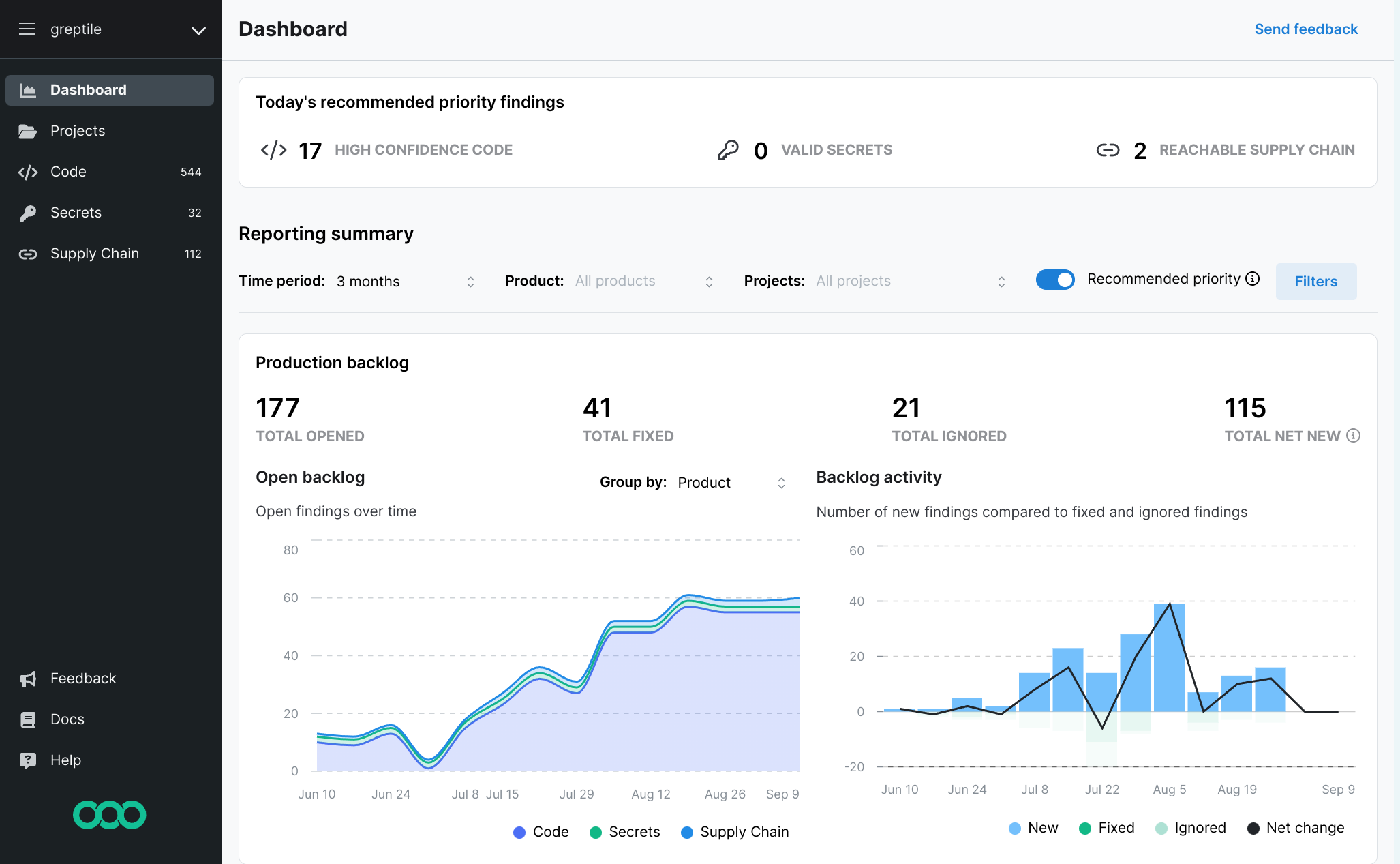
5. Semgrep

Best for: Developer-focused teams that want fast, customizable static analysis integrated into everyday development workflows.
Key strengths: Fast pattern-based scanning, customizable rules, reachability-based SCA, and AI-assisted triage.
Things to consider: Initial rule tuning is often required, custom rule creation has a learning curve, and broader AppSec coverage may require additional products.
Semgrep is a developer-focused application security platform built around a fast, pattern-matching static analysis engine that has roots in a widely used open-source edition. Its commercial AppSec Platform brings together Semgrep Code for SAST, Semgrep Supply Chain for software composition analysis with reachability, and Semgrep Secrets for credential detection, with an AI assistant for triage and remediation.
The Pro Engine adds cross-file and cross-function dataflow analysis to improve results over the open-source Community Edition, and rules are written in a pattern syntax that mirrors source code rather than a separate query language. Semgrep emphasizes diff-aware scanning that focuses on current changes and integrates results into pull requests. The platform centralizes rule management, policy enforcement, and reporting for security teams.
Key features include:
- Pattern-based SAST (Semgrep Code): Semgrep Code scans first-party code using cross-file and cross-function analysis through its Pro Engine, with rules written in a syntax that resembles the code being scanned. Teams can write and share custom rules across the organization to enforce internal coding standards without learning a dedicated query language.
- Reachability-based SCA (Supply Chain): Semgrep Supply Chain detects vulnerabilities in open-source dependencies and uses reachability analysis to flag dependencies whose vulnerable code is actually used, which the company describes as substantially reducing high- and critical-severity false positives. It also blocks known malware in dependencies.
- Secrets detection with validation: Semgrep Secrets combines semantic and entropy analysis with validation against external services to confirm whether a detected credential is live, with the goal of blocking unsafe merges by default rather than flagging every string that resembles a secret.
- AI triage and remediation (Assistant): Semgrep Assistant provides AI-generated triage and code-fix recommendations, and the platform’s multimodal detection combines rule-based analysis with AI reasoning to surface issues such as business-logic flaws that pattern rules alone may miss.
- Policies, diff-aware scans, and centralized management: The AppSec Platform manages rules and policies, can block pull requests from merging, and runs diff-aware scans that focus on current changes rather than the full backlog. Centralized dashboards and reporting give security teams visibility across code, supply chain, and secrets.
Limitations (as reported by users on G2):
- Out-of-the-box noise: Reviewers report that results can be noisy with false positives by default, requiring upfront tuning and rule customization to reduce irrelevant findings.
- Rule-writing learning curve: Some users note that crafting effective custom rules takes a degree of expertise, which can be challenging for newcomers and for more complex vulnerability patterns.
- Limited context on its own: Reviewers mention that Semgrep on its own can provide limited context, so determining whether a finding is genuinely exploitable may require supplementary tools.
- Platform maturity: Some users describe the management application as still maturing, with minor bugs around the rule editor and rule board, though they note responsive support.
- Breadth relative to all-in-one suites: Reviewers note that the core focus is on code security, so teams wanting built-in coverage of areas such as infrastructure as code or containers may need additional products.
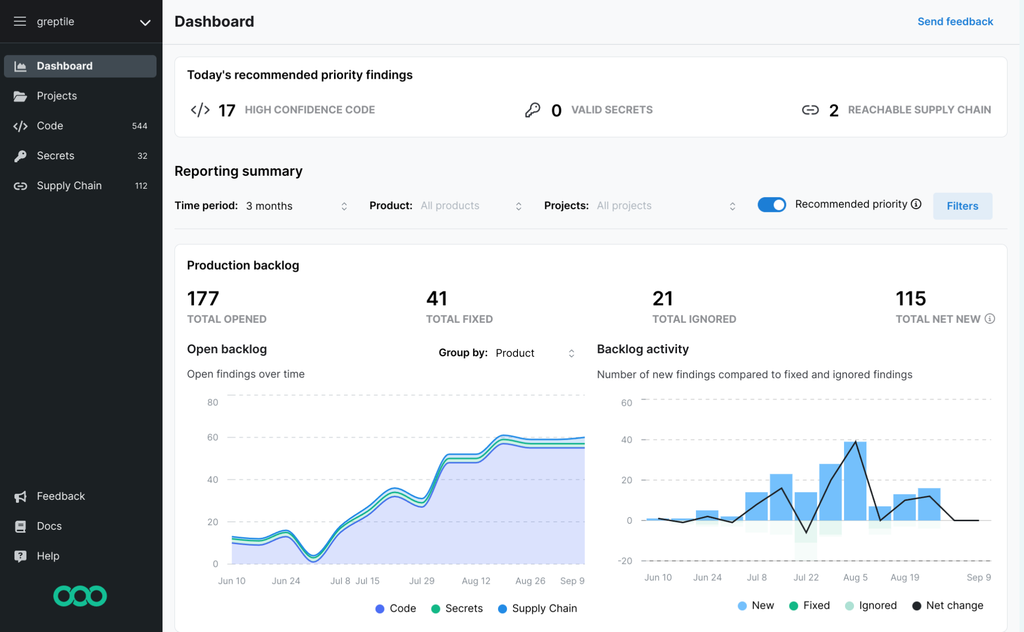
Source: Semgrep
6. SonarQube
Best for: Organizations that want to combine code quality management with application security testing across the SDLC.
Key strengths: Integrated code quality and security analysis, taint analysis, Quality Gates, and broad language support.
Things to consider: Initial setup and rule tuning require effort, and advanced security capabilities are limited to commercial editions.
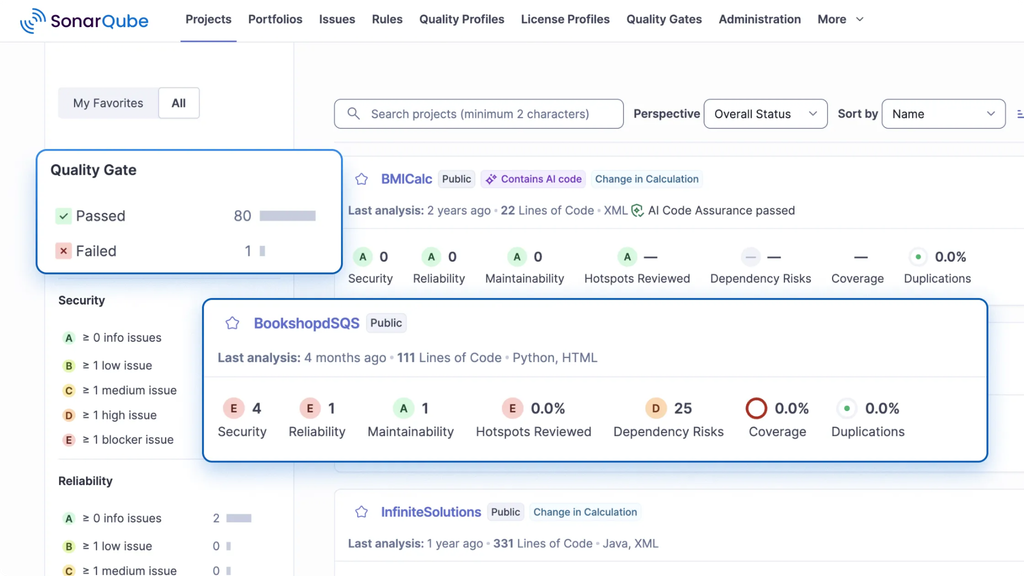
SonarQube, from Sonar (formerly SonarSource), is a code quality and security analysis platform that combines static application security testing with broader code-health analysis. It is available as the self-hosted SonarQube Server, the SaaS-based SonarQube Cloud, and SonarQube for IDE, and it supports more than 35 programming languages and frameworks. Its analysis covers bugs, security vulnerabilities, security hotspots, leaked secrets, and code smells, with a taint-analysis engine that traces data flow to find injection flaws.
An Advanced Security add-on extends SAST into third-party libraries and adds software composition analysis, while Quality Gates enforce policy thresholds before code is merged or deployed. SonarQube also offers AI CodeFix for context-aware fix suggestions and maps findings to standards such as the OWASP Top 10 and CWE.
Key features include:
- Combined quality and security analysis: SonarQube analyzes code for bugs, vulnerabilities, security hotspots, secrets, and maintainability issues in a single platform, on the premise that code quality and security are closely linked. It integrates into IDEs, pull requests, and CI/CD pipelines to catch issues early.
- Taint and data-flow analysis: A taint-analysis engine tracks data flow across files and functions to detect injection vulnerabilities such as SQL injection, cross-site scripting, and SSRF, with framework awareness intended to produce more relevant findings and fewer false positives.
- Advanced Security with SCA: The Advanced Security offering extends SAST to trace data flow into and out of third-party libraries, addressing a blind spot in traditional static analysis, and pairs this with software composition analysis so dependencies are held to the same standard as first-party code.
- Quality Gates and policy enforcement: Quality Gates define conditions code must meet, such as coverage and limits on new issues, and can block a pull request from merging through PR decoration in GitHub, GitLab, Bitbucket, or Azure DevOps. This provides an automated enforcement mechanism tied to branch protection.
- Secrets detection, IaC scanning, and AI CodeFix: SonarQube detects leaked secrets in the IDE and CI/CD pipeline, scans infrastructure as code, and offers AI CodeFix, which uses large language models to generate context-aware fix suggestions within the developer’s workflow. Compliance reporting maps results to standards including NIST SSDF, OWASP, and CWE.
Limitations (as reported by users on G2):
- Initial setup and rule tuning: Reviewers note that initial setup and rule tuning take time, and that default rules can feel overly strict, particularly for older or legacy projects.
- Overwhelming first results: Some users describe early scans generating very large numbers of issues, which requires effort to prioritize rather than attempting to fix everything at once.
- Features gated to paid editions: Reviewers point out that advanced capabilities such as branch analysis and deeper security analysis are not included in the free Community Edition.
- Reporting and navigation: Users mention that reporting could be improved and that navigating and triaging findings becomes time-consuming when the issue count grows large.
- Pricing complexity: Some reviewers describe the pricing model as complex and, for certain teams, on the costly side.
Source: SonarQube

7. Aikido Security
Best for: Small and mid-sized development teams looking for broad application and cloud security coverage from a single platform.
Key strengths: Consolidated multi-scanner platform, AI-powered remediation, strong noise reduction, and developer-friendly workflows.
Things to consider: Enterprise governance and runtime capabilities are less mature than larger platforms, and advanced customization is more limited.
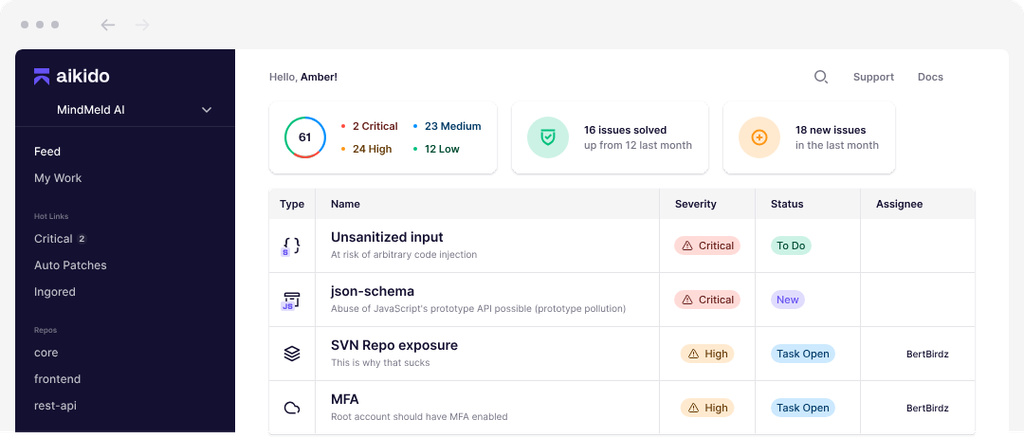
Aikido Security is a developer-oriented application security platform that consolidates a range of scanners into a single product spanning code, cloud, and runtime. Its coverage includes static analysis, software composition analysis, secrets detection, infrastructure as code scanning, container scanning, dynamic application security testing, cloud security posture management, license scanning, and malware detection.
Aikido emphasizes noise reduction through auto-ignore rules and reachability analysis, and it offers AI-powered auto-triage and auto-fix that open pull requests for remediation. The platform integrates with common source control, CI/CD, and task-management tools, and it offers both a cloud SaaS deployment and a local scanner so sensitive data can stay within a customer’s environment. It is positioned for teams that want broad coverage from one tool rather than assembling separate point solutions.
Key features include:
- Consolidated multi-scanner coverage: Aikido combines SAST, SCA, secrets, IaC, container scanning, DAST, and cloud posture management in a single platform, scanning container images for vulnerable packages and unsafe configurations across base images, Dockerfile commands, and Kubernetes workloads. This is aimed at replacing several point solutions with one interface.
- Noise reduction and reachability: Auto-ignore rules filter out false positives, and reachability analysis helps prioritize issues that affect code actually in use. Aikido also deduplicates findings, reporting a repeated issue once rather than many times, to reduce triage effort.
- AI auto-triage and auto-fix: The platform uses AI to triage findings and to generate fixes, automatically opening pull requests for container, SAST, IaC, and SCA issues. It can also adjust severity scores based on context such as which environments and resources a team considers critical.
- Cloud security posture management: Aikido scans AWS, GCP, and Azure environments for misconfigurations and policy violations using read-only APIs across a large number of resource types, maps issues to frameworks such as CIS Benchmarks, SOC 2, ISO 27001, and PCI DSS, and monitors continuously for drift and new resources.
- Developer workflow and deployment options: The product integrates with IDEs, CI/CD pipelines such as GitHub Actions, GitLab, CircleCI, and Jenkins, and task managers such as Jira and Linear, and offers a local scanner option for container scanning so only results, not source, leave the environment.
Limitations (as reported by users on G2):
- Alert volume on first connection: Reviewers note that connecting everything can surface a large number of findings initially, so prioritization still involves work to decide what to fix first.
- Customization for larger environments: Some users would like deeper policy and reporting customization and additional advanced configuration options for larger or more complex, compliance-heavy environments.
- Documentation depth: Reviewers mention that documentation is good for setup but could include more troubleshooting guidance and examples explaining why a particular finding was generated.
- Enterprise and runtime depth: Some users note limits in advanced enterprise features, including deeper runtime controls, relative to larger enterprise-focused platforms.
- Pricing for smaller teams: A few reviewers mention that pricing can be a consideration for smaller teams.
Source: Aikido
.svg)
Cloud-Native and Container Security
8. Aqua Security
Best for: Organizations securing cloud-native applications, Kubernetes, and container workloads across development and runtime.
Key strengths: Comprehensive CNAPP capabilities, strong runtime protection, Kubernetes security, and flexible SaaS or self-hosted deployment.
Things to consider: Agentless deployments provide less runtime visibility than agent-based protection, some workload coverage gaps have been reported, and organizations should evaluate overlap with existing cloud security tools.
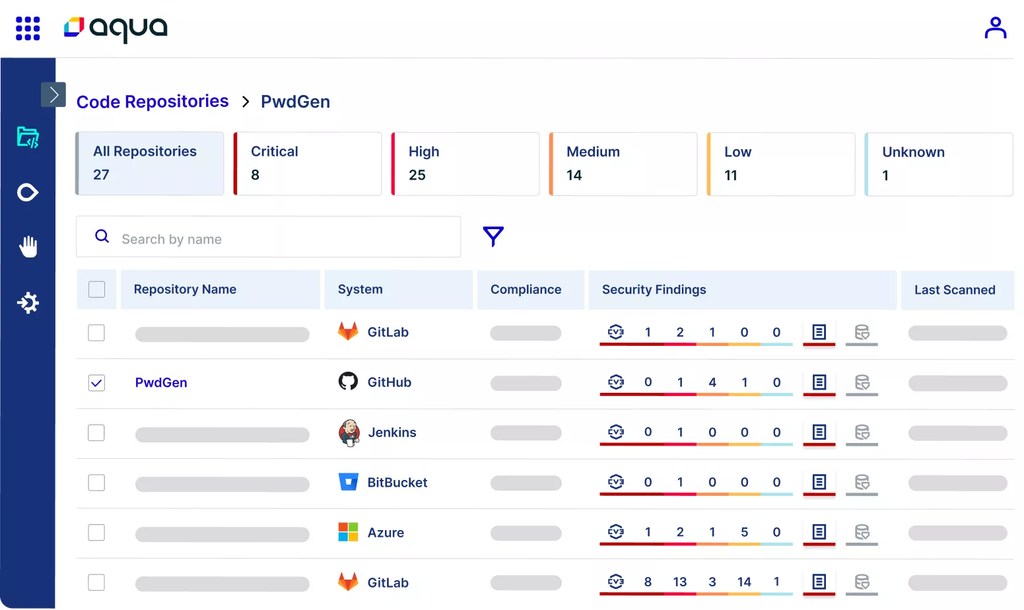
Aqua Security is a Cloud Native Application Protection Platform (CNAPP) focused on securing containerized and cloud-native applications from development through runtime. It scans container images for vulnerabilities, secures Kubernetes workloads, and protects running workloads with real-time, intelligence-driven detection, combining agent and agentless technology in a single platform.
Aqua’s coverage spans container image scanning, Kubernetes security posture management, cloud security posture management, and cloud workload protection, with infrastructure-as-code scanning to shift checks earlier. The platform supports major clouds and orchestrators and offers both SaaS and self-hosted deployment, including air-gapped environments. It also includes capabilities such as sandbox-based threat analysis and runtime virtual patching for vulnerabilities that cannot be immediately fixed.
Key features include:
- Full-lifecycle container security: Aqua scans container images for vulnerabilities and enforces pre-deployment hygiene through image and Kubernetes assurance policies, then mitigates attacks in real time in production. Scanning runs from build through running environments to keep vulnerable images out of production.
- Kubernetes posture management: Powered by Open Policy Agent, Kubernetes Assurance Policies apply out-of-the-box and custom Rego-based rules to control the security posture of workloads based on image contents, configuration, and pod attributes, working alongside image assurance to prevent unsafe deployments.
- Runtime protection: The platform provides multi-layered, intelligence-driven runtime protection to detect and stop attacks in real time, with behavioral profiling to flag anomalous activity. Dynamic Threat Analysis sandboxes suspicious container images to identify advanced malware before deployment.
- Cloud and AI workload coverage: Aqua extends across containers, Kubernetes, serverless functions, VMs, and AI workloads, providing visibility across multi-cloud environments and policy-driven posture controls to identify and fix the most important cloud and AI security risks.
- Flexible deployment with virtual patching: The platform offers SaaS and self-hosted deployment, including air-gapped support, across clouds such as AWS, Azure, and GCP and orchestrators such as EKS, AKS, GKE, and OpenShift. vShield technology can virtually patch vulnerabilities at runtime without modifying container images.
Limitations (as reported by users on Gartner Peer Insights):
- Coverage gaps for some workloads: One reviewer notes that, at the time of review, the product did not have a solution for ECS containers that worked for their organization, limiting visibility into those image vulnerabilities.
- Support responsiveness: Some users mention that the ticketing system could be improved to respond to customers faster.
- Agentless trade-offs: Reviewers note that agentless deployment, while convenient, cannot see in-container process behavior, so the choice between agent and agentless modes involves a real trade-off.
- Overlap with existing tooling: Some users point out that a broad CNAPP can overlap with point solutions a team already runs, such as CI image scanners and admission controllers, which warrants mapping coverage before committing.
Source: Aqua Security

9. Wiz

Best for: Organizations securing large multi-cloud environments with agentless cloud security and attack-path prioritization.
Key strengths: Agentless deployment, Security Graph, attack-path analysis, and comprehensive code-to-cloud visibility.
Things to consider: Premium pricing, alert tuning is often required, and workload sizing can be more complex than expected.
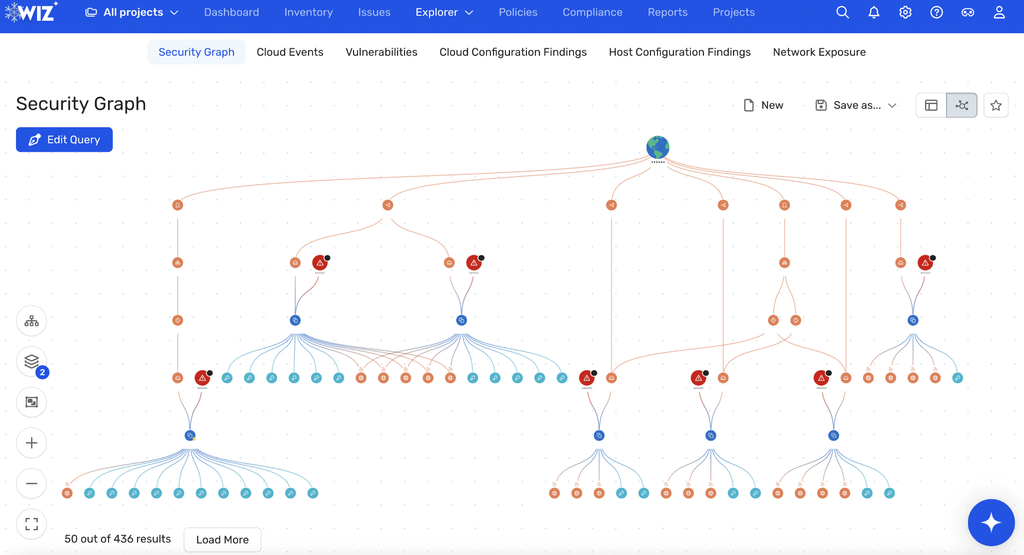
Wiz is an agentless Cloud Native Application Protection Platform that connects code, cloud, and runtime into a single context graph. It works by connecting to cloud provider APIs to scan virtual machines, containers, identities, data stores, and network configurations, then builds a Security Graph that maps how components relate and surfaces real attack paths.
The platform consolidates cloud security posture management, workload protection, entitlement management, data security posture management, vulnerability management, and code security, and it adds AI security to cover models, pipelines, and the data behind AI applications. Wiz offers three modules: Wiz Cloud for posture and workload coverage, Wiz Code for code-to-cloud application security, and Wiz Defend for runtime detection. It integrates with a large ecosystem of security tools through its integration network.
Key features include:
- Agentless scanning and the Security Graph: Wiz connects to cloud APIs to scan resources without installing agents and builds a Security Graph that maps relationships between resources, identities, vulnerabilities, and network exposure. A full risk profile is typically available within a day of connecting cloud accounts.
- Attack-path analysis and toxic combinations: Rather than presenting flat lists of issues, Wiz identifies attack paths and prioritizes “toxic combinations” of risks that together create real exposure, helping teams focus on what is actually exploitable in production.
- Consolidated cloud coverage (Wiz Cloud): The platform combines cloud security posture management, cloud workload protection, cloud infrastructure entitlement management, and data security posture management across AWS, Azure, GCP, OCI, and Kubernetes, analyzing effective permissions to show who has access to what.
- Code-to-cloud and runtime modules: Wiz Code brings security into CI/CD and can open one-click fix pull requests to address issues at the source, while Wiz Defend provides runtime threat detection, extending coverage from development through production.
- AI security and broad integrations: Wiz secures AI applications across infrastructure, data, access, models, agents, and applications, treating AI security posture management as part of the same graph and policy engine, and it connects to more than 200 tools through the Wiz Integration Network.
Limitations (as reported by users on G2):
- Pricing: Reviewers note that pricing can be higher than competitors and a barrier for smaller organizations, though many feel the value offsets it.
- Sizing complexity: Some users describe workload-based sizing as not straightforward, since it can require running a script to inventory the environment, which is not always permitted.
- Alert volume: Reviewers mention that the volume of alerts can be overwhelming and requires careful tuning to manage effectively.
- Reporting and granularity: Some users highlight a need for improvement in granularity and reporting functions for better usability.
- Remediation accuracy and integrations: Reviewers note that suggested fixes are not always accurate for a given codebase, and that integrations with tools such as Splunk, ServiceNow, and Jira, along with deeper Kubernetes monitoring, could be refined.
Source: Wiz

10. Prisma Cloud

Best for: Enterprises that need comprehensive cloud-native application protection across code, infrastructure, workloads, and runtime.
Key strengths: Broad CNAPP capabilities, strong IaC security, AI-powered risk prioritization, and code-to-cloud visibility.
Things to consider: Deployment can be complex, pricing is relatively high, and customers should understand the ongoing transition to Cortex Cloud.
Prisma Cloud, from Palo Alto Networks, is a Cloud Native Application Protection Platform that secures applications from code to cloud across multicloud and hybrid environments. It provides continuous visibility and threat prevention throughout the application lifecycle, with optional components covering code, infrastructure, workloads, data, networks, cloud identities, and web applications and APIs.
Its code security capabilities build on the Checkov open-source scanner to check infrastructure-as-code templates such as Terraform, CloudFormation, Kubernetes, Helm, and ARM against compliance benchmarks. Prisma Cloud uses AI-powered risk prioritization to analyze the blast radius of at-risk assets and link production issues back to their origin in source code. Palo Alto Networks has been folding Prisma Cloud into a broader offering called Cortex Cloud, with existing capabilities preserved.
Key features include:
- Code-to-cloud CNAPP coverage: Prisma Cloud unifies cloud security posture management, workload protection, entitlement management, and data security posture management, with optional components spanning code, infrastructure, workloads, data, networks, identities, and web applications and APIs across major clouds.
- Infrastructure-as-code security: The platform’s code security module, built on the widely used Checkov scanner, checks IaC templates including Terraform, CloudFormation, Kubernetes manifests, Helm charts, and ARM templates against benchmarks such as CIS, NIST, and PCI before deployment.
- AI-powered risk prioritization: Prisma Cloud uses what Palo Alto Networks calls Precision AI to analyze the blast radius from at-risk assets and prioritize complex risks, processing a large volume of events daily to maintain visibility across the cloud estate.
- Code-to-cloud intelligence: The platform links production security issues back to specific remediation recommendations in source code, with capabilities such as an application-centric view of cloud services and cloud discovery and exposure management to surface unknown internet-facing assets.
- AI and web application security: Prisma Cloud extends to securing AI model training data, model integrity, and deployed-model access, and includes web application and API security and cloud network security as part of its broader code-to-cloud coverage.
Limitations (based on publicly available sources):
- Setup complexity: Users report that the platform can be complex to set up and difficult to understand, particularly for teams new to the Palo Alto Networks ecosystem.
- Query flexibility: Some users note that custom analysis relies on the platform’s own query language, which can limit flexibility for certain tasks, and that significant control must be handed to the platform.
- Pricing: Reviewers across Palo Alto Networks products describe pricing as steep and not always transparent, which can be a barrier for smaller organizations.
- Documentation and support: Users mention that documentation can be scattered and support response times inconsistent in some cases.
- Product transition: Prisma Cloud is being consolidated into Palo Alto Networks’ Cortex Cloud platform, so prospective buyers should confirm current packaging and the migration path, even though existing capabilities are being preserved.
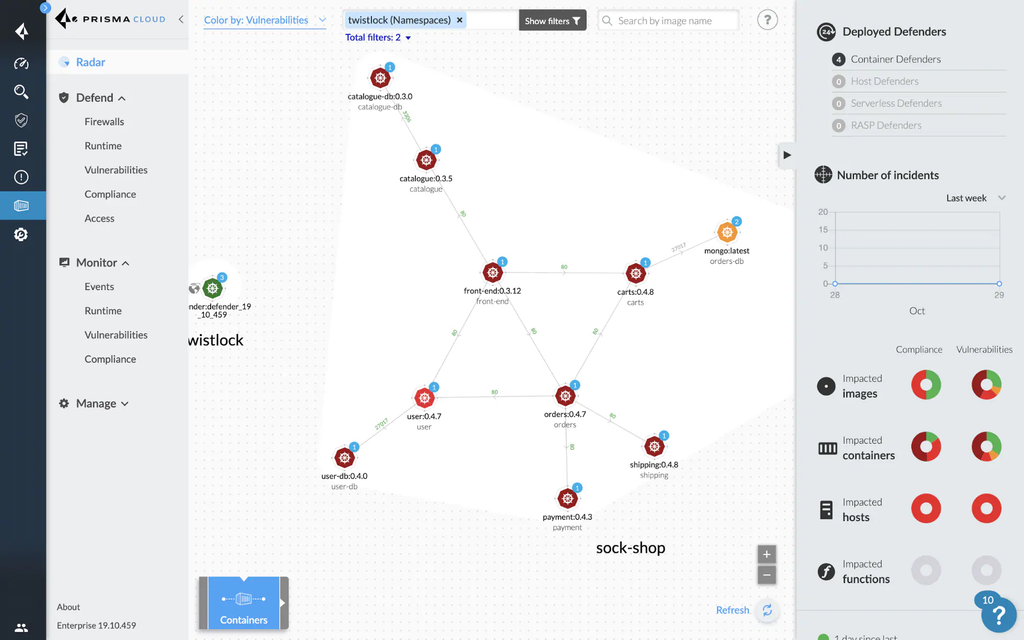
Source: Palo Alto Networks

How to Evaluate Snyk Alternatives
Choosing a Snyk alternative requires looking beyond feature checklists and comparing how well each platform supports your organization’s security goals, development workflows, governance requirements, and scale.
The strongest alternatives balance developer experience with enterprise security needs while providing accurate detection, actionable prioritization, and operational visibility. During evaluations, organizations should focus on practical outcomes such as risk reduction, remediation efficiency, policy enforcement, and long-term cost effectiveness.
- Broad Coverage: Look for platforms that provide security coverage across multiple testing domains rather than focusing primarily on one area. This includes SAST, SCA, supply chain security, container security, infrastructure as code, API security, DAST, developer education, and SDLC integrations. Organizations with diverse technology stacks should also verify language and framework support, especially for legacy applications and less common programming languages. Broader coverage can reduce tool sprawl and simplify security operations.
- Detection Accuracy: Detection quality should be a core evaluation criterion. Compare true positives, false positives, and false negatives using real applications whenever possible. While false positives create noise, false negatives can be more problematic because vulnerabilities remain undiscovered. Proof-of-value testing can help determine how accurately a platform identifies security issues across the languages, frameworks, and architectures used by the organization.
- Risk-Based Findings: Security teams often struggle with alert overload, making prioritization critical. Evaluate whether the platform can distinguish between vulnerabilities that are merely present and those that pose meaningful risk. Features such as exploitability analysis, malicious package detection, application context, and risk-based prioritization can help developers focus on the issues that require immediate attention instead of reviewing large volumes of lower-priority findings.
- Remediation Capabilities: Detection alone provides limited value without effective remediation support. Assess whether the platform offers clear remediation guidance, code-level recommendations, upgrade paths, automated fixes, ticket creation, and workflow integrations. Strong remediation capabilities help reduce mean time to remediate (MTTR) and make it easier for developers to address vulnerabilities without extensive security expertise.
- AI and Automation Features: AI capabilities should be evaluated based on practical outcomes rather than marketing claims. Useful capabilities include secure coding assistance, AI-generated fix recommendations, validation of AI-generated code, and automated policy enforcement. Automation should also extend to scanning, reporting, ticket creation, pull request workflows, and CI/CD integration to reduce manual effort across the software development lifecycle.
- Developer Workflow Integrations: Security tools are more likely to succeed when they fit naturally into existing development workflows. Evaluate integrations with IDEs, source control systems, pull requests, CI/CD platforms, command-line tools, and issue-tracking systems. At the same time, organizations should ensure these integrations support centralized visibility and policy enforcement, particularly in large development environments.
- Visibility and Reporting: Reporting should serve developers, security teams, managers, and executives. Evaluate dashboard quality, reporting flexibility, application-level views, trend analysis, and the ability to organize projects into meaningful business structures. Strong visibility helps organizations understand risk posture, track remediation progress, and communicate security performance across stakeholders.
- Governance and Compliance: Enterprise security programs often require more than vulnerability detection. Assess capabilities such as policy management, build-breaking controls, role-based access control, audit trails, exception handling, compliance mapping, and organizational segmentation. Governance features become increasingly important as organizations scale security practices across multiple teams, repositories, and business units.
- Service and Enablement: Vendor support can significantly impact implementation success and long-term adoption. Evaluate onboarding assistance, technical support quality, professional services, customer success resources, training programs, and documentation. Strong enablement services help organizations operationalize the platform faster and support ongoing program maturity.
- Total Cost of Ownership: The lowest subscription price does not always result in the lowest overall cost. Organizations should evaluate licensing models, developer-based pricing, product add-ons, implementation effort, support requirements, operational overhead, and future scaling costs. The most cost-effective solution is often the one that improves remediation efficiency, reduces manual effort, and supports long-term security goals without requiring significant additional tooling.
Conclusion
Snyk is one of the best-known developer security platforms because it combines application security testing, open-source dependency analysis, container security, infrastructure as code scanning, API security, and AI-assisted development into a developer-first experience. For many organizations, it provides an effective way to shift security earlier in the software development lifecycle without disrupting developer workflows.
However, the right choice depends on an organization’s product requirements, workflow priorities, pricing expectations, governance needs, and whether it requires a broader unified application security platform rather than a platform centered primarily on developer productivity.
Organizations with mature enterprise application security programs may find a stronger fit with unified platforms like Checkmarx, which combines a broader set of testing technologies with Application Security Posture Management (ASPM), centralized governance, enterprise-scale reporting, and cross-engine risk correlation. Checkmarx brings together AI-assisted remediation, software supply chain protection, and strong policy management, better suited for organizations that need consistent security controls, portfolio-wide visibility, and centralized management across large development environments.