
Summary
Code security tools automate vulnerability detection across the SDLC. Examples include Checkmarx One (best for enterprise AppSec platforms), Veracode (risk management and compliance), Snyk (developer-first security), and Black Duck (software supply chain security).
What Are Code Security Tools?
Code security tools automate vulnerability detection and remediation across the software development lifecycle. The best tools focus on your development stack and integrate directly into your CI/CD pipelines.
Many code security tools integrate directly into development environments, version control platforms, and CI/CD pipelines. This allows developers to receive security feedback while writing code, opening pull requests, or running builds. By shifting security checks earlier in the development lifecycle, organizations can fix issues when they are easier and less expensive to remediate.
The goal of a code security tool is not only to identify vulnerabilities but also to help teams prioritize, review, and remediate them efficiently. This improves software security, reduces risk, and supports secure development practices at scale.
Core scanning categories include:
- SAST and source code analysis: Analyzes proprietary application code to identify vulnerabilities, insecure coding patterns, and logic flaws before deployment.
- Code security review and developer assistance: Supports secure coding with automated code review, remediation guidance, and developer-focused security feedback.
- SCA, dependency, and supply chain analysis: Identifies vulnerable open-source components, license risks, and software supply chain exposures across dependencies.
- Secret detection: Detects exposed API keys, credentials, tokens, and other sensitive data before they are committed or shared.
- Repository and policy-oriented security tools: Enforces governance, repository security settings, branch protections, and organization-wide security policies.
- IaC scanning: Reviews infrastructure-as-code templates and configurations for misconfigurations, excessive permissions, and other security risks.
Code Security Tools at a Glance
The following table summarizes the code security tools reviewed in this article. We explore each of the tools in more detail below.
| Category | Tool | Best For | Key Strengths | Things to Consider |
| Comprehensive Application Security Platform | Checkmarx One | Enterprises | Unified AppSec platform, broad testing coverage, AI-assisted remediation | Initial deployment and policy tuning require AppSec expertise |
| Comprehensive Application Security Platform | Veracode | Compliance-driven organizations | Mature testing portfolio, risk prioritization, governance | Higher licensing costs and implementation complexity |
| Comprehensive Application Security Platform | Snyk | Developer-first teams | Excellent IDE integration, dependency security, AI-powered fixes | Advanced capabilities require higher-tier plans |
| Comprehensive Application Security Platform | Mend.io | Supply chain-focused organizations | Strong SCA, automated dependency updates, reachability analysis | Interface and documentation have a learning curve |
| Comprehensive Application Security Platform | Black Duck | Large enterprises with complex environments | Mature SAST and SCA, extensive vulnerability intelligence | Resource-intensive deployments and premium pricing |
| Static Analysis & Developer Security | SonarQube | Teams combining code quality and security | Static analysis, broad language support, CI/CD integration | Advanced security features require commercial editions |
| Static Analysis & Developer Security | Semgrep | Security teams needing customizable scanning | Flexible rules, fast scanning, AI-assisted detection | Custom rule tuning is often needed for best results |
| Static Analysis & Developer Security | GitHub Advanced Security | GitHub-centric organizations | Native code scanning, secret detection, Copilot Autofix | Best value within the GitHub ecosystem |
| Software Composition & Supply Chain Security | Sonatype Lifecycle | Managing open source risk | Strong policy engine, dependency governance, SBOM support | Language support is strongest for Java ecosystems |
| Software Composition & Supply Chain Security | Endor Labs | AI-assisted development teams | Reachability analysis, evidence-based prioritization, AI-native security | Newer platform with a maturing ecosystem |
| Software Composition & Supply Chain Security | JFrog Xray | Organizations using JFrog Artifactory | Continuous dependency scanning, license compliance, supply chain visibility | Delivers the most value within the JFrog platform |
| Posture Management & Specialized Security | Cycode | Enterprise AppSec programs | ASPM, graph-based risk analysis, AI-driven remediation | Advanced capabilities may be excessive for smaller teams |
| Posture Management & Specialized Security | Apiiro | Mature AppSec organizations | Deep code analysis, contextual risk prioritization, developer ownership | Best suited to organizations with established security practices |
| Posture Management & Specialized Security | GitGuardian | Secrets management and credential protection | Industry-leading secret detection, NHI governance, developer-side prevention | Large deployments may require alert tuning |
Why Code Security Scanning Tools Matter
Code security tools help organizations identify, prioritize, and remediate vulnerabilities throughout the software development lifecycle. By integrating security checks into developer workflows, repositories, and CI/CD pipelines, they reduce risk, improve software quality, and enable teams to deliver code more securely without slowing development:
- Find vulnerabilities earlier: Security tools scan code during development and before merges, helping teams identify and fix issues while context is still fresh and before vulnerabilities reach production.
- Help developers fix issues faster: Many tools pinpoint vulnerable code, explain the underlying issue, and provide remediation guidance, reducing investigation time and accelerating resolution.
- Reduce security debt: Continuous scanning helps prevent unresolved vulnerabilities from accumulating, lowering long-term maintenance costs and reducing exposure to future security risks.
- Support compliance and governance: Automated security checks, reporting, and audit trails help organizations enforce policies, demonstrate compliance, and maintain visibility across development teams.
- Improve developer confidence in fast-moving environments: Continuous validation throughout the development process allows teams to release software more frequently while maintaining confidence that new changes have not introduced security risks.
Related content: Learn how to choose the right code security scanning tools for your AppSec program.
Core Code Security Categories
The following table briefly reviews the primary categories of code security tools. Below we explore representative tools from each category in more detail.
| Tool Category | Role in Code Security | Key Capabilities |
| SAST and Source Code Analysis | Finds vulnerabilities in application code before deployment | Static code analysis, data flow analysis, custom rules, risk prioritization |
| Developer Assistance and Code Security Review Tools | Helps developers identify and remediate security issues during coding and review | Security guidance, remediation recommendations, automated code review |
| SCA, Dependency, and Supply Chain Analysis | Identifies risks in open-source and third-party components | Dependency inventory, vulnerability detection, license analysis, SBOM support |
| Secret Detection | Prevents exposure of credentials in repositories | Secret scanning, commit history analysis, credential rotation and remediation |
| Repository and Policy-Oriented Security Tools | Enforces security controls and governance across repositories | Branch protection, configuration auditing, commit signing, policy enforcement |
| IaC Scanning | Detects security issues in infrastructure defined as code | Terraform and Kubernetes scanning, misconfiguration detection, permissions and encryption checks |
Common Workflows for Code Security Tools
Secure Coding and Shift-Left Development
Many organizations use code security scanning tools to embed security checks directly into everyday development activities. Instead of waiting for dedicated security reviews, developers receive feedback while writing code, committing changes, or running builds. This approach helps identify vulnerabilities earlier, when they are easier and less expensive to fix.
Typical workflow:
- Integrate security scanners into IDEs, repositories, and CI/CD pipelines.
- Analyze code during development, pull requests, and build processes.
- Surface vulnerabilities and insecure coding patterns automatically.
- Provide remediation guidance directly to developers.
- Resolve issues before code progresses to testing or production.
Code Review and Remediation Support
Code security review tools are commonly used during peer review and pull request validation to identify security issues alongside functional defects. By incorporating security findings into existing review workflows, teams can evaluate risks before changes are approved and merged.
Typical workflow:
- Scan code changes when pull requests are opened.
- Present security findings within review interfaces.
- Highlight affected files, code paths, and vulnerability details.
- Provide recommended fixes and remediation guidance.
- Verify issues are resolved before approving changes.
Dependency and Supply Chain Risk Reduction
Modern applications rely heavily on open-source packages and third-party libraries, making software supply chain security a critical concern. Software composition analysis (SCA) tools help teams track dependencies and identify known vulnerabilities throughout the development lifecycle.
Typical workflow:
- Inventory open-source and third-party dependencies.
- Continuously monitor components for newly disclosed vulnerabilities.
- Alert teams when affected packages are identified.
- Recommend secure versions or available patches.
- Automate dependency update requests where possible.
Secret Detection Before Merge
Accidentally committing credentials remains one of the most common software security risks. Secret detection tools help prevent API keys, passwords, tokens, and certificates from entering shared repositories by scanning code before changes are merged.
Typical workflow:
- Scan commits, branches, and pull requests for exposed secrets.
- Detect hardcoded credentials and sensitive data patterns.
- Alert developers immediately when secrets are found.
- Block commits or merges based on policy settings.
- Guide remediation and credential rotation processes.
Governance Across Repositories and Teams
As organizations scale, maintaining consistent security controls across repositories becomes increasingly difficult. Repository governance tools provide centralized visibility and policy enforcement to help security teams manage large development environments.
Typical workflow:
- Monitor repository configurations and security settings.
- Validate branch protection and approval requirements.
- Enforce organization-wide security policies.
- Track compliance across development teams.
- Generate reports and dashboards for security oversight.
Securing AI-Generated Code
AI coding assistants can accelerate development, but generated code may introduce vulnerabilities, insecure patterns, or outdated practices. Code security tools help organizations validate AI-generated code using the same controls applied to human-written software.
Typical workflow:
- Scan AI-generated code before review or deployment.
- Identify vulnerabilities and insecure coding patterns.
- Compare generated code against security policies.
- Provide remediation guidance for detected issues.
- Approve secure code for merge and release.
Representative Code Security Tools by Category
How we selected these tools: We shortlisted code security tools based on their coverage across application security testing, software supply chain security, developer workflow integration, remediation capabilities, and enterprise scalability.
Comprehensive Application Security Platforms
1. Checkmarx One

Best for: Large enterprises looking for a unified application security platform that consolidates multiple AppSec capabilities with AI-assisted remediation.
Key strengths: Broad application security coverage, strong enterprise governance, and integrated AI guidance from IDE to production.
Things to consider: Initial deployment and policy tuning may require dedicated AppSec expertise.
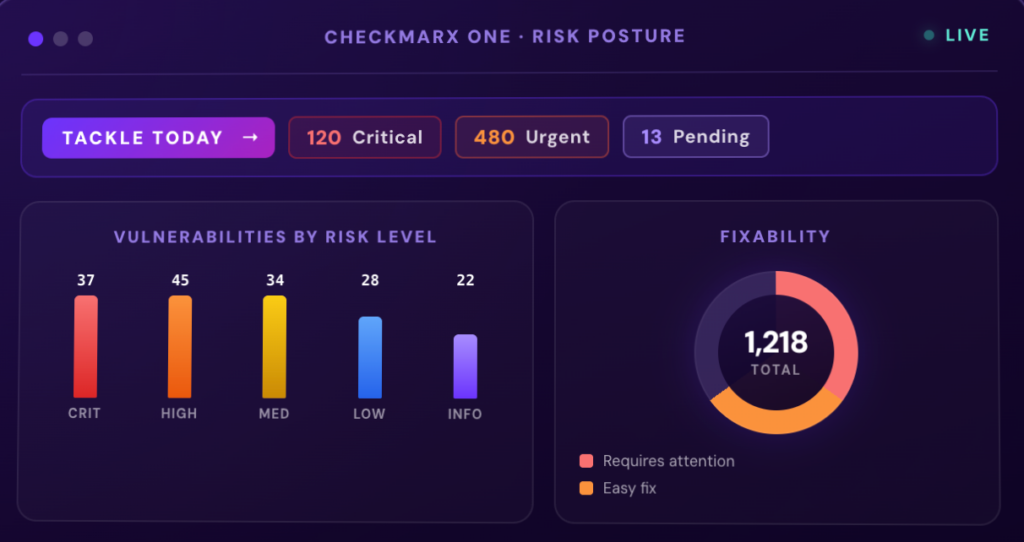
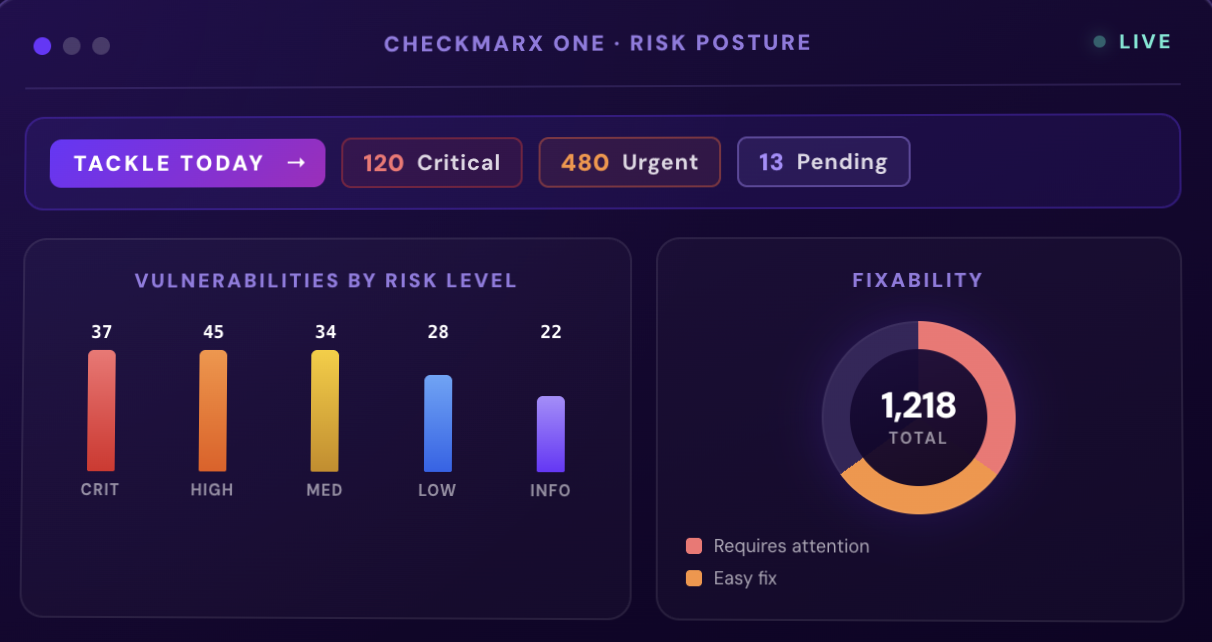
Checkmarx One is the unified, cloud-native application security platform for enterprises that need to secure code, applications, and AI-driven development at scale. It brings SAST, SCA, IaC, API, DAST, container, and supply chain security together with ASPM and the Checkmarx One Assist family of agentic AI agents, delivering correlated risk insights and developer-centric remediation from the IDE to production.
With a single platform and data model, customers reduce tool sprawl, improve risk visibility, and help developers ship secure software faster.
Key capabilities of the Checkmarx One platform:
- Unify fragmented AppSec tools: Consolidate multiple scanning and point solutions into one platform with a shared data model.
- Gain a single view of application risk: Correlate findings across code, open source, infrastructure, APIs, containers, and supply chain.
- Accelerate remediation: Use agentic AI assistants to provide contextual fixes, prioritization, and guidance where teams work.
- Support enterprise governance and reporting: Align AppSec metrics and posture with business-critical applications and regulatory requirements.
- Enable shift everywhere: Embed security across IDEs, CI/CD pipelines, cloud, and runtime, aligned to modern DevSecOps practices.
Limitations (as reported by users on G2):
- Scan duration on large codebases: Some users note that full scans of large or complex codebases can take time, which is common to deep analysis engines and is often managed with incremental scan modes.
- Initial configuration and tuning: A few reviewers mention an upfront setup and tuning period to align the scanners and policies with their specific environment.
- False positives requiring triage: Some users report a degree of false positives that need review before remediation.
Source: Checkmarx
Bring security into every stage of development, ship faster without security tradeoffs
Checkmarx One Platform
Application Security Platform for the AI Era
Explore the Platform2. Veracode

Best for: Organizations that need mature application risk management with strong governance and compliance capabilities.
Key strengths: Comprehensive testing portfolio, AI-assisted remediation, and risk-based prioritization.
Things to consider: Licensing costs and implementation complexity may be higher than developer-focused alternatives.
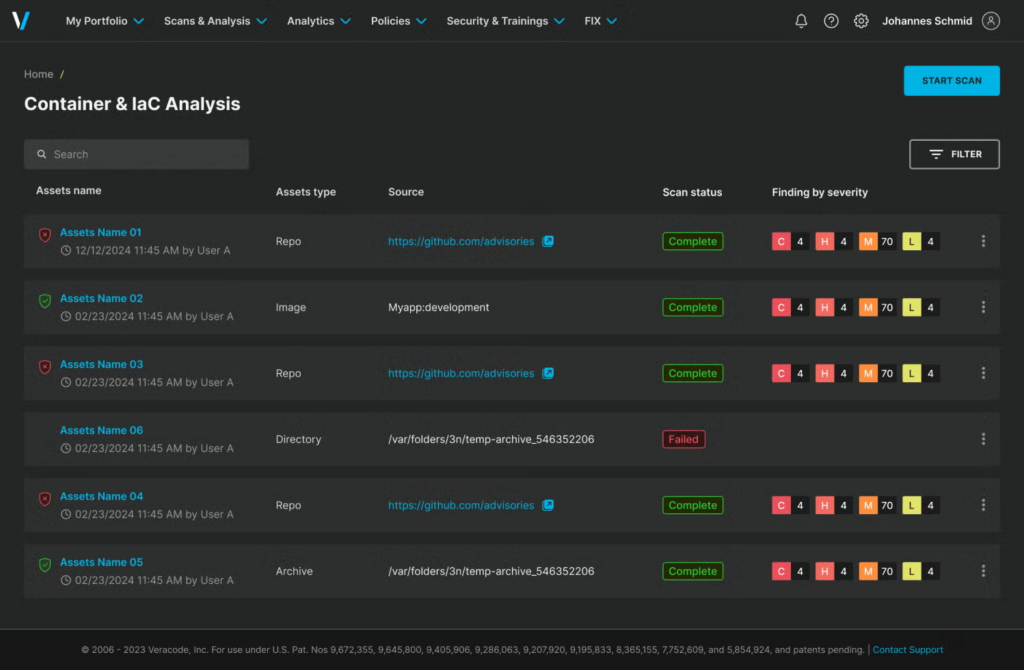
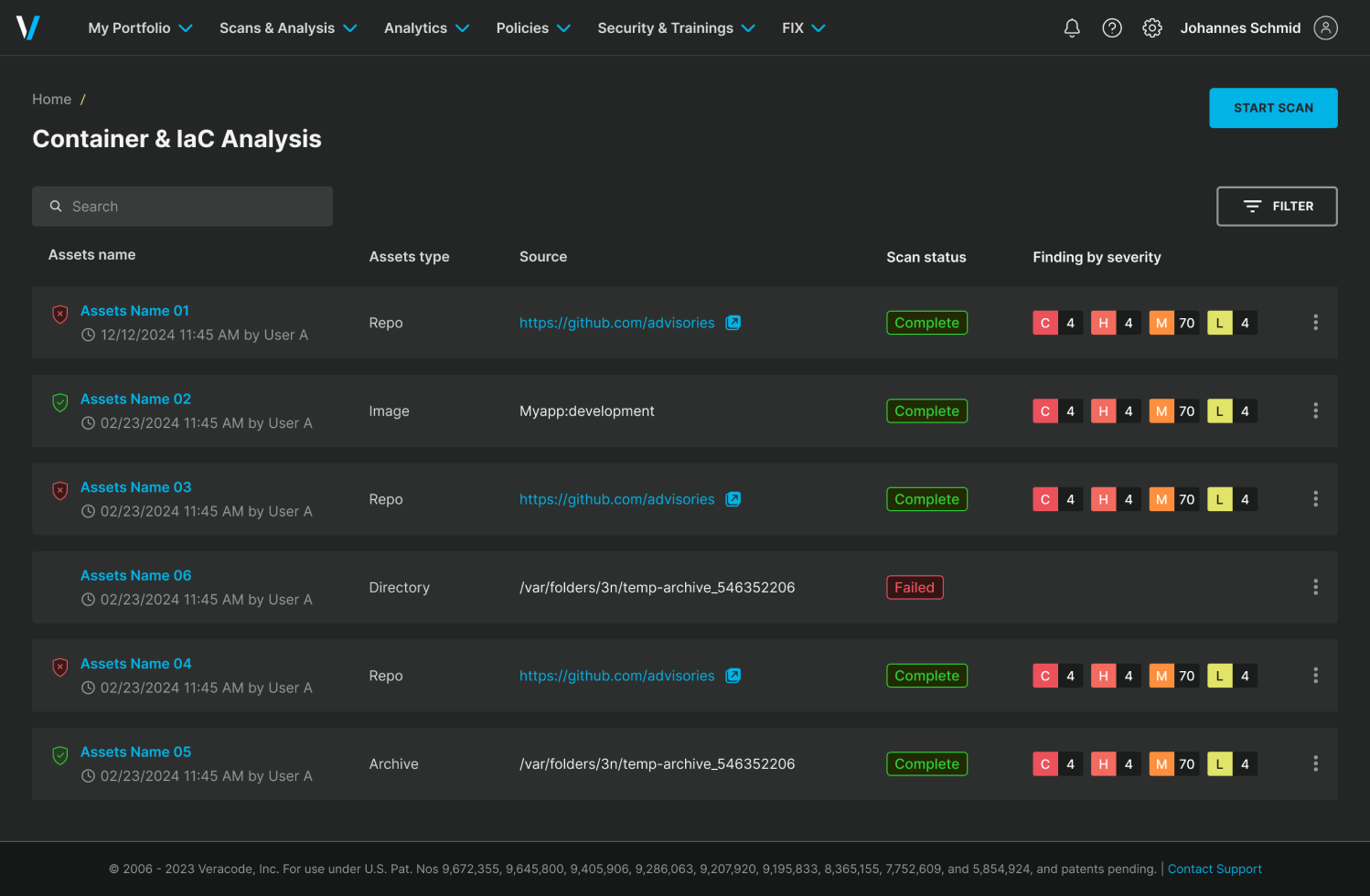
Veracode is an application risk management platform built to identify, prioritize, and mitigate risk across the software development lifecycle. It combines static, dynamic, and composition analysis with AI-assisted remediation and supply chain controls under a single platform. Veracode positions root-cause and ownership data alongside findings so teams can act on the most urgent issues first.
The platform integrates testing into developer tools and CI/CD pipelines while giving security teams centralized visibility into flaws across complex environments. It draws on two decades of software security data and supports scanning across hundreds of languages and frameworks.
Key features include:
- Code-to-cloud scanning: Veracode provides SAST, DAST, SCA, IaC, and container scanning integrated into IDEs and pipelines for actionable feedback during development. Bringing these scan types under one platform lets teams cover proprietary code, open-source dependencies, and infrastructure definitions from a single place.
- Risk Manager (ASPM): This capability prioritizes vulnerabilities, pinpoints the owner and root cause of each issue, and recommends a next best action for remediation. It is designed to reduce risk by directing effort to the issues that matter most rather than presenting an undifferentiated backlog.
- AI-powered remediation (Fix): Veracode Fix generates remediation guidance trained on curated data, producing reference patches developed by Veracode experts. The intent is to shorten the time between detecting a flaw and shipping a fix, moving remediation from hours toward minutes for supported cases.
- Software supply chain controls: A Package Firewall is designed to stop vulnerable packages, malware, and policy violations before they reach development pipelines, while Software Supply Chain Intelligence delivers a curated threat feed maintained by Veracode’s research team.
- Container and IaC scanning: Veracode integrates scanning for vulnerabilities, misconfigurations, and embedded secrets in container images and infrastructure-as-code. This extends coverage beyond application code into the configuration and packaging layers of a deployment.
- Broad integrations and root-cause analysis: The platform integrates with more than forty development and security tools and applies automated root-cause analysis to surface the most urgent issues first. Real-time insights are presented to both developers and security teams to support prioritization across the SDLC.
Limitations (as reported by users on G2):
- Scan turnaround: Several users report that in-depth analysis can be slower than developer-focused tools, which can add friction for teams that release frequently.
- Cost: Reviewers describe the platform as expensive, with per-application licensing that can rise as an application portfolio grows.
- Setup and licensing complexity: Some users find the configuration process demanding and the licensing model complex, noting it can require dedicated security expertise to operate effectively.
- Reporting and consistency: A few reviewers ask for more customizable external reporting for non-technical stakeholders and have observed occasional inconsistency between scans.
Source: Veracode
3. Snyk

Best for: Developer-centric organizations embedding security directly into IDEs and CI/CD pipelines.
Key strengths: Excellent developer experience, strong dependency security, and AI-assisted remediation.
Things to consider: Advanced capabilities and enterprise reporting require higher licensing tiers.
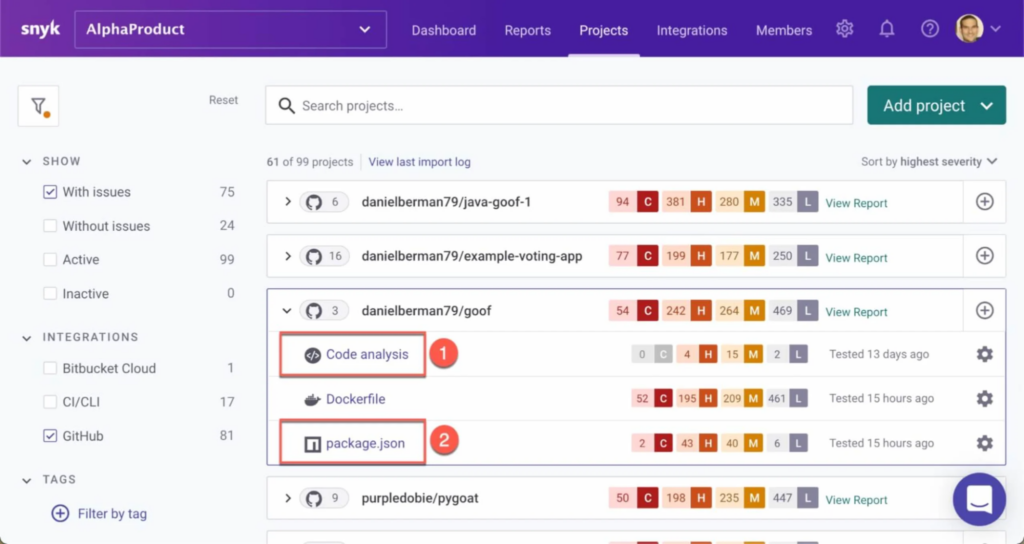
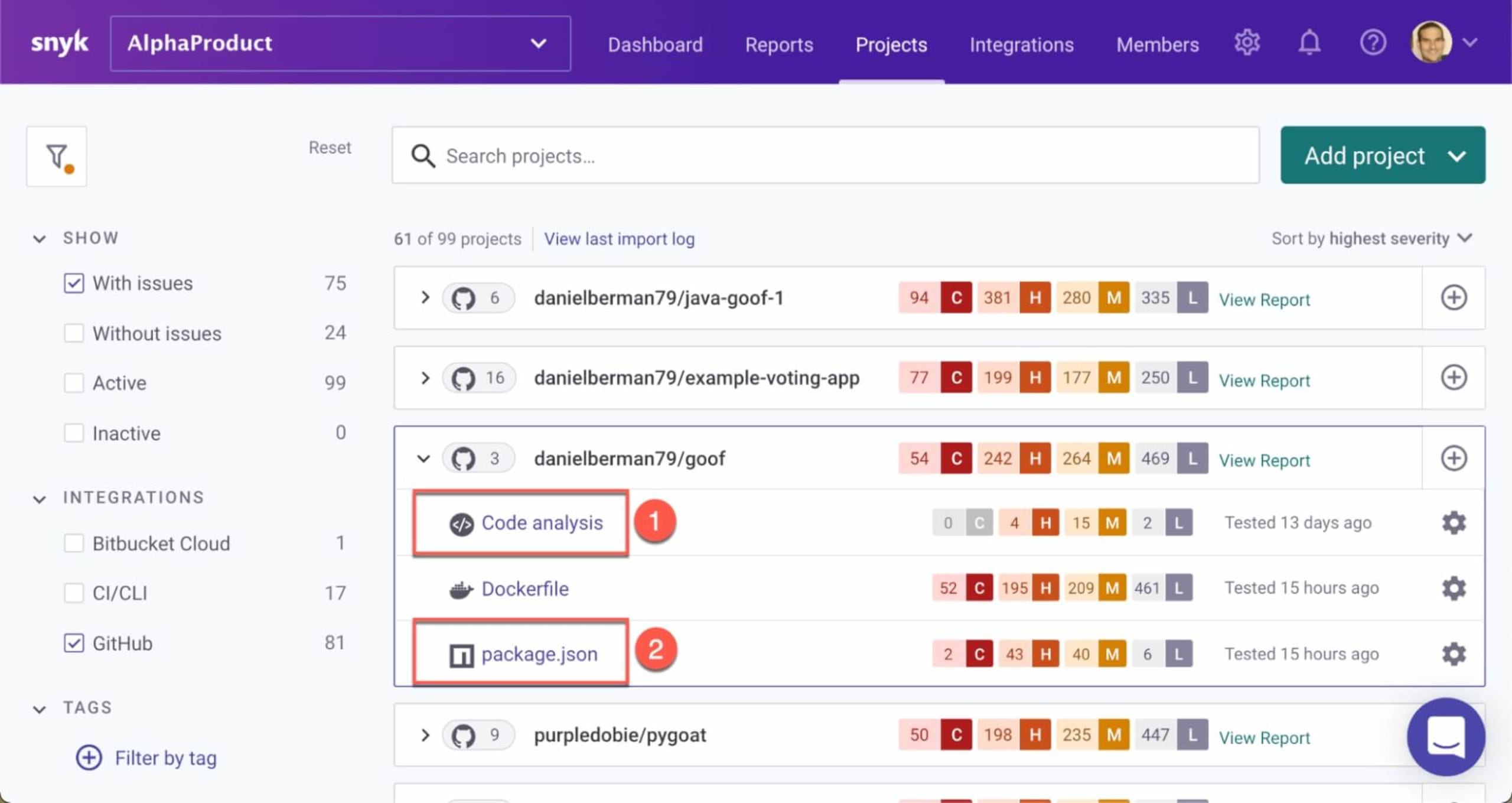
Snyk is an AI-native, developer-focused security platform built to secure and govern software development across the lifecycle. It frames its approach around three areas: accelerating DevSecOps, securing AI-driven development, and securing AI-native software.
Snyk embeds security directly into the tools developers use, including AI coding assistants, so issues are addressed at the point code is written. The platform follows a defined path from visibility and prevention through prioritization, remediation, governance, and autonomous defense.
Key features include:
- Foundational visibility and inventory: Snyk automatically discovers and inventories assets across code, dependencies, and AI models. This baseline of visibility is intended to eliminate blind spots before teams move on to prevention and prioritization.
- Prevention and AI guardrails: The platform enforces “secure at inception” guardrails across AI assistants, IDEs, and pipelines to stop vulnerabilities before they enter the codebase. Embedding controls at the point of creation is designed to reduce the number of issues that reach later stages.
- Reachability-based prioritization: Snyk uses application intelligence, risk scores, and reachability analysis to focus attention on exploitable risks. Identifying whether a vulnerable package is actually called helps teams concentrate on issues that genuinely threaten the application.
- AI-accelerated remediation: The platform offers AI-powered one-click fixes directly in the IDE and pull request to accelerate fix rates and reduce security debt. Bringing remediation into the developer’s workflow is meant to shorten the path from finding to fix.
- Governance and measurement: Snyk provides automated policy enforcement and analytics to track risk reduction, developer adoption, and program metrics. This supports consistent enforcement and reporting as a security program scales across teams.
- Agentic orchestration: Snyk’s agentic orchestrator, Evo, is positioned to provide autonomous, runtime-oriented protection for non-deterministic, AI-native applications. It extends the platform’s coverage toward emerging agent-based software.
Limitations (as reported by users on G2):
- False positives: Users report that false positives can accumulate over time and require manual review to separate real issues from noise.
- SAST maturity: Some reviewers find the SAST capability (Snyk Code) less mature than the open-source/SCA side, with more false positives and less context.
- Fix suggestions and breaking changes: A few users note that recommended upgrades can introduce breaking changes without flagging compatibility risk, leaving manual research to do.
- Pricing and gated features: Reviewers mention that some capabilities, such as reachability and richer reporting, sit behind paid tiers, and that pricing can be costly.
- Scan time: Scans on medium-sized repositories can take a few minutes and slow a pipeline.
Source: Snyk
4. Mend.io

Best for: Organizations prioritizing software supply chain security alongside application security.
Key strengths: Strong SCA capabilities, automated dependency management, and reachability analysis.
Things to consider: The interface and documentation may require a learning period for new users.
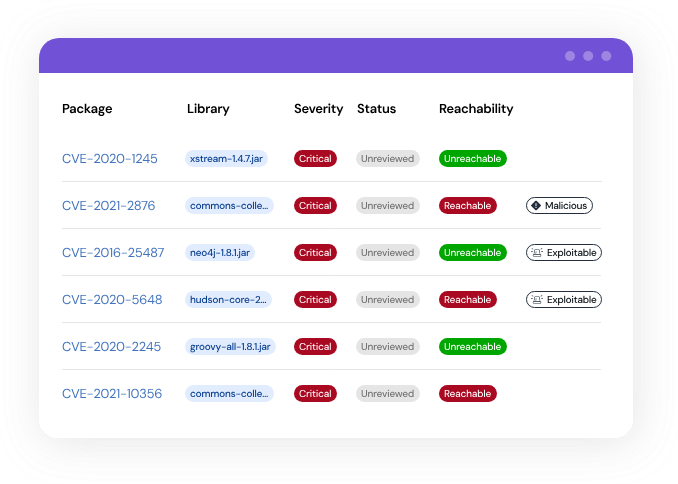
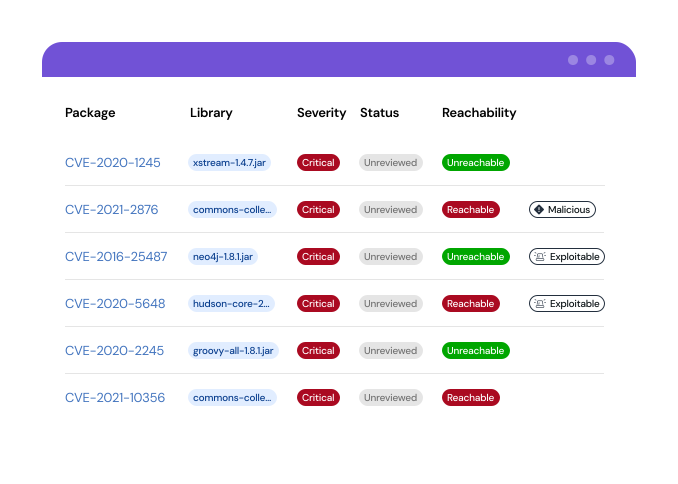
Mend.io is an application security platform that unifies open-source risk management, proprietary code scanning, and AI security in a single workflow. It is organized around Mend AppSec, Mend SCA, Mend SAST, Mend Renovate for automated dependency updates, and Mend AI for securing AI components.
The platform shows not only what is vulnerable but what is exploitable, and pairs detection with remediation that ships alongside the code. It extends established AppSec workflows to the models, prompts, and agents running inside applications. Mend.io supports repository integration, scalability across many projects, and reachability analysis to prioritize findings.
Key features include:
- Open-source security and SCA: Mend SCA identifies vulnerabilities and license issues in open-source dependencies and surfaces shadow and transitive dependencies that standard tooling can miss. It supports prevention, prioritization, and automated handling of open-source risk across the codebase.
- Proprietary code scanning (SAST): Mend SAST analyzes first-party source code for security flaws and is paired with secrets detection and reachability analysis. The combination is designed to flag exploitable issues in custom code and reduce time spent on findings that are not reachable.
- Automated dependency updates (Renovate): Mend Renovate creates and manages pull requests for dependency updates across a codebase, with Smart Merge Control intended to prevent bad updates from shipping. This automates a maintenance task that is otherwise manual and time-consuming at scale.
- AI security (Mend AI): Mend AI discovers AI components, runs automated red teaming against behavioral risks such as injection and data leakage, and applies runtime guardrails that enforce policy in production. It also generates an AI-BOM to inventory models, prompts, and agents.
- Software supply chain and container security: The platform covers software supply chain integrity, container image scanning, SBOM and AI-BOM generation, and end-of-life component support. These features extend visibility across the components that make up a deployed application.
- Remediation, policy, and integrations: Mend.io provides auto-remediation with contextual guidance, policy and build gates, and integration with CI/CD systems and source repositories.
Limitations (as reported by users on G2):
- On-premise integration: Users report that integrating with on-premise tooling can be challenging and costly.
- Documentation: Some reviewers note that documentation for newer features can be incomplete.
- Verifying findings: A few users find false positives and the lack of proof-of-concept detail for some CVEs make it harder to confirm true positives.
- Cost and interface: Reviewers describe the product as pricey and the interface as less intuitive or dated in places.
- Coverage and project sprawl: Some users note historical emphasis on SCA and that per-branch handling can generate duplicate project entries that need cleanup.
Source: Mend
5. Black Duck

Best for: Enterprises requiring deep static analysis and comprehensive open-source governance.
Key strengths: Mature SAST and SCA capabilities backed by extensive vulnerability intelligence.
Things to consider: Full platform deployments can require significant resources and investment.
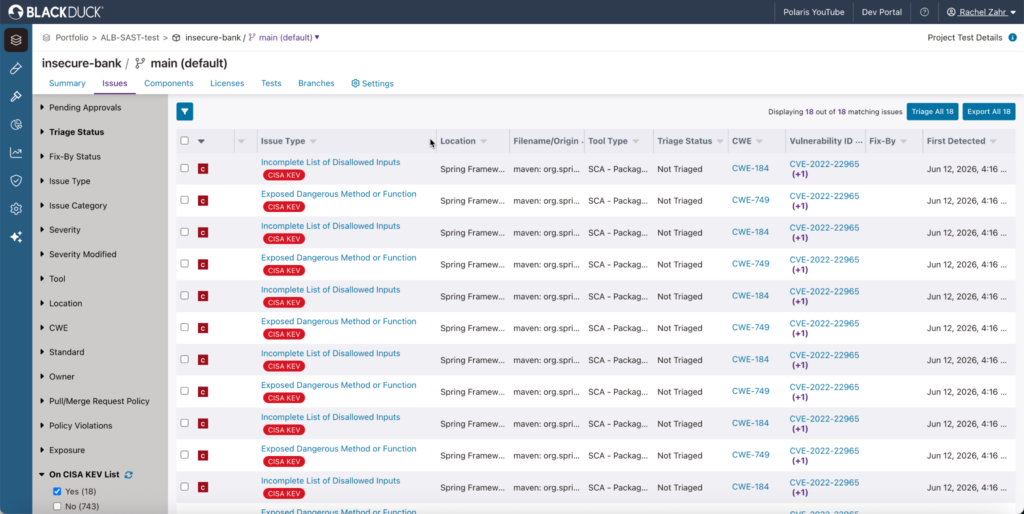
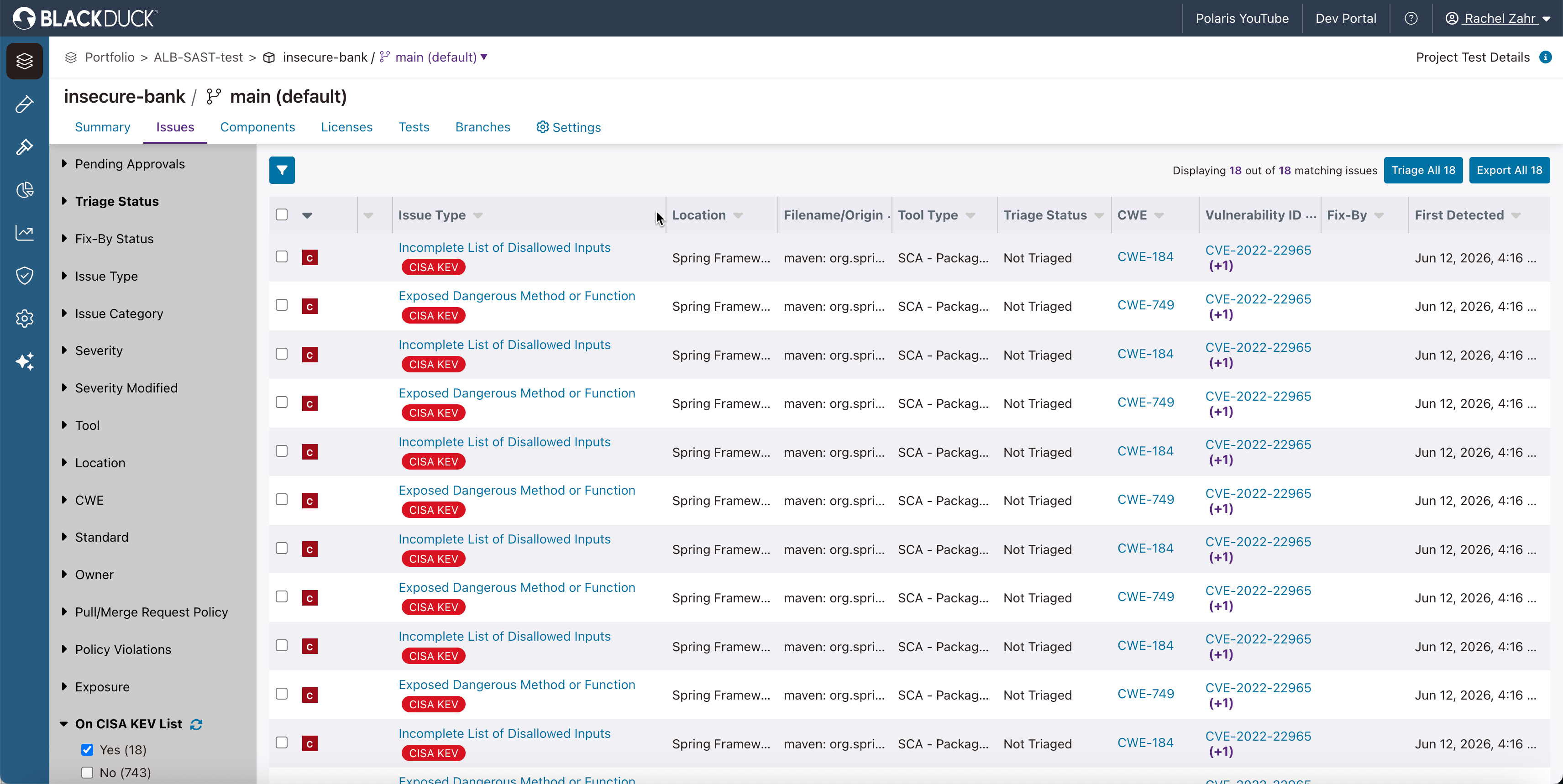
Black Duck, formerly the Synopsys Software Integrity Group, now an independent company, is an application security testing vendor whose portfolio unifies SAST, SCA, DAST, IAST, and AI-powered analysis. Its cloud-native Polaris Platform consolidates these testing types into a single SaaS solution with centralized policy enforcement and vulnerability management.
Coverity provides static analysis and Black Duck SCA covers open-source and third-party components, both backed by a long-maintained vulnerability knowledge base. The portfolio supports SaaS, on-premises, hybrid, and developer-integrated deployment models. Black Duck also extends coverage to AI-generated code through dedicated assistance and signal analysis.
Key features include:
- Polaris Platform: Polaris is a cloud-native platform that consolidates SAST, SCA, and DAST into one SaaS solution with centralized policy enforcement and vulnerability management.
- Coverity static analysis: Coverity performs deep source code analysis across more than twenty languages and seventy frameworks, detecting issues such as memory safety problems, null pointer dereferences, concurrency defects, and injection flaws. It includes rule sets aligned to MISRA, CERT, OWASP, and CWE to enforce quality and security standards.
- Software composition analysis: Black Duck SCA provides visibility into open-source and third-party components across source code, containers, and binaries, generating and managing SBOMs and tracking versions, licenses, and security status. It continuously monitors components against vulnerability databases, including the proprietary KnowledgeBase, and includes AI Model Risk Insights.
- Dynamic and interactive testing: Polaris fAST Dynamic and Continuous Dynamic provide DAST for web applications and APIs, while Seeker provides interactive analysis of running applications. These add runtime testing that complements static and composition analysis.
- Agentic and AI code security: Black Duck Signal applies LLM-powered analysis to detect and remediate vulnerabilities, and Black Duck Assist works inside the Code Sight IDE plug-in to flag insecure patterns, potential IP infringement, and license issues before code is committed.
- Flexible deployment and integration: Black Duck supports SaaS, on-premises, hybrid, and developer-integrated deployment, and connects to CI/CD tools such as Jenkins, Azure DevOps, GitHub Actions, and GitLab CI through plug-ins, CLIs, REST APIs, and webhooks.
Limitations (as reported by users on G2):
- On-premise resource demands: Users report that on-premises deployment can require significant resources.
- Cost: Reviewers describe pricing as higher than some alternatives on the market.
- Interface and reporting: Some users find the UI and reporting dashboards dated relative to newer developer tools.
- Scan time: A few reviewers note that full scans of large codebases can be slow, though incremental modes help.
- Configuration and support transition: Some users mention that initial configuration requires expertise and that support consistency was a concern during the ownership change.
Source: Black Duck
Static Analysis and Developer Security Tools
6. SonarQube

Best for: Development teams that want to combine code quality and security in a single workflow.
Key strengths: Excellent static analysis, broad language support, and seamless CI/CD integration.
Things to consider: Advanced security capabilities require commercial editions.
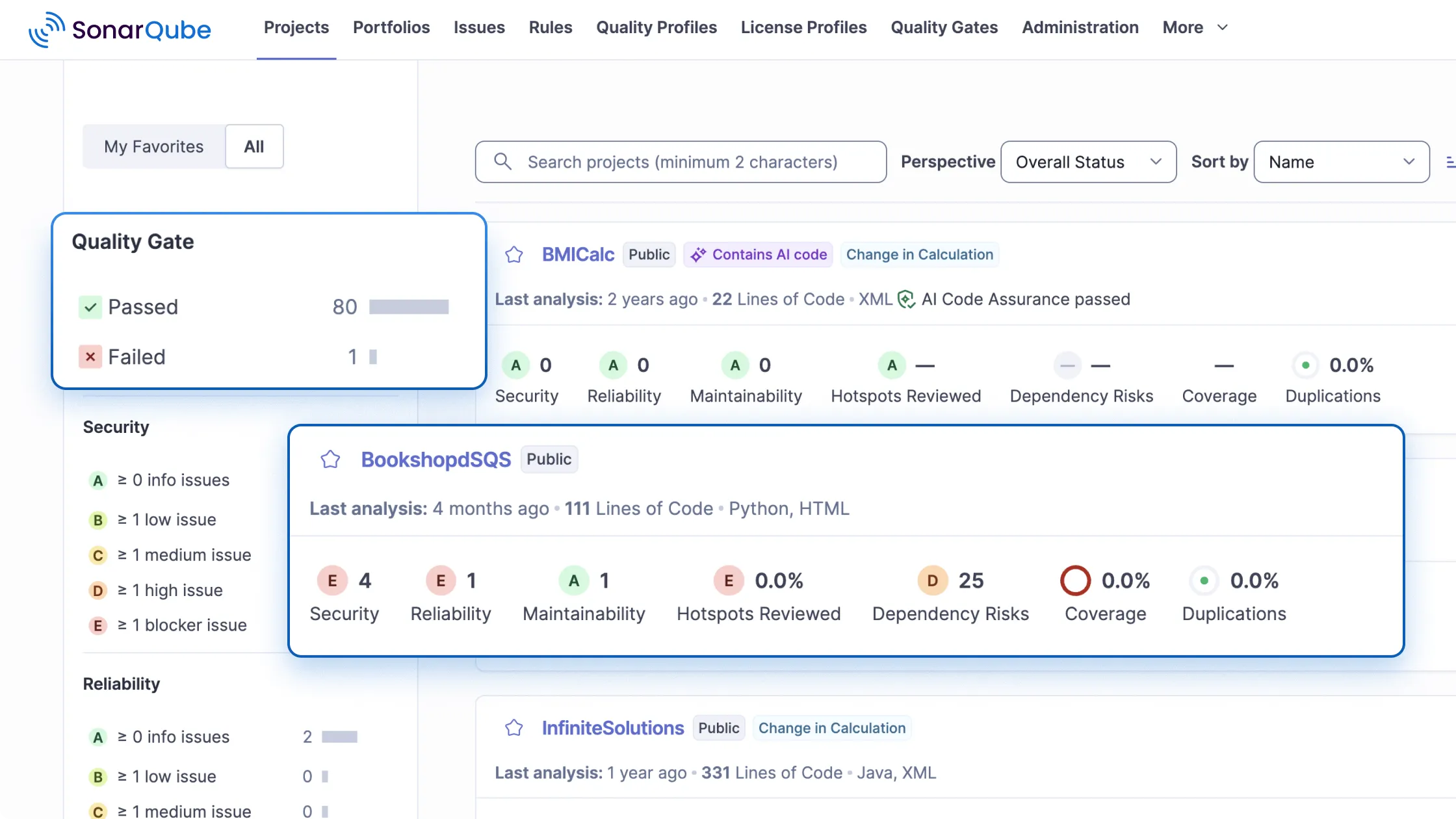
SonarQube, from Sonar, is a code quality and security tool focused on automated, explainable code review across the development lifecycle. It is available as a self-hosted Server, a managed Cloud service, and an IDE extension, with an Advanced Security add-on for deeper analysis.
The platform applies static analysis to detect bugs, code smells, vulnerabilities, and security hotspots, and supports more than forty languages with a library of over seven thousand rules. Quality Gates enforce standards at defined checkpoints, and connected mode synchronizes rules between IDEs and CI/CD systems. SonarQube also validates AI-generated code and offers AI-assisted fixes.
Key features include:
- Static analysis across many languages: SonarQube analyzes more than forty languages and frameworks using over seven thousand rules, detecting bugs, code smells, vulnerabilities, and security hotspots. It builds internal models of the code, such as control- and data-flow graphs, to assess whether a flagged issue is genuinely reachable.
- SAST, SCA, and secrets detection: Beyond core code quality, the platform performs SAST scans, software composition analysis, and secrets detection, with architecture management for larger systems.
- Quality Gates and connected mode: Quality Gates enforce minimum standards at key checkpoints and can fail a pipeline when thresholds are not met, while connected mode synchronizes coding rules between local IDEs and CI/CD systems. Together these keep standards consistent from local development through automated builds.
- CI/CD integration and pull request decoration: SonarQube integrates natively with GitHub, GitLab, Bitbucket, and Azure DevOps, decorating pull requests with issue summaries and providing branch analysis.
- AI CodeFix and AI Code Assurance: AI CodeFix uses large language models to suggest one-click, context-aware remediation for detected issues in both human-authored and AI-generated code, while AI Code Assurance is designed to surface risks specific to AI-generated code. Both operate within the developer’s environment.
- Flexible deployment: SonarQube offers a fully managed Cloud option and a self-managed Server option for full data residency, with an IDE extension that provides real-time feedback while coding.
Limitations (as reported by users on G2):
- False positives and rule tuning: Users report that some rules do not fit real-world or legacy code well and require tuning or suppression, particularly around security hotspots.
- Learning curve: Several reviewers note a learning curve in understanding rules and Quality Gates and in interpreting results.
- Performance on large projects: Some users find setup complex for large or multi-language projects and the UI or scans slow on big codebases.
- Paid tiers: A few reviewers mention that advanced capabilities, such as branch analysis and deeper security analysis, require paid editions, with pricing increases reported at renewal.
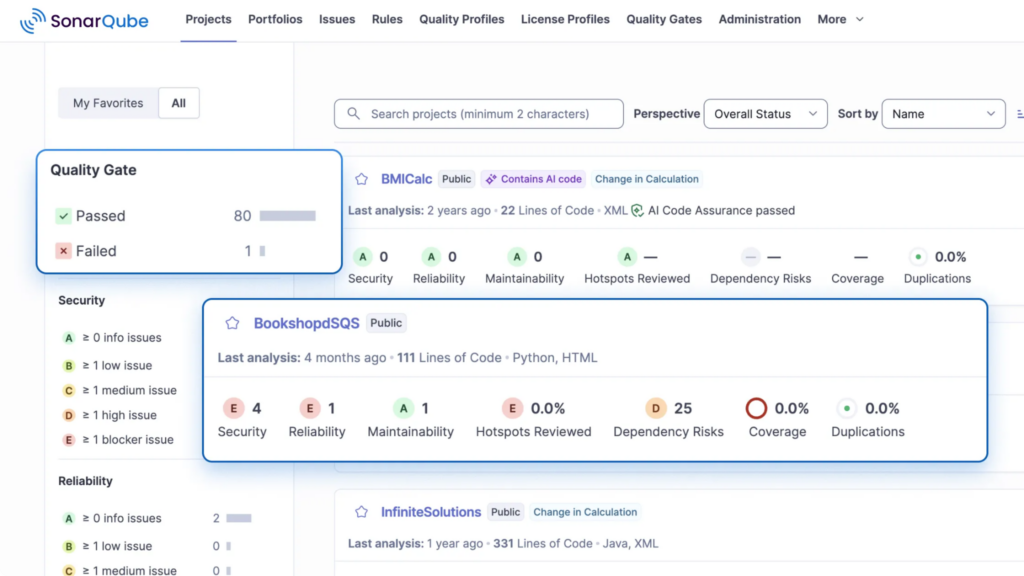
Source: SonarQube
7. Semgrep

Best for: Security teams that want fast, customizable static analysis integrated into developer workflows.
Key strengths: Flexible rule creation, high developer adoption, and AI-assisted detection.
Things to consider: Achieving high signal quality often requires rule customization.
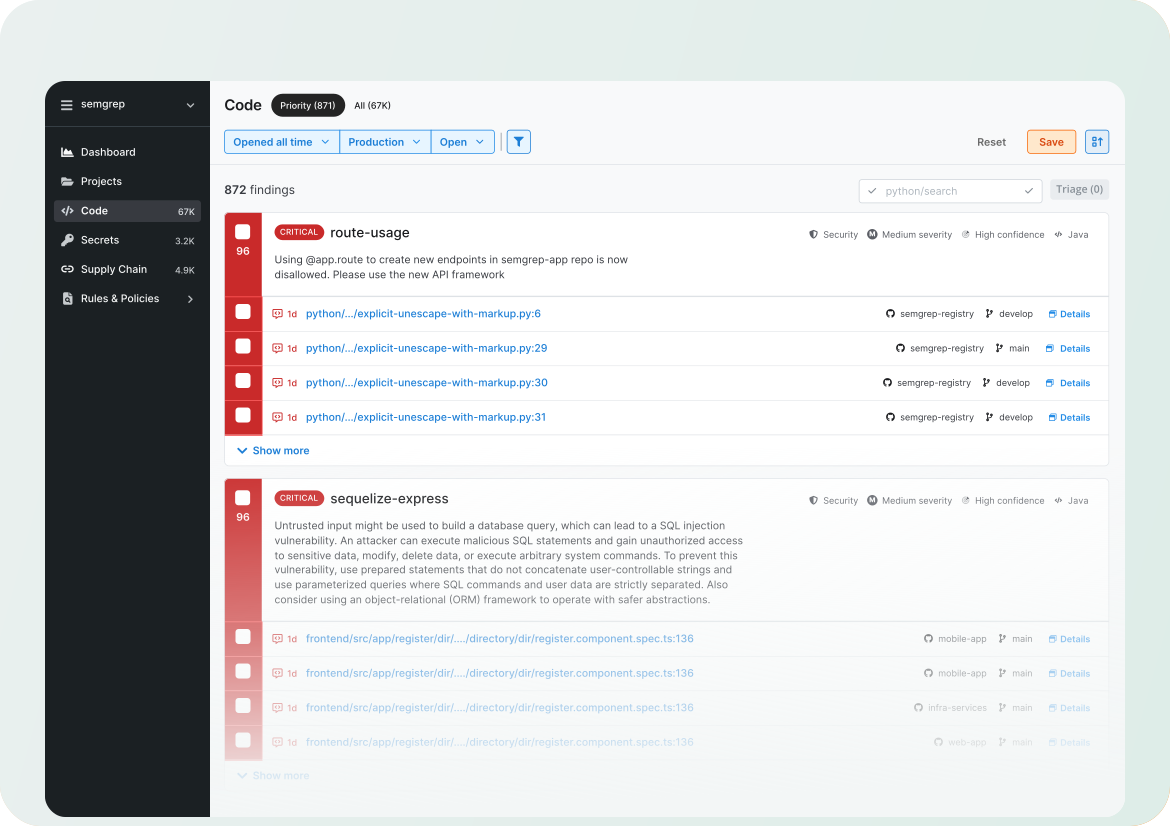
Semgrep is a static analysis platform centered on finding and fixing security issues in source code, with additional products for dependencies, secrets, and AI-generated code. Its core product, Semgrep Code, runs SAST scans and is paired with a Multimodal capability that combines deterministic rule-based detection with AI reasoning.
The platform filters out false positives and gives developers step-by-step remediation in their pull requests. Rules are customizable, allowing teams to tailor detection to their own codebase, and scans can run locally or in CI/CD pipelines. Semgrep is available in open-source and commercial editions.
Key features include:
- Static analysis (Semgrep Code): Semgrep Code uses deterministic SAST to catch classic issues such as cross-site scripting and SQL injection, applying organization-specific context to produce high-signal findings.
- Multimodal detection: The Multimodal capability combines rule-based analysis with AI reasoning to uncover more complex flaws, such as insecure direct object references and business-logic vulnerabilities.
- Supply chain and secrets scanning: Semgrep Supply Chain fixes vulnerabilities in open-source dependencies and blocks malware, while Semgrep Secrets finds hardcoded secrets using semantic analysis.
- AI-generated code scanning (Guardian): Semgrep Guardian scans and fixes AI-generated code the moment it is written. This targets risk introduced as teams adopt AI coding assistants.
- Custom rules and developer remediation: Teams can craft rules tailored to their codebase, and the platform delivers step-by-step remediation instructions inside pull requests so issues are addressed before security teams review them. This supports tailoring detection and resolving findings within the development flow.
- Platform and workflow automation: The Semgrep AppSec Platform and Semgrep Workflows let teams automate, manage, and enforce security across an organization and build pipelines that combine static analysis with AI at scale. Scans run locally during development or within CI/CD pipelines.
Limitations (as reported by users on G2):
- Noise out of the box: Users report that Semgrep can produce false positives by default, requiring upfront tuning and rule customization.
- Focused scope: Some reviewers note the product concentrates on security and that other categories, such as secrets, IaC, or container scanning, sit outside the core code product.
- Custom rule expertise: A few users mention a learning curve in writing effective custom rules, especially for complex vulnerabilities.
- Limited context and rule syntax: Reviewers note that on its own the tool can provide limited context to confirm a true positive, and that rule syntax can feel restrictive for dynamic or metaprogramming-heavy code.
- Scan time on large repositories: Some users report slower scans and latency on large monorepos.
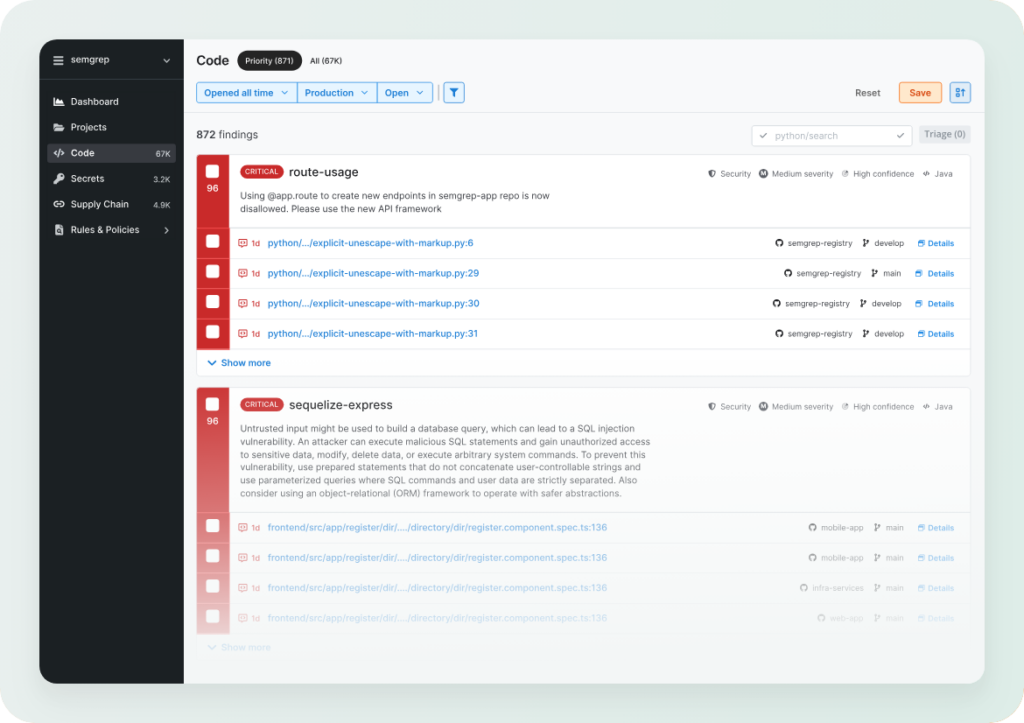
Source: Semgrep
8. GitHub Advanced Security
Best for: Organizations standardizing on GitHub for software development.
Key strengths: Native GitHub integration with built-in code scanning, secret detection, and AI-assisted fixes.
Things to consider: The platform delivers the most value within GitHub-centric development environments.
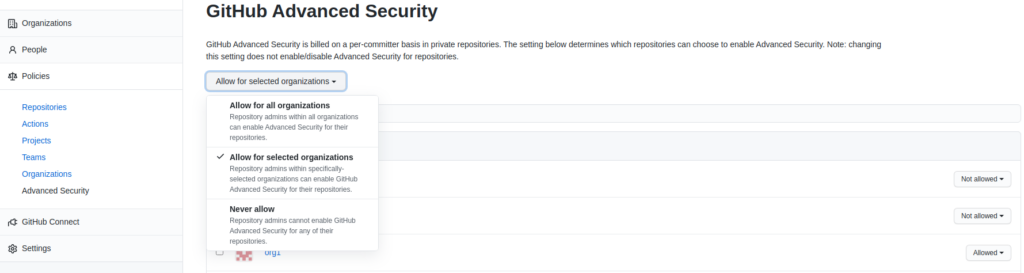
GitHub Advanced Security (GHAS) is GitHub’s application security offering, built directly into the GitHub platform that developers already use. It comprises GitHub Code Security and GitHub Secret Protection, adding static analysis, software composition analysis, and secret scanning to repositories.
Code scanning is powered by CodeQL, and Copilot Autofix provides AI-driven fix suggestions. Because it operates inside native GitHub workflows, developers can find and remediate issues without leaving their repositories. GHAS is also available as an add-on for Azure DevOps.
Key features include:
- Code scanning with CodeQL: GHAS provides static application security testing through CodeQL, which identifies vulnerabilities in source code. Queries can be customized and run across projects, letting teams detect patterns specific to their code.
- Secret protection: GitHub Secret Protection scans for and helps prevent hardcoded secrets from being committed or pushed, alerting developers before credentials are exposed. This addresses a common source of accidental exposure directly in the commit flow.
- Software composition analysis: GHAS adds dependency scanning to surface vulnerabilities in open-source dependencies as part of its code security tooling. This brings third-party component risk into the same platform as first-party code.
- Copilot Autofix: AI-driven fix suggestions from Copilot Autofix help developers remediate vulnerabilities as they work. Pairing detection with automated suggestions is designed to reduce the manual effort of resolving findings.
- Native GitHub workflow: GHAS operates entirely within the GitHub workflows developers already know, surfacing alerts and remediation in pull requests and the repository. This keeps security checks in place without requiring a separate tool.
- Azure DevOps support: GitHub Advanced Security is available as an add-on for Azure DevOps, extending its scanning capabilities to teams working in that environment.
Limitations (as reported by users on PeerSpot):
- Add-on cost: Users note that GHAS is billed as separate, per-committer add-ons, and that forecasting the combined cost can be complex for mid-sized organizations.
- Centralized reporting: Several reviewers report the lack of a centralized dashboard for viewing results across all projects, and ask for better reporting such as PDF exports.
- Deployment and language coverage: Some users find deployment complex and request support for additional programming languages.
- Update timeliness and ecosystem fit: A few reviewers note that open-source vulnerability updates are not always timely and that the tooling works best within the GitHub ecosystem.
Source: GitHub

Software Composition and Supply Chain Security
9. Sonatype Lifecycle

Best for: Organizations focused on managing open-source dependencies and software supply chain risk.
Key strengths: Strong policy engine, proprietary vulnerability intelligence, and dependency governance.
Things to consider: Teams outside the Java ecosystem may find broader language support less comprehensive.
Sonatype Lifecycle is a software composition analysis tool focused on managing open-source risk and automating dependency management across the development pipeline. It identifies known vulnerabilities, license issues, and outdated components, drawing on proprietary intelligence that the vendor positions as more complete than public CVE data alone.
The tool applies customizable policies across applications and continuously monitors components for new risk. It integrates with developer tools and supports more than twenty languages and package formats, surfacing component intelligence where developers work. Sonatype Lifecycle also supports SBOM generation and open-source AI model risk.
Key features include:
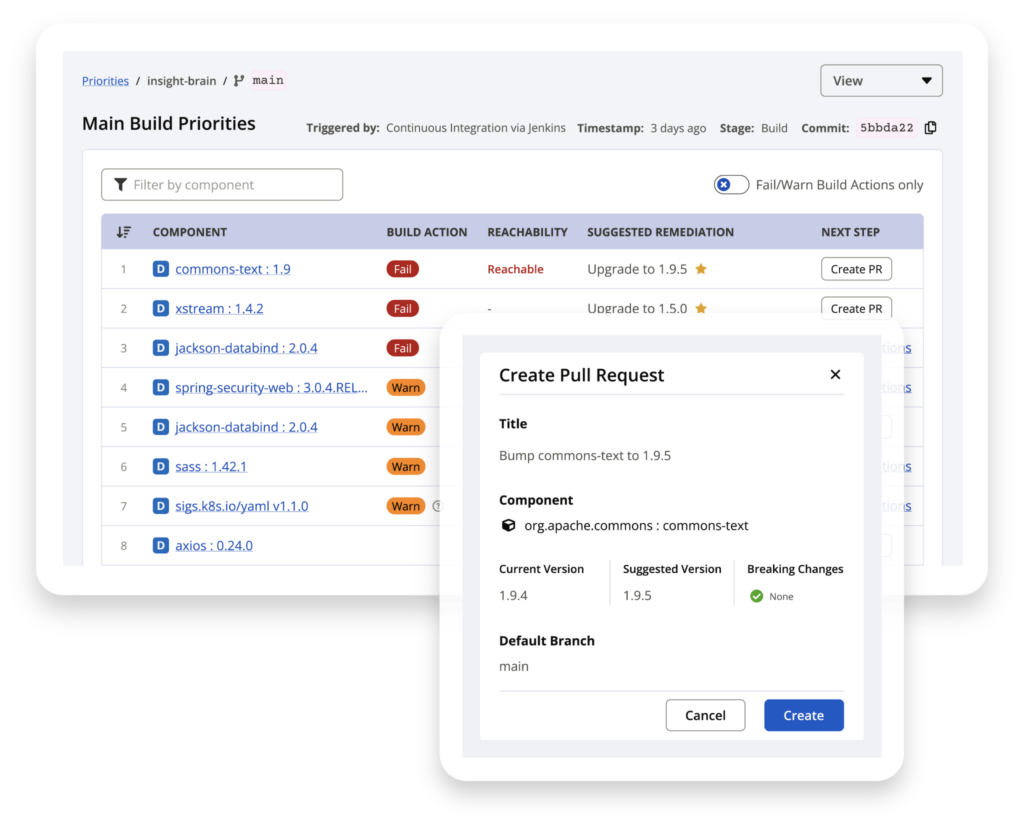
- Automated dependency management: Sonatype Lifecycle detects open-source risks and provides assisted remediation, including automated waivers and “Golden Pull Requests” that aim to upgrade components without breaking builds.
- Flexible policy engine: The tool offers eighteen default policies and more than thirty customizable constraints that can be applied by application type or risk profile. Continuous monitoring enforces security, legal, and architectural rules across open-source components, InnerSource, and open-source AI models.
- Proprietary component intelligence: Sonatype supplements public CVE data with proprietary research drawn from open-source repositories, automated vulnerability detection, behavioral analysis, and consumption analysis. The vendor positions this as addressing gaps and inaccuracies in public vulnerability data.
- License and AI model management: The tool allows policies across more than two thousand open-source licenses, categorized by threat group, with legal workflows to resolve issues, and it reports on open-source AI model usage. This covers legal and compliance risk alongside security.
- Container scanning and reachability: Sonatype Lifecycle scans containers and Kubernetes deployments and includes reachability analysis to help prioritize findings. SBOMs can be generated or imported and managed in conjunction with Sonatype SBOM Manager.
- Developer-tool integration: The tool pushes component intelligence into IDEs and source control, surfacing policy violations directly in pull requests, and supports integrations with GitHub, GitLab, and Azure across more than twenty languages and packages. This keeps open-source guidance within existing developer workflows.
Limitations (as reported by users on PeerSpot):
- Reporting and documentation: Users report that reporting interfaces can be confusing for infrequent users and that documentation could be improved.
- Language coverage: Some reviewers note that language support skews toward Java relative to other ecosystems.
- Azure integration: A few users find integration with Azure DevOps and Azure Active Directory weaker, with workarounds that are not always sufficient.
- Transitive dependencies and setup: Reviewers mention that transitive dependencies can cause confusion when unexpected libraries are pulled in, and that setup of the broader Nexus tooling can be resource-intensive with a learning curve.
- Cost: Some users describe pricing as competitive but able to run higher than certain alternatives.
Source: Sonatype

10. Endor Labs

Best for: Organizations adopting AI-assisted software development that want reachability-based prioritization.
Key strengths: Reachability analysis, AI-native security verification, and evidence-backed findings.
Things to consider: As a newer platform, some integrations and capabilities continue to mature.
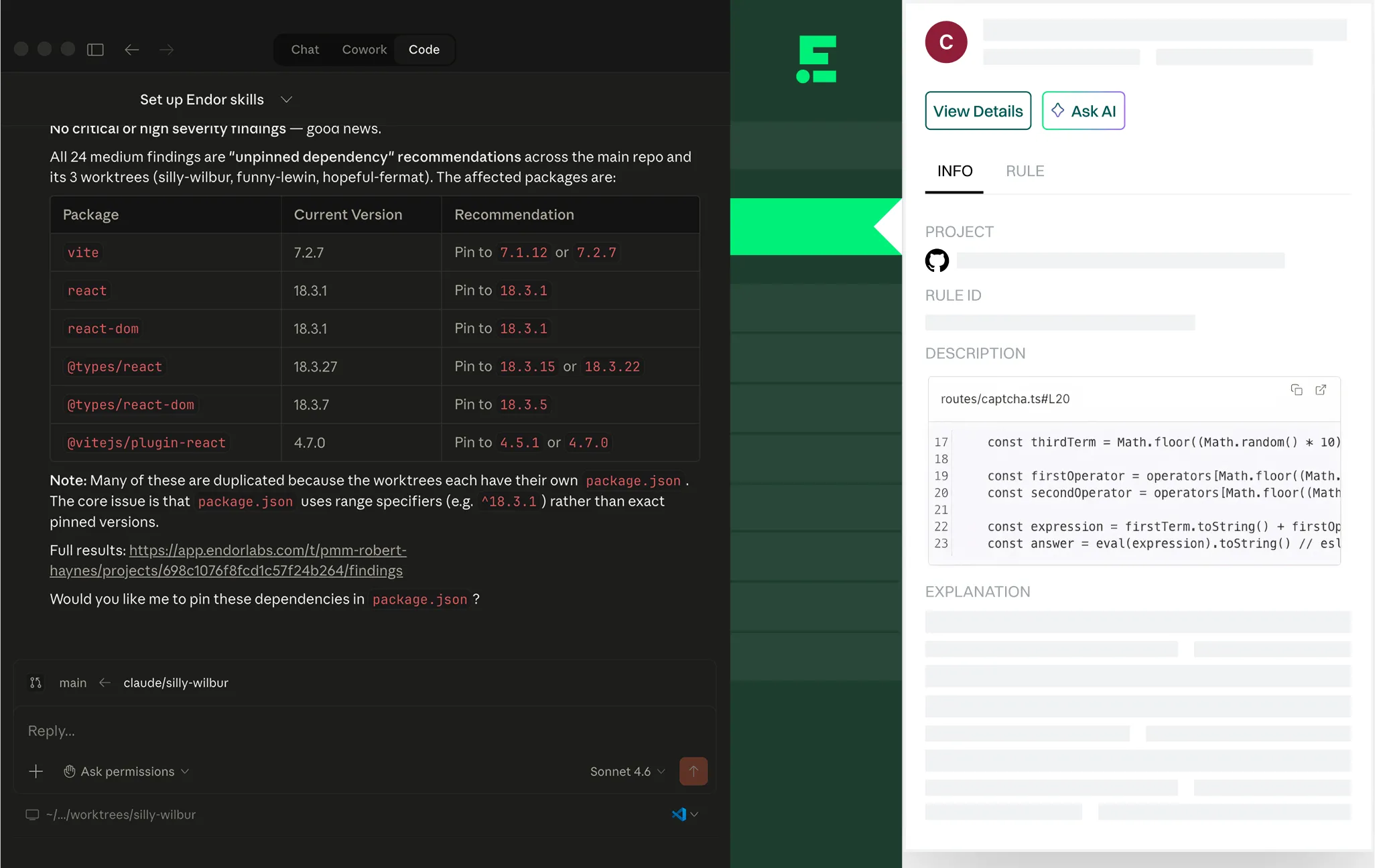
Endor Labs is an AI-native application security platform, organized around an engine the vendor calls AURI, that combines agentic reasoning with deterministic program analysis. It covers AI code, software supply chain, secrets, and containers, and emphasizes reducing noise by focusing on issues that are reachable and exploitable.
The platform separates code generation from security verification, giving security teams an independent policy and enforcement layer across AI coding agents. Findings are accompanied by verifiable evidence such as data flow, call paths, and reachability. Endor Labs integrates through hooks, skills, MCP, and a CLI.
Key features include:
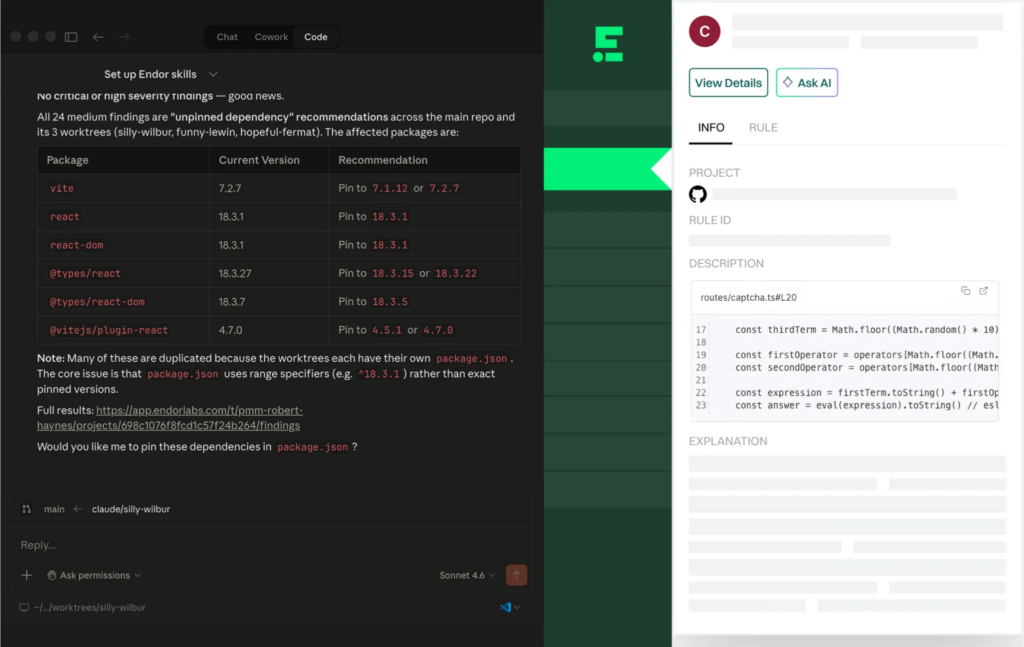
- Reachability-based SCA: Endor Labs analyzes direct and transitive dependencies using full-stack reachability analysis to filter out unreachable risks.
- AI SAST and security code review: The platform provides AI-native detection, triage, and remediation of flaws in source code, and runs continuous AI-driven security reviews on pull requests.
- Secrets and malware prevention: Endor Labs detects and validates exposed secrets and prevents malware from entering the software supply chain. Together these target credential exposure and malicious package risk.
- Container reachability: The platform applies reachability-based scanning to container images, extending its noise-reduction approach beyond source code and dependencies into containers.
- Verifiable, policy-driven findings: AURI combines agentic reasoning with deterministic program analysis to provide evidence — data flow, call paths, and reachability — for each finding, and supports policy-as-code written and enforced across AI coding agents. This is designed for configurable, reproducible, audit-ready results.
- Independent verification layer and integration: The platform provides an integrated but independent security and enforcement layer across AI coding agents and integrates via hooks, skills, MCP, or CLI, with GitHub Action and app support. This separates code generation from its security verification.
Limitations (as reported by users on G2):
- Maturing feature set: As a newer platform, some users note missing features and occasional integration gaps.
- Setup: A few reviewers report that initial setup can be difficult for some teams.
- API capabilities: Some users mention API limitations in certain workflows.
- Learning curve and UX: Reviewers note that advanced features carry a learning curve and request UX refinements.
- Fit for smaller teams: A few users observe that pricing can be steep for smaller organizations and that adopting a reachability-prioritized model can require a shift from noise-heavy workflows.
Source: Endor Labs
11. JFrog Xray

Best for: Organizations already using the JFrog Platform to manage software artifacts.
Key strengths: Continuous component scanning, license compliance, and strong supply chain visibility.
Things to consider: Organizations not using Artifactory may realize less value from the platform.
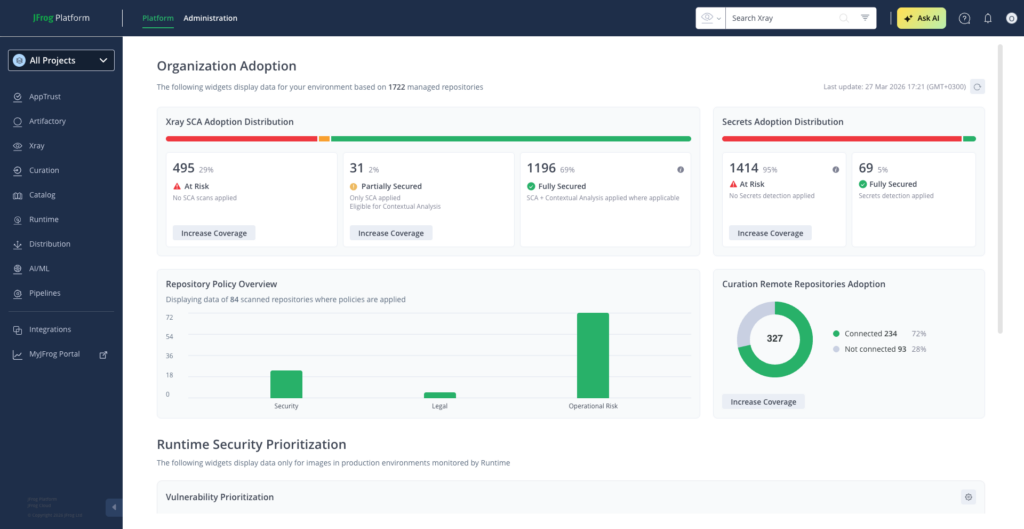
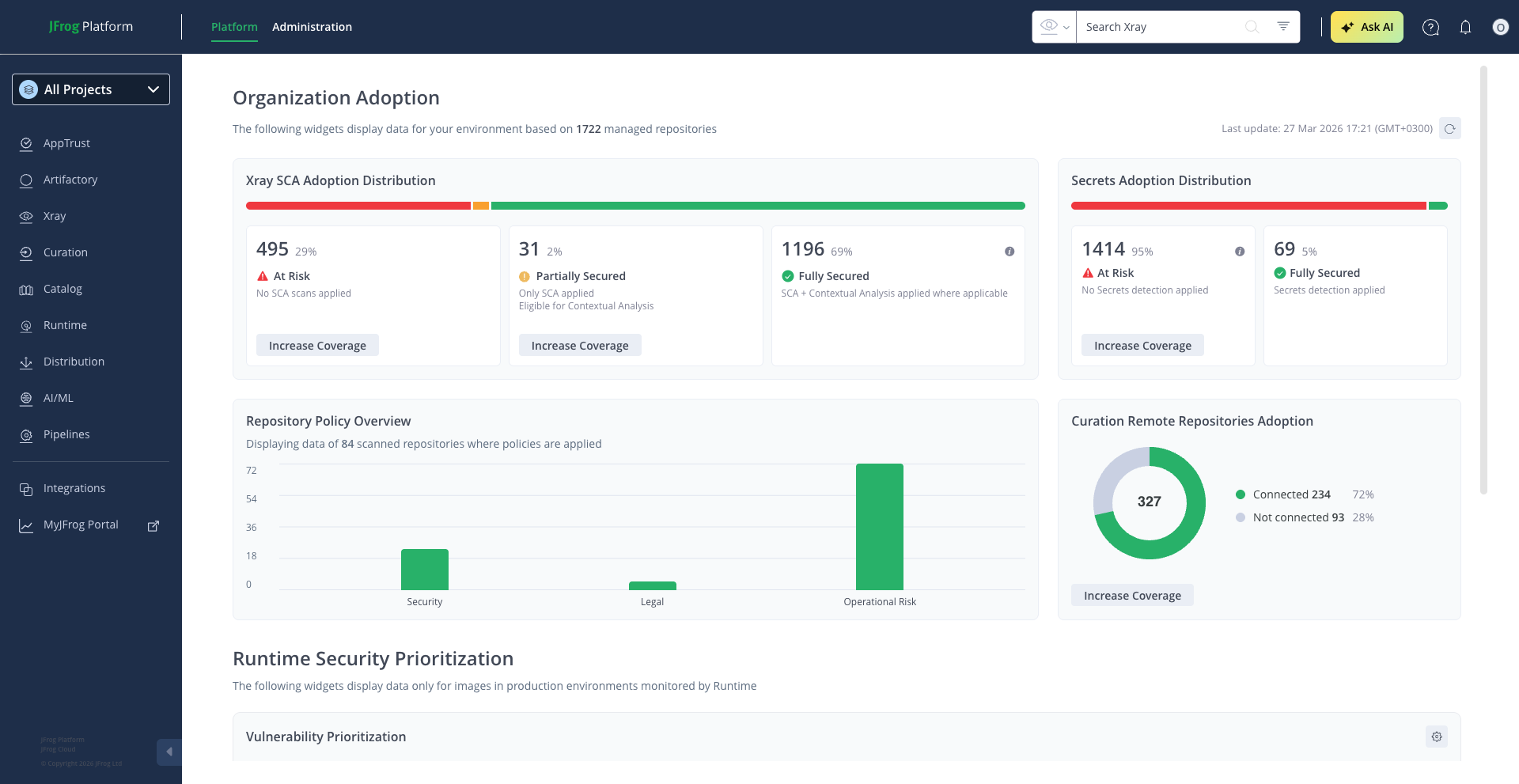
JFrog Xray is an enterprise software composition analysis tool that identifies, prioritizes, and remediates security and license risk in open-source and third-party components. It performs continuous scanning of repositories, build packages, and container images throughout the development cycle and is a core component of the JFrog Platform alongside Artifactory.
Xray surfaces vulnerable dependencies with remediation context in the IDE and CLI and enriches its findings with research from JFrog’s security team. It supports more than twenty-five package types and integrates into CI/CD pipelines. The tool also detects malicious packages and manages operational risk through custom policies.
Key features include:
- Continuous component scanning: Xray scans repositories, build packages, and container images throughout development to identify and prioritize vulnerabilities in open-source packages and binaries.
- License compliance and SBOM: The tool provides visibility into direct and indirect dependencies with automatically generated SBOMs, detects open-source licensing issues, and allows policies to enforce license regulations and produce compliance reports.
- Operational risk policies: Xray lets teams create custom policies to block packages based on factors such as version age, number of contributors, maintenance cadence, number of commits, and end-of-life status.
- Malicious package detection: Drawing on a database of more than four million open-source packages and input from JFrog’s security research team, Xray discovers and helps eliminate malicious packages with out-of-the-box mitigation steps.
- CVE research and enrichment: Findings are supplemented with research from the JFrog Security Research Team, including a proprietary severity ranking, to help teams understand actual risk and prioritize high-profile CVEs.
- Developer and pipeline integration: Xray surfaces vulnerable dependencies with remediation context in IDEs and the CLI, supports more than twenty-five package types such as Docker, Maven, PyPI, npm, and NuGet, and integrates into CI/CD pipelines through tools including the Frogbot Git bot. JFrog Advanced Security adds source code and binary scanning across the platform.
Limitations (as reported by users on G2):
- False positives: Users report that false positives can require manual review.
- Cost: Reviewers describe a high entry cost that can be hard to justify for small teams.
- Configuration: Some users find the configuration process complex and the interface unintuitive at times.
- Artifactory dependency: A few reviewers note that Xray is closely tied to Artifactory, with limited support for external tools beyond it.
- Performance at scale: Some users mention occasional performance issues and a need for resources when scanning at scale.
Source: JFrog
Posture Management and Specialized Tools
12. Cycode

Best for: Enterprises seeking a unified application security posture management platform with AI-driven remediation.
Key strengths: Context-aware prioritization, broad AppSec coverage, and graph-based risk analysis.
Things to consider: Advanced capabilities may introduce operational complexity for smaller teams.
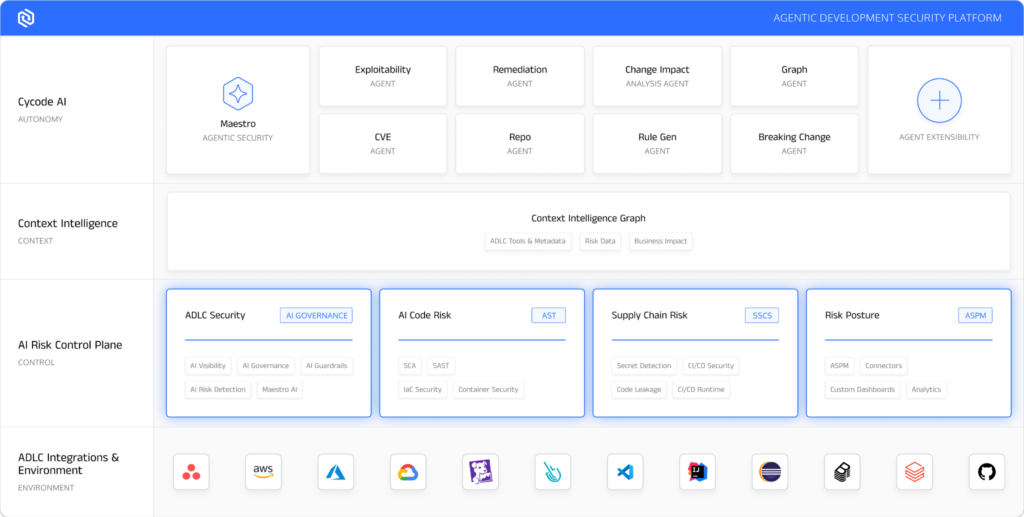
Cycode is an agentic development security platform that consolidates application security testing and software supply chain security under a single graph-based model. It unifies SAST, software composition analysis, secrets scanning, IaC security, container scanning, and application security posture management, along with source control and CI/CD pipeline security.
A Context Intelligence Graph correlates signals across these areas without stitching separate tools together. Cycode’s Maestro orchestrates AI agents that confirm exploitability, assess change impact, and open pull-request-ready fixes. The platform also adds preventative guardrails across AI-native development workflows.
Key features include:
- Consolidated application security testing: Cycode brings SAST, next-generation SCA, secrets scanning, IaC security, and container scanning onto one platform.
- Application security posture management: The platform provides ASPM with a Context Intelligence Graph that models relationships across the development lifecycle, application security testing, and software supply chain security in a single graph.
- Software supply chain and pipeline security: Cycode covers source control and CI/CD security, source code leakage detection, and build hardening through Cimon.
- Agentic remediation (Maestro): Maestro orchestrates purpose-built AI agents — including an Exploitability Agent that confirms whether a CVE is reachable, a Remediation Agent that generates pull-request-ready fixes, and Change Impact Analysis on each merge.
- Preventative guardrails: The platform applies guardrails across AI tools, prompts, and code at the point of creation rather than after the fact. This is designed to prevent risk from entering the codebase during AI-assisted development.
- Connectors and exploitability analysis: ConnectorX ingests and contextualizes security posture from third-party tools, and exploitability analysis filters findings to those that are reachable and exposed. A Cycode MCP Server brings the graph’s intelligence into AI-native development tools.
Limitations (as reported by users on G2):
- Cloud service integrations: A user notes limited integrations with some cloud services for tracking vulnerabilities at the host level rather than only in code and artifacts.
- Re-scanning and messaging: Reviewers mention that violations requiring manual re-scan could be improved and that error messaging during large knowledge-graph queries could be clearer.
- Container scanning CLI: A user notes the absence of a CLI for container scanning.
- Complexity: Some users find extensive or advanced use of the platform a little complex, and the product has relatively few public reviews to date.
13. Apiiro

Best for: Security teams that prioritize contextual application risk and developer ownership.
Key strengths: Deep code analysis, application inventory, and risk-based prioritization.
Things to consider: The platform is best suited to organizations with mature AppSec programs.
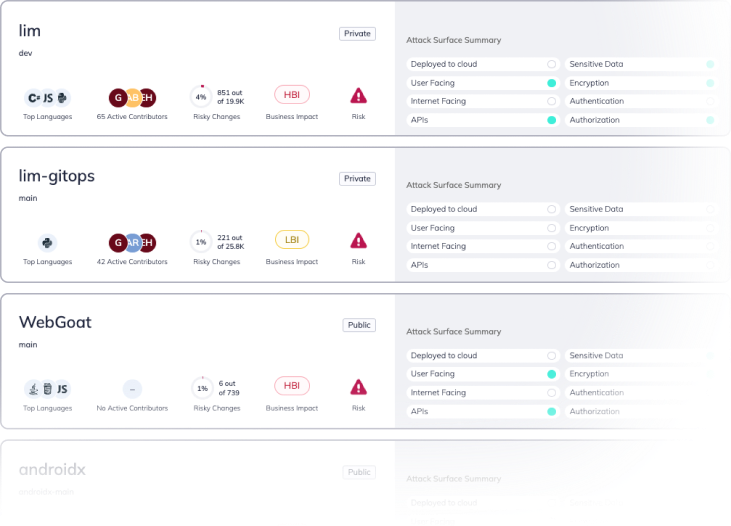
Apiiro is an agentic application security platform and application security posture management (ASPM) tool that takes a deep, code-based approach to risk. It analyzes source code and pulls in runtime context to build a continuous, graph-based inventory of application and software supply chain components.
Its Risk Graph, built on patented Deep Code Analysis, contextualizes findings from code to container to pipeline to runtime so teams can prioritize by likelihood and impact. Apiiro aggregates and normalizes findings from other tools as well as its own native scanners. It ties risks to code owners and embeds risk-based guardrails in developer workflows.
Key features include:
- Deep Code Analysis and Risk Graph: Apiiro’s Risk Graph, built on patented Deep Code Analysis and code-to-runtime matching, contextualizes findings across code, containers, pipelines, and runtime to prioritize by risk likelihood and impact.
- Application visibility and inventory: Through API-based source control integration, the platform builds a continuous inventory of codebases and an extended software bill of materials (XBOM) across applications and software supply chains.
- AI threat modeling: Apiiro automates risk assessments based on material code changes and threat modeling before code is written.
- Native contextual scanners: The platform includes native scanners for software supply chain security, secrets detection, open-source security, API security testing in code, and sensitive data exposure prevention, alongside CI/CD and SCM security.
- Aggregation and prioritization: Apiiro aggregates security signals from any tools across the development stack, normalizing, correlating, and deduplicating them, and ties each risk to its root cause and code owner.
- Policy engine and guardrails: A risk-based policy engine and automated workflows embed guardrails into pull requests and builds and trigger remediation processes. LLM-enriched remediation guidance is provided to help resolve issues at the source.
Limitations (as reported by users on PeerSpot):
- Access control: Users note that role-based access control and some usability options could be more flexible.
- Initial tuning: Some reviewers report high initial noise that required fine-tuning to manage.
- Maturity dependency: A few users observe that the platform can feel complex for teams with less mature application security practices and that it depends on quality integrations.
- Performance: Reviewers mention that loading very large repository sets or reports can be slow and that some functions can lag.
- Source control support: A user requests broader support for self-hosted Git beyond GitHub.v
Source: Apiiro

14. GitGuardian

Best for: Organizations focused on secrets detection and non-human identity governance.
Key strengths: Industry-leading secret detection, incident management, and developer-side prevention.
Things to consider: Large environments may require tuning to manage alert volume effectively.
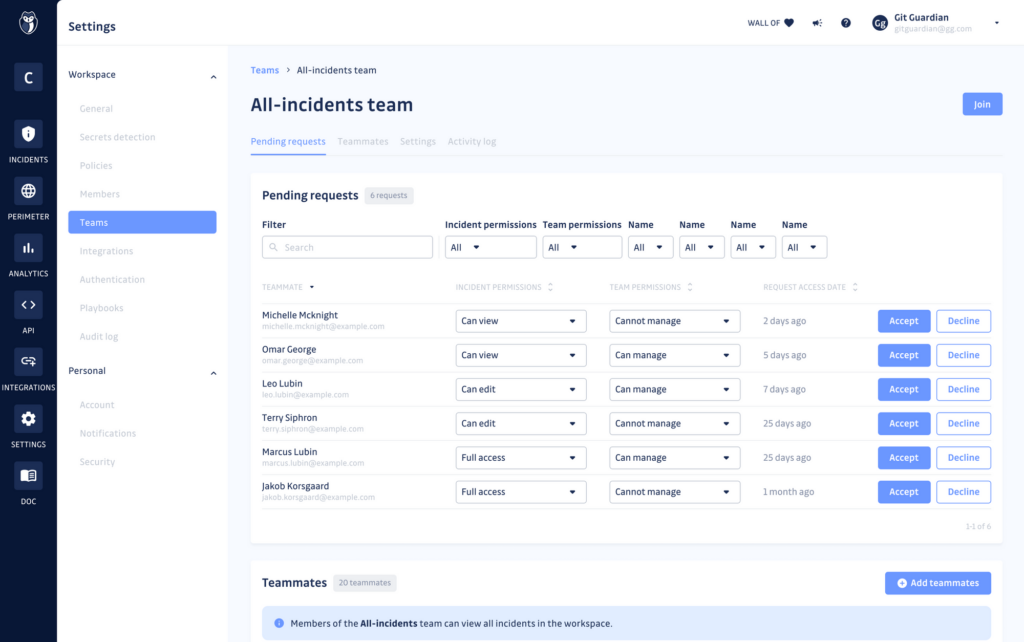
GitGuardian is a platform focused on secrets security and non-human identity (NHI) governance. It combines internal secrets detection, public exposure monitoring, and NHI governance with automated remediation workflows.
The platform scans for hardcoded secrets such as API keys and tokens across repositories and version control history, pinpointing the exact location of a leaked credential. It centralizes incident management across source control and productivity tools and provides client-side scanning through its ggshield CLI. GitGuardian is available as SaaS or self-hosted and integrates across development, security, and identity infrastructure.
Key features include:
- Internal secrets monitoring: GitGuardian scans codebases and version control history for hardcoded secrets and highlights the exact location of any leaked token.
- Public secrets monitoring: The platform monitors public exposure of secrets, catching leaks that appear outside an organization’s own repositories.
- Non-human identity governance: GitGuardian provides a centralized inventory of secrets across vaults and identity sources and helps identify stale, unused, or unrotated credentials. This extends secrets management toward governance of machine identities.
- Incident management and investigation: The platform centralizes incidents across source control and productivity tools, provides a secrets exploration map to trace context and impact, and applies automated severity scoring with AI-enriched tagging.
- Developer-side prevention (ggshield): The ggshield command-line tool runs client-side scanning with detection for hundreds of secret types and integrates with Git hooks and CI/CD pipelines to prevent secrets from being committed. It syncs with the central dashboard to align developer and security workflows.
- Automated remediation and integrations: Automated playbooks and custom remediation guidelines streamline response, and the platform integrates with more than twenty tools across development, security, and identity infrastructure, including GitHub, GitLab, Azure, AWS, Okta, and ServiceNow. It is available as SaaS or self-hosted.
Limitations (as reported by users on G2):
- False positives: Users report that false positives can clutter the dashboard and add manual review time.
- Alert volume: Several reviewers find the volume of notifications heavy when working across many repositories with frequent commits.
- Remediation automation: Some users would like more automation in secret remediation after detection.
- Alert management UX: A few reviewers note that navigating and managing alerts could be more intuitive for newcomers, and that severity assessment is not always accurate.
- Pricing clarity: Some users find the pricing and feature tiers unclear.
Source: GitGuardian
How to Choose Code Security Tools
Choosing a code security tool requires more than comparing vulnerability counts. The right solution should fit into existing development workflows, provide accurate results, and help teams remediate issues efficiently without slowing delivery. When evaluating tools, consider the following factors:
- Coverage across languages and frameworks: Look for tools that support a broad range of programming languages and frameworks. Strong coverage helps reduce blind spots, especially as teams adopt new technologies and AI-assisted development.
- Scanning flexibility and performance: Evaluate whether the tool supports different scanning approaches, such as full and incremental scans. Flexible scanning options help balance security depth with pipeline speed.
- Accuracy and signal quality: High-quality findings reduce the time spent reviewing false positives. Prioritize tools that can surface the most relevant risks and help teams focus on issues that matter.
- AI-assisted remediation: Modern platforms increasingly provide fix recommendations and automated remediation support. These capabilities can help developers resolve vulnerabilities faster and reduce security backlog.
- Developer workflow integration: Security tools should integrate directly into IDEs, repositories, and CI/CD pipelines. This allows developers to identify and fix issues without disrupting their workflow.
- Source code scanning capabilities: Consider whether the tool can analyze source code directly without requiring a build process. This makes it easier to incorporate security checks earlier in the development lifecycle.
- Remediation prioritization: Some tools help identify the most effective place to fix a vulnerability, allowing a single code change to address multiple related issues. This can significantly reduce remediation effort across large codebases.
- Support for AI-generated code: As AI coding assistants become more common, organizations should assess whether a tool can effectively analyze and secure both human-written and AI-generated code.
- Scalability for enterprise environments: Ensure the platform can handle large applications, multiple repositories, and growing development teams while maintaining performance and visibility.
Conclusion
The best code security tools help organizations identify and remediate security issues before code reaches production. By integrating directly into IDEs, repositories, and CI/CD pipelines, they allow developers to detect vulnerabilities, exposed secrets, insecure dependencies, and infrastructure misconfigurations early, when fixes are faster and less expensive. Modern platforms also prioritize findings based on exploitability and business risk instead of overwhelming teams with long lists of vulnerabilities.